The short answer
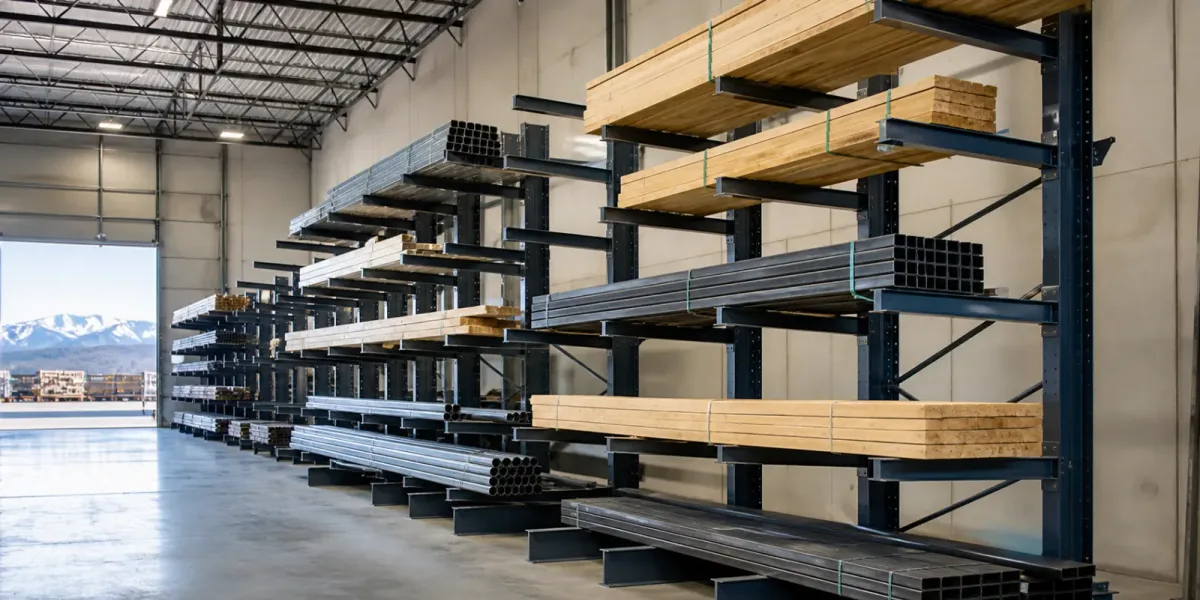
Cantilever racking stores long, bulky, or awkward material on arms that project from a column, with no front upright in the way. That single difference is the whole point: lumber, pipe, tube, bar stock, and sheet goods load and unload along their full length, which pallet racking physically cannot do. Sizing comes down to three numbers — the heaviest load on one arm, the longest material you carry, and the total weight per column — and getting them in that order is what separates a working quote from a wrong one.
When cantilever is the right answer
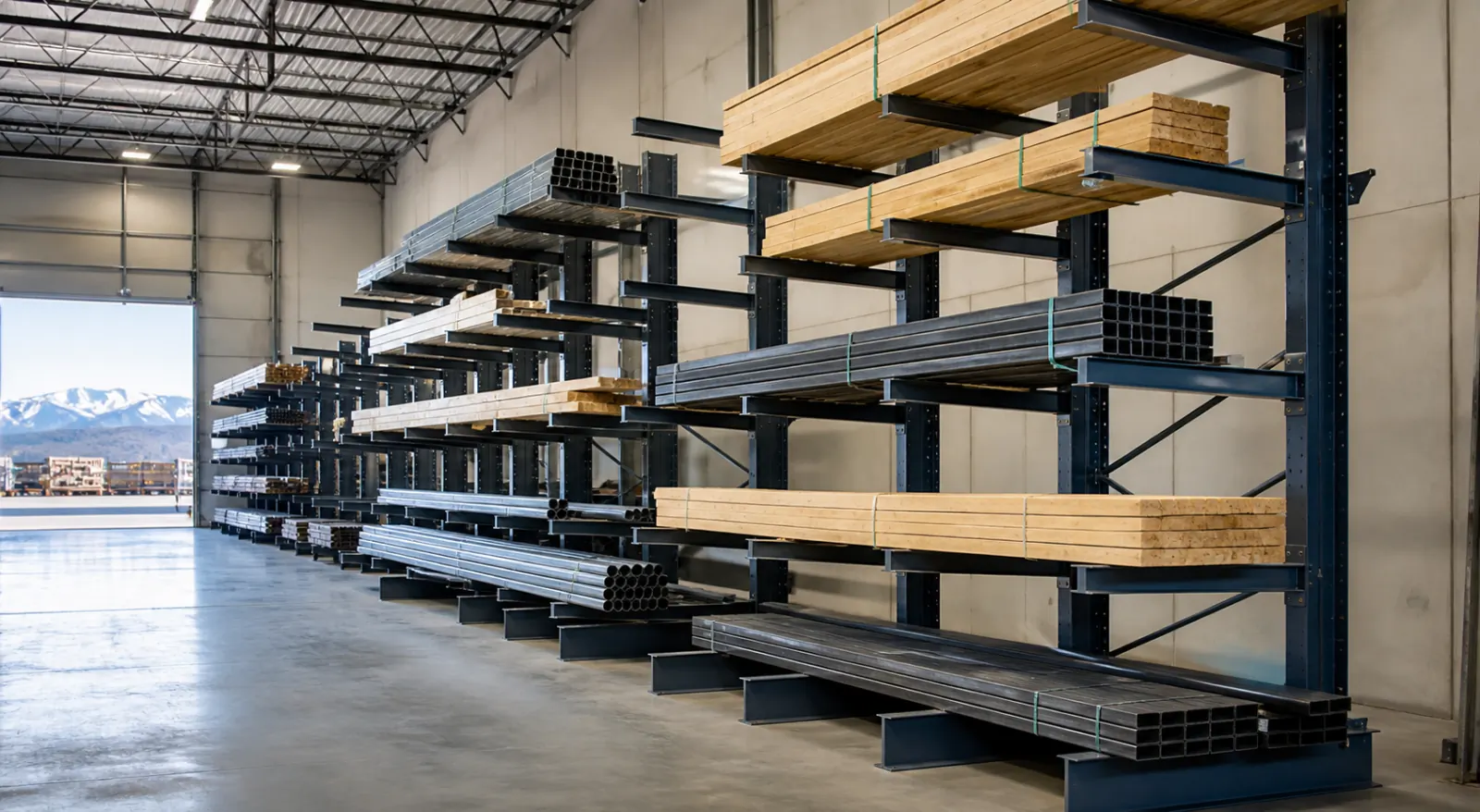
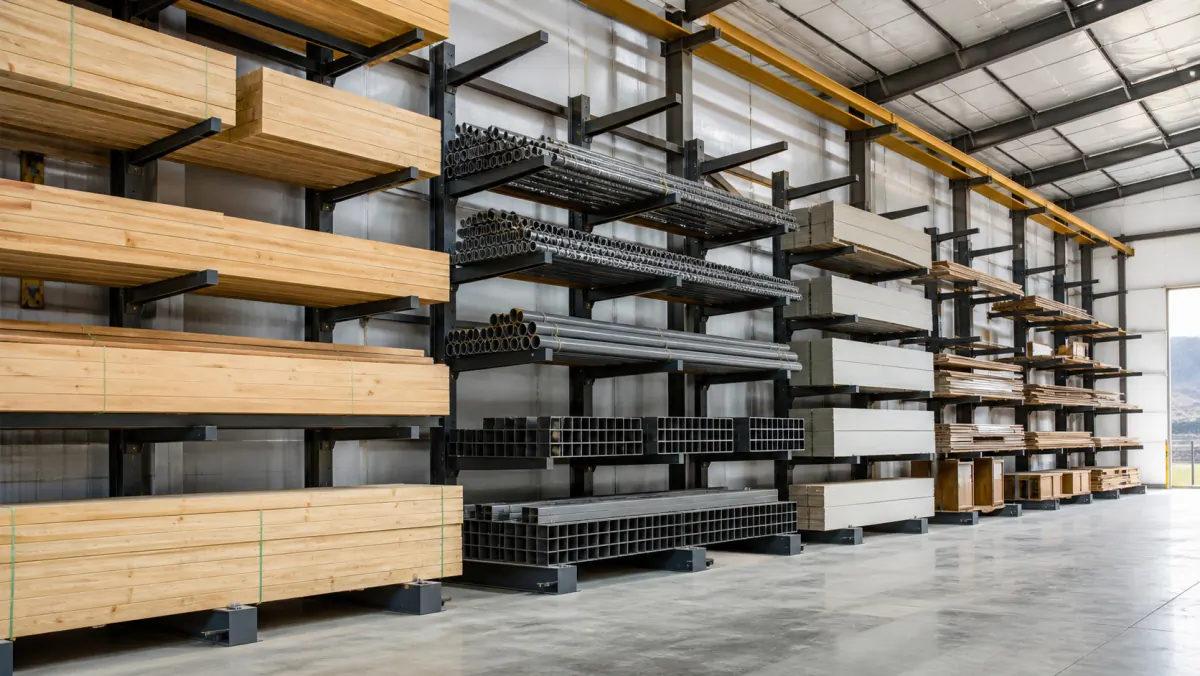
Reach for cantilever when the material is longer than a pallet, when it is bundled rather than palletized, or when it has to be picked from the side by forklift or crane. Lumber yards, steel service centers, pipe and plumbing suppliers, drywall distributors, and fabricators are the recurring cases.
Reach for pallet racking instead when the load actually sits on a pallet and a forklift places it from the aisle. If you are trying to decide between the two systems generally, our comparison of pallet racking and cantilever racking covers that fork in more detail.
The mistake worth avoiding is buying cantilever for material that would sit happily on a pallet. Cantilever costs more per linear foot of storage than selective racking does per pallet position, and it buys you access you may not need.
Single-sided or double-sided
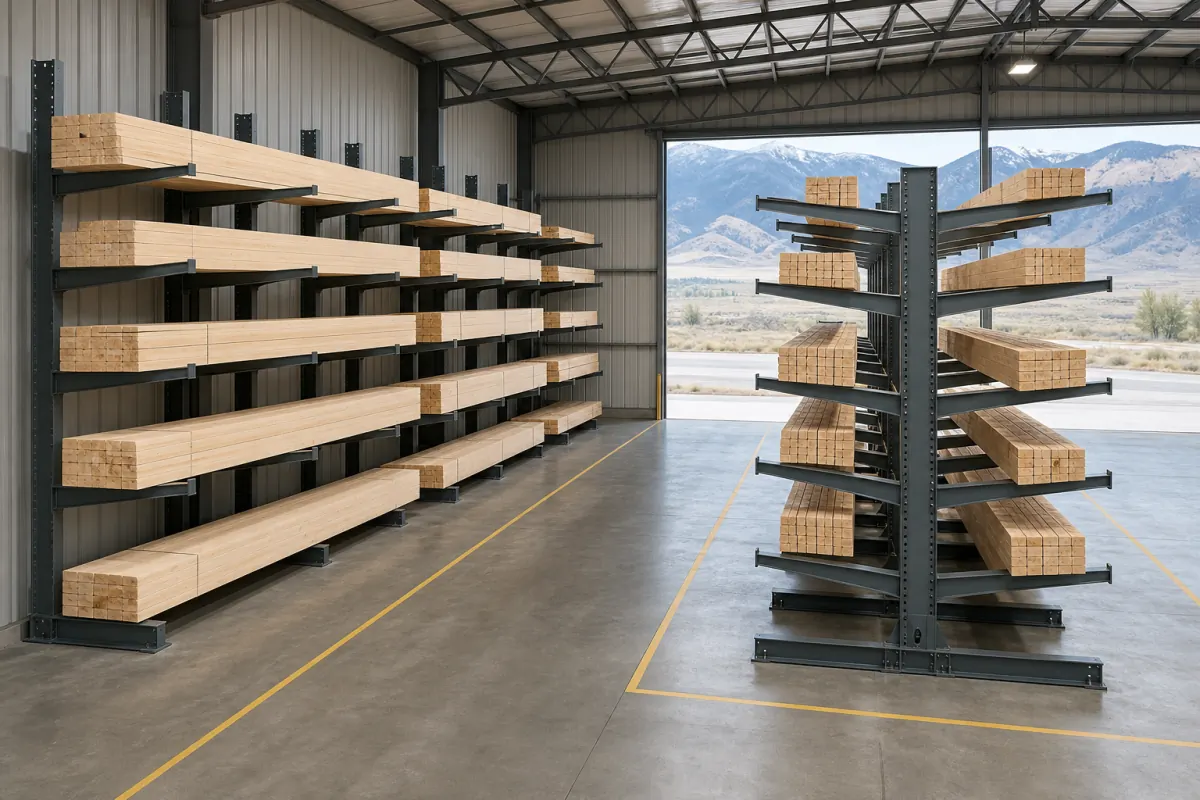
Single-sided cantilever anchors against a wall and stores on one face. It suits perimeter storage, narrow bays, and buildings where you only have room for one aisle.
Double-sided stands free on the floor with arms on both faces, roughly doubling the storage per base and per square foot of aisle. When you have room to run an aisle on both sides, double-sided is almost always the more efficient use of floor area, because the base and column cost is shared across twice the storage.
The capacity math that trips people up
This is where most cantilever specifications go wrong, and it is worth being precise about.
Arm capacity and column capacity are separate ratings. Satisfying one does not satisfy the other. A column rated at 12,000 lbs total does not carry six arms rated at 4,000 lbs each. The column rating is the ceiling for everything hung on it.
Column capacity falls as arm length increases. A longer arm applies more bending moment at the connection, so the same column carries less on 48-inch arms than on 24-inch arms.
Published arm ratings assume a uniformly distributed load. They are stated for the load spread across the arm, not concentrated near the tip. A point load at the end of an arm can exceed the rated moment even when total weight sits comfortably under the published number. This is the single most common cause of overloaded cantilever we are called out to look at.
So work it in this order: heaviest single load on one arm, then total weight on one column across all arm levels, then confirm the column rating at the arm length you actually need.
Arm spacing comes from your shortest material
Material should span a minimum of three arms so the load distributes and the bundle cannot tip or rack the system. That means arm spacing is set by the shortest material you intend to store, not the longest.
Flexible material makes this stricter. Thin-wall tube, small-diameter pipe, and long trim may need four or more arms to prevent visible sag between supports. If you store 20-foot bar and 8-foot trim on the same run, the spacing has to work for the trim.
Base depth governs stability rather than capacity. A taller column carrying longer arms needs a deeper base to resist overturning, and the required depth increases with both.
Structural or roll-formed
Roll-formed cantilever is lighter, less expensive, and adjusts easily. It suits lumber, trim, and lighter bundled material where arm capacities in the hundreds to low thousands of pounds are enough.
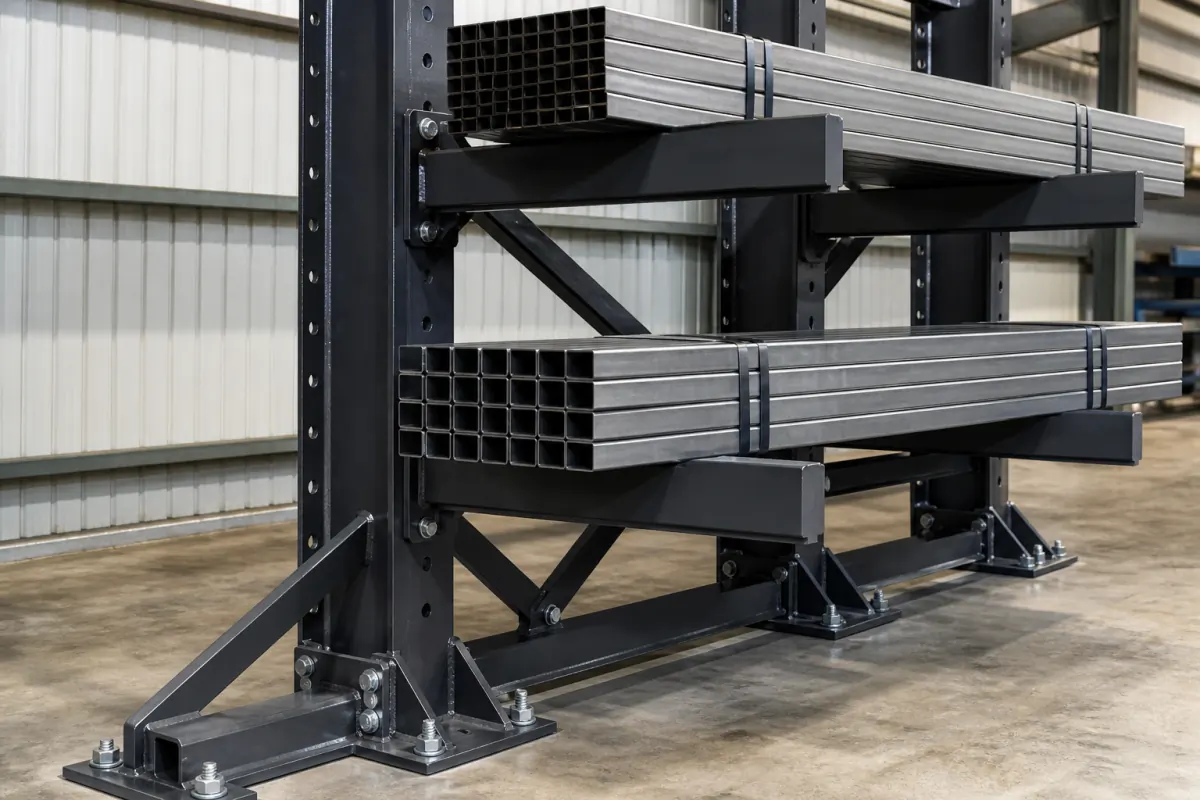
Structural cantilever uses heavier hot-rolled sections with bolted connections. It costs more and it is what you want for steel bar, heavy pipe, long structural shapes, and any application where impact from a forklift is a regular event rather than an accident. In a steel service center, structural is usually not optional.
Anchoring, and why it matters more for cantilever
Cantilever is more sensitive to seismic design than selective pallet racking, and the reason is geometric rather than regulatory. The load sits out on an arm instead of between two uprights, so the overturning moment concentrates in the base plate and its anchors rather than distributing through a bay.
In the higher seismic design categories common across much of the Mountain West, that drives deeper bases, engineered anchor patterns, and additional bracing on taller runs. Anchor selection depends on the slab rather than the rack: pull-out values are a function of concrete depth, compressive strength, and distance to joints and slab edges. An older building can require a different base plate design than a new tilt-up shell a few miles away.
Assess the floor before finalizing the base design. Our guide to racking permits and seismic anchoring covers what a building department is likely to ask for and why thresholds differ between neighbouring jurisdictions.
Outdoor and yard cantilever
Yard storage is normal practice for lumber and building materials operations, and it changes two things.
Finish comes first. Hot-dip galvanizing is the right specification for anything exposed or in an unheated building, and it costs considerably less at fabrication than remediation after corrosion appears at the connections.
Wind loading then enters the calculation alongside seismic, which affects base depth and anchor design on taller freestanding runs. Drainage and grade matter more than people expect: a yard that ponds corrodes base plates from below, and a base on uneven grade transfers load unevenly into the anchors.
What drives the price
Cantilever pricing is driven by duty rating far more than by size. The variables that move a quote most are arm capacity, arm length, column height, base depth, single or double-sided configuration, and whether the system needs galvanizing or engineered seismic anchorage.
Compare quotes on cost per linear foot of usable storage at a stated capacity, and confirm what each includes: freight, installation, anchors, engineered drawings, and permit support are frequently priced separately. Our cost guide covers how to normalize two quotes that look nothing alike.
Buying used
Used cantilever is worth considering, with two cautions. Confirm the manufacturer and series, because arm and column ratings are manufacturer-specific and an arm without a documented rating cannot be safely load-labeled. And inspect arms for deflection that does not recover when unloaded, since a bent arm is finished regardless of price.
The used racking inspection checklist applies to cantilever with one addition: check the arm-to-column connection specifically, since that is where the moment concentrates and where damage shows first.
Getting a configured quote
Send us the longest and heaviest items you need to store, how many linear feet you need, your building’s clear height, and whether the run is going indoors or in the yard. We will return a configuration with the capacity math shown rather than a catalog price.
Request a quote, or see the cantilever racking page for what we supply and install across Utah and the Mountain West.