Push-Back Racking for LIFO High-Density Storage
Push-Back Racking for LIFO Warehouse Storage
Why Choose Push-Back Racking?
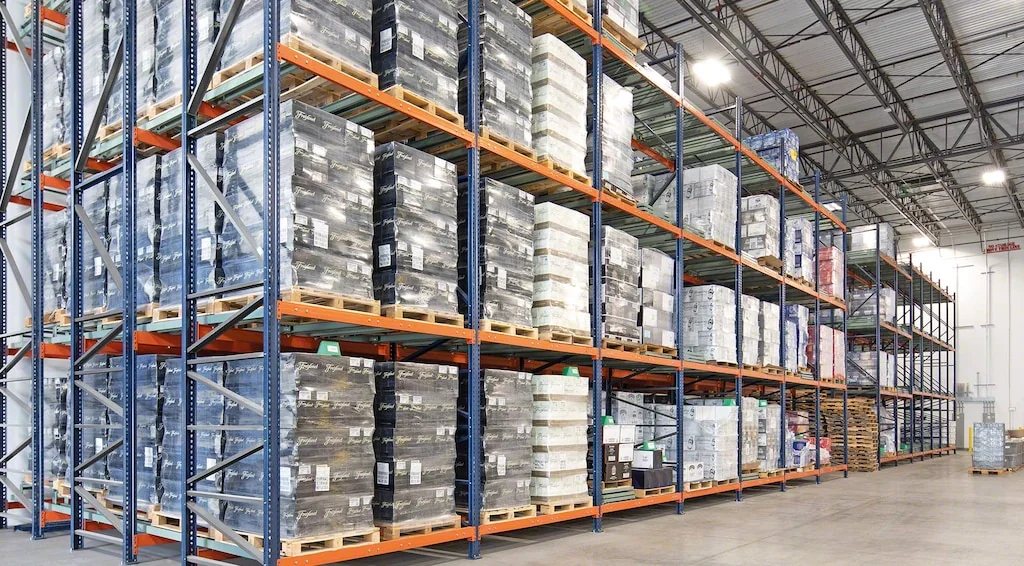
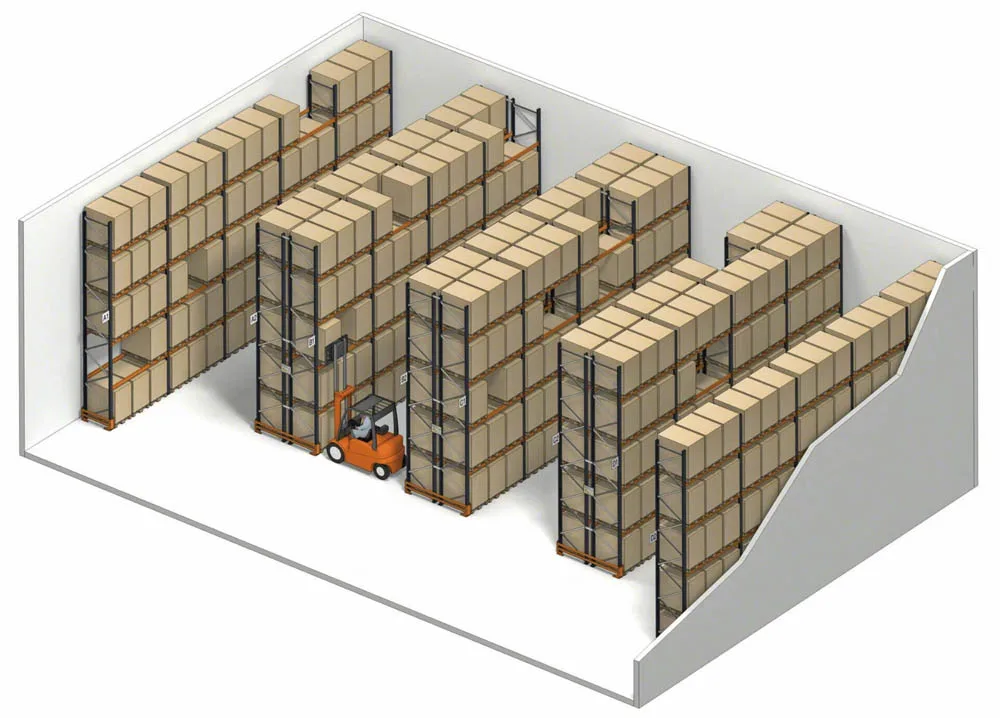
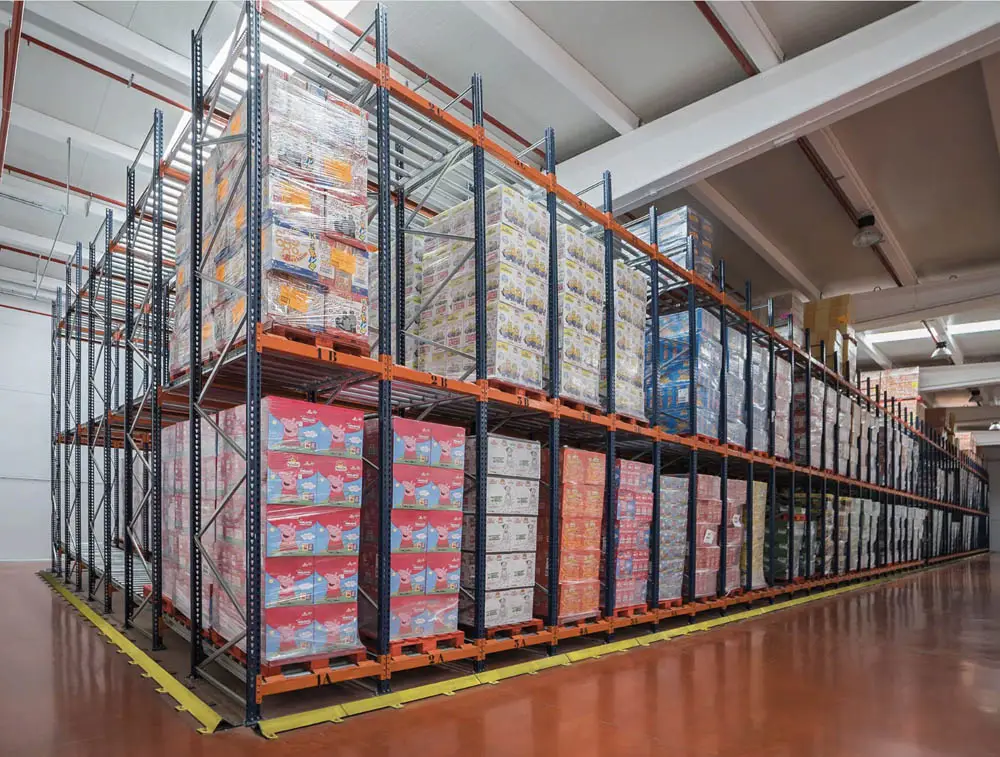
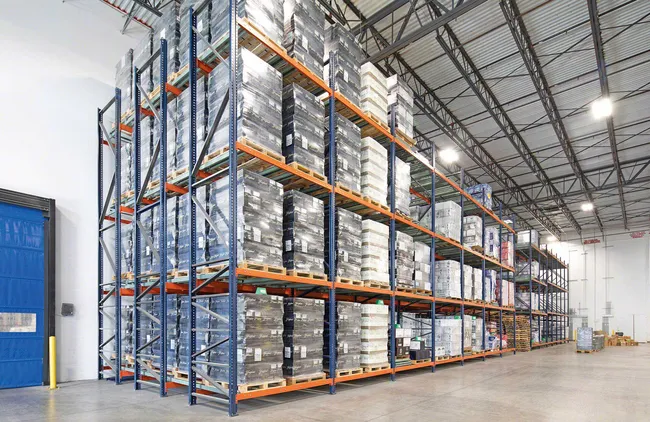
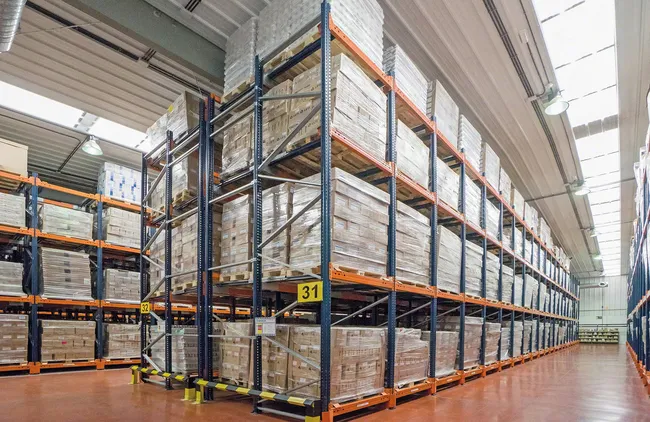
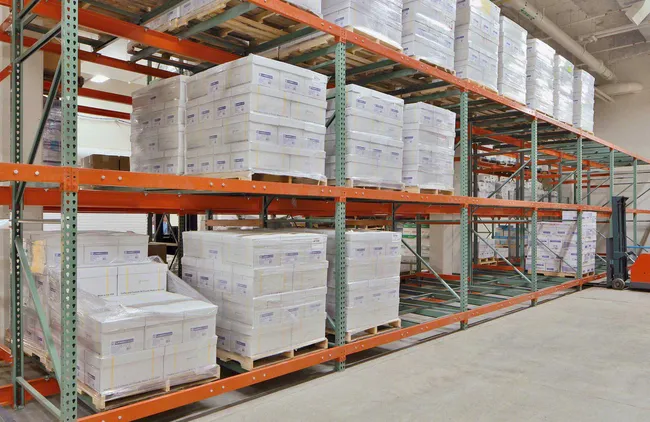
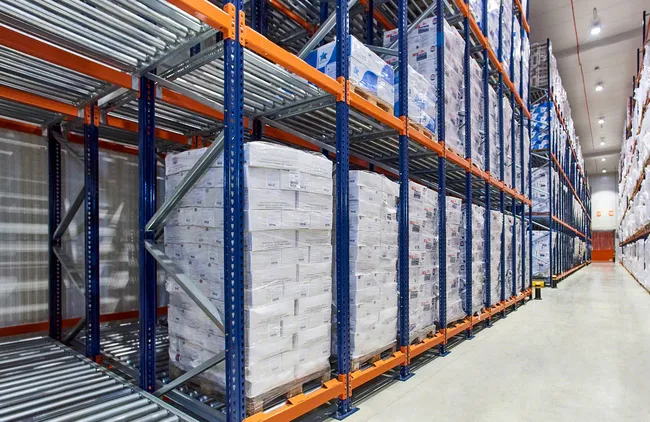
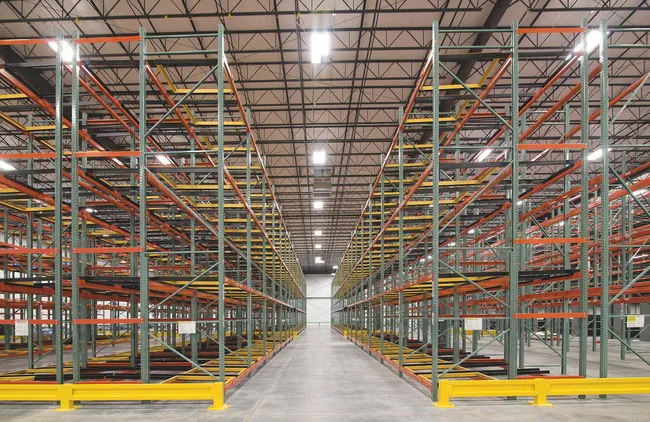
Push-back racking is a last-in, first-out (LIFO) deep-lane system accessed from a single front aisle. Each pallet is placed on a nested cart that rides on inclined rails. As a new pallet is loaded, it pushes the previous pallet back on the rail. When the front pallet is removed, gravity returns the remaining pallets forward to the pick face. Push-back systems handle 2–6 pallet depths and strike a practical balance between storage density and SKU selectivity: better density than selective racking, but better selectivity than drive-in racking: a different SKU can occupy each position in the lane. For distribution centers and warehouses managing a medium number of high-volume SKUs, push-back racking is often the optimal storage solution. You can dedicate multiple lanes to your highest-velocity products, giving those SKUs deep inventory reserves accessible from a single aisle, while maintaining the flexibility to assign different SKUs to different lanes without the operational constraints of a drive-in system. The result is a storage system that delivers high density and operational flexibility simultaneously. Rocky Mountain Warehouse Solutions designs and installs push-back racking systems for food and beverage distributors, cold storage facilities, manufacturing operations, and general merchandise warehouses across Utah and the Mountain West. Every system includes an engineered load capacity label, a cart and rail configuration optimized for your pallet type and weight, and installation by our experienced crews. We also service existing push-back systems, replacing worn carts, damaged rails, and bent components.
- Better SKU selectivity than drive-in racking
- Single-aisle access from the front only
- LIFO rotation for non-date-sensitive products
- 2–6 pallet depths available
- Gravity-powered return: no electricity needed
- Works with standard counterbalance forklifts
- Higher density than selective racking
Technical Details & Buying Guide
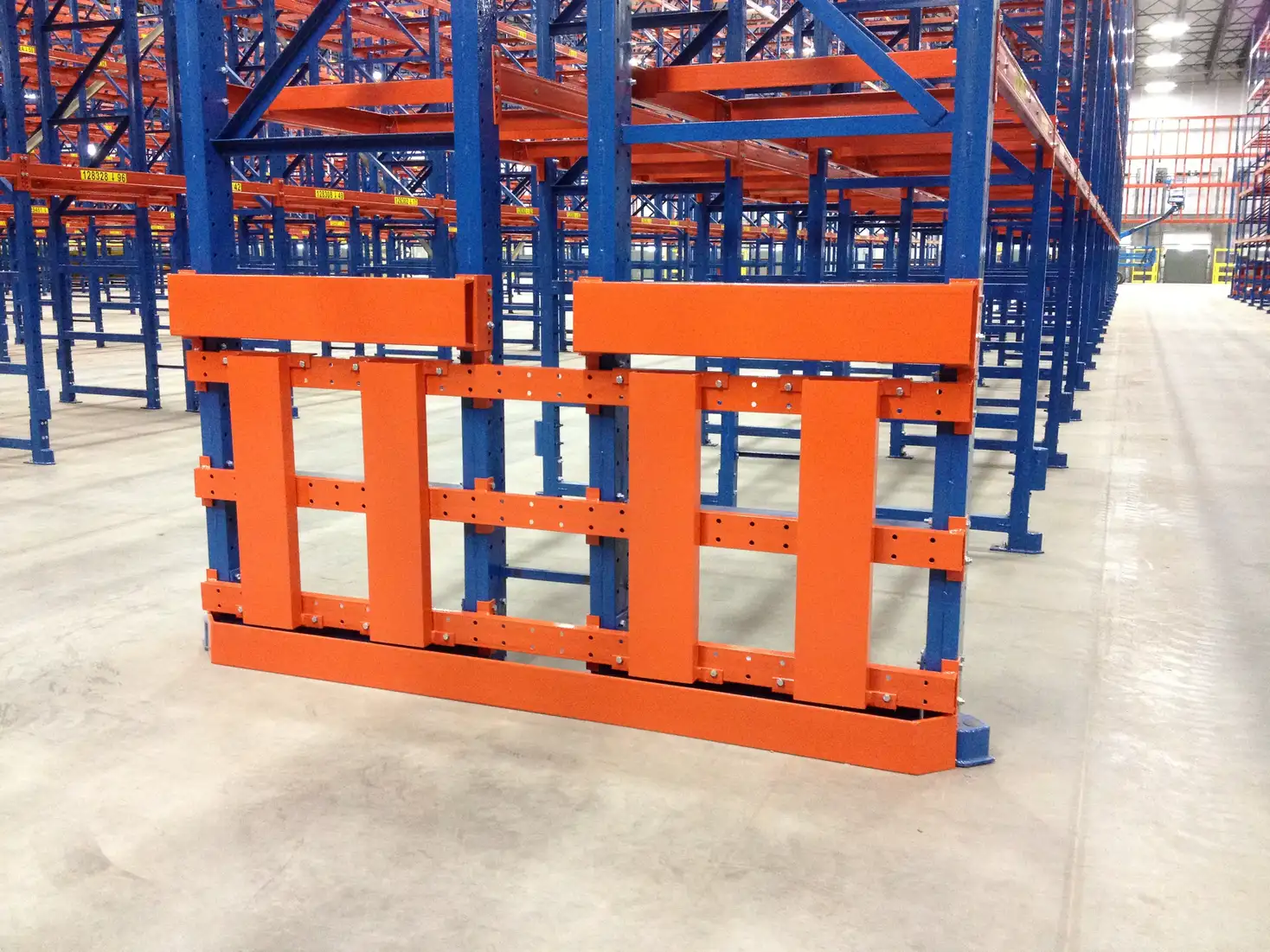
Push-back racking uses a series of nesting carts (typically 2 carts for a 3-deep system, 3 carts for a 4-deep system, and so on) that stack on top of each other at the front of the lane when empty. Each cart rides on inclined rails attached to the pallet rack beams, sloped at approximately 3/8 inch per foot toward the pick face. When a pallet is placed on the front cart, the operator pushes it back to place it behind the front position, nesting the carts together. Each subsequent pallet loads behind the previous one. When the front pallet is retrieved, the remaining carts and pallets flow forward under gravity to the pick face.
Cart capacity is a critical specification. Standard push-back carts are rated for 2,500–3,500 lbs per pallet position for 2–3 deep systems. Heavy-duty carts for 4–6 deep systems with heavier loads require structural-grade cart components and heavier rail sections. The incline angle and cart design must be carefully matched: too shallow an incline and pallets may not return to the pick face reliably; too steep and pallets arrive with excessive speed. Properly engineered push-back systems from Unarco, Mecalux, or other reputable manufacturers account for these variables across a range of pallet weights.
The operational advantage of push-back versus drive-in is significant in multi-SKU environments. In a drive-in lane, only one SKU can occupy the lane (any retrieval requires taking the front pallet, which may not be the desired SKU unless the lane is dedicated to a single product). In push-back racking, the front pallet is always the most recently loaded, meaning a single lane can contain multiple pallets of the same SKU loaded at different times, or in some warehouse configurations, different SKUs if LIFO rotation is acceptable for those products. The front-only access from a single aisle also means no sacrificial aisle is needed at the back of the system, recovering that floor space for additional storage.
Industries We Serve
Common Use Cases
Frequently Asked Questions
What is the load capacity per level for push-back racking?
Push-back systems are typically rated for 2,500 to 3,500 lbs per pallet position for standard 2–3 deep configurations. Heavy-duty systems for 4–6 deep lanes can support 3,500–5,000 lbs depending on the cart and rail specification. We provide engineered load capacity labels for every installation.
Is push-back racking compatible with my existing forklifts?
Push-back racking works with standard counterbalance and reach-truck forklifts. The key requirements are that the forklift mast height accommodates your storage height and the lift capacity supports your heaviest loaded pallet. We verify forklift compatibility as part of the quoting process and can provide mast and capacity recommendations.
How does push-back racking compare to drive-in for density?
Drive-in racking provides slightly higher storage density than push-back because there are no cart and rail components occupying vertical space. However, push-back provides much better SKU selectivity and eliminates the need for forklifts to drive inside the rack structure, which reduces operational risk and column damage.
What pallets work best in push-back racking?
Standard GMA 48×40 wooden pallets work well in most push-back systems. Block pallets (CHEP, plastic block pallets) are also compatible. String pallets and poorly conditioned pallets with missing boards or cracked runners can cause cart engagement issues. We recommend inspecting and discarding damaged pallets before using them in push-back systems.
Can push-back carts be repaired if damaged?
Yes. Individual carts and rail sections can be replaced without rebuilding the entire system. We carry common cart components for major push-back manufacturers and can source replacement parts for older systems. Cart and rail inspection should be part of your annual rack inspection program to identify wear or impact damage before it affects system performance.
Is Push-Back Racking Right for Your Facility?
- Available options: New, certified used, and custom-configured systems
- Installation: Professional installation and teardown by our trained crews
- Layout support: CAD-based warehouse layout assistance included
- Service area: Utah, Nevada, Idaho, Colorado, Arizona, Wyoming, and Montana
- Response time: Quote within 1 business day. Site visits available.
Available in major service areas
- Push-Back Racking in Albuquerque, NM
- Push-Back Racking in Billings, MT
- Push-Back Racking in Boise, ID
- Push-Back Racking in Boulder, CO
- Push-Back Racking in Bozeman, MT
- Push-Back Racking in Casper, WY
- Push-Back Racking in Cheyenne, WY
- Push-Back Racking in Clearfield, UT
- Push-Back Racking in Colorado Springs, CO
- Push-Back Racking in Davis County, UT
- Push-Back Racking in Denver, CO
- Push-Back Racking in Evanston, WY
- Push-Back Racking in Flagstaff, AZ
- Push-Back Racking in Fort Collins, CO
- Push-Back Racking in Glendale, AZ
- Push-Back Racking in Grand Junction, CO
- Push-Back Racking in Henderson, NV
- Push-Back Racking in Idaho Falls, ID
- Push-Back Racking in Laramie, WY
- Push-Back Racking in Las Vegas, NV
- Push-Back Racking in Layton, UT
- Push-Back Racking in Lehi, UT
- Push-Back Racking in Logan, UT
- Push-Back Racking in Meridian, ID
- Push-Back Racking in Mesa, AZ
- Push-Back Racking in Nampa, ID
- Push-Back Racking in North Las Vegas, NV
- Push-Back Racking in North Salt Lake, UT
- Push-Back Racking in Ogden, UT
- Push-Back Racking in Phoenix, AZ
- Push-Back Racking in Pocatello, ID
- Push-Back Racking in Prescott, AZ
- Push-Back Racking in Provo, UT
- Push-Back Racking in Pueblo, CO
- Push-Back Racking in Reno, NV
- Push-Back Racking in Salt Lake City, UT
- Push-Back Racking in Scottsdale, AZ
- Push-Back Racking in Spanish Fork, UT
- Push-Back Racking in Sparks, NV
- Push-Back Racking in St. George, UT
- Push-Back Racking in Twin Falls, ID
- Push-Back Racking in West Valley City, UT
Related Products
Ready to upgrade your warehouse?
Our team of warehouse experts is ready to help you find the perfect solution for your facility. Contact us today for a free consultation and layout.