Compare on cost per pallet position, not total price
The single most useful thing you can do with two racking quotes is convert both to cost per pallet position. Total price tells you nothing without knowing how many positions you are buying. Price per bay is worse than useless, because it actively rewards the quote that is giving you less.
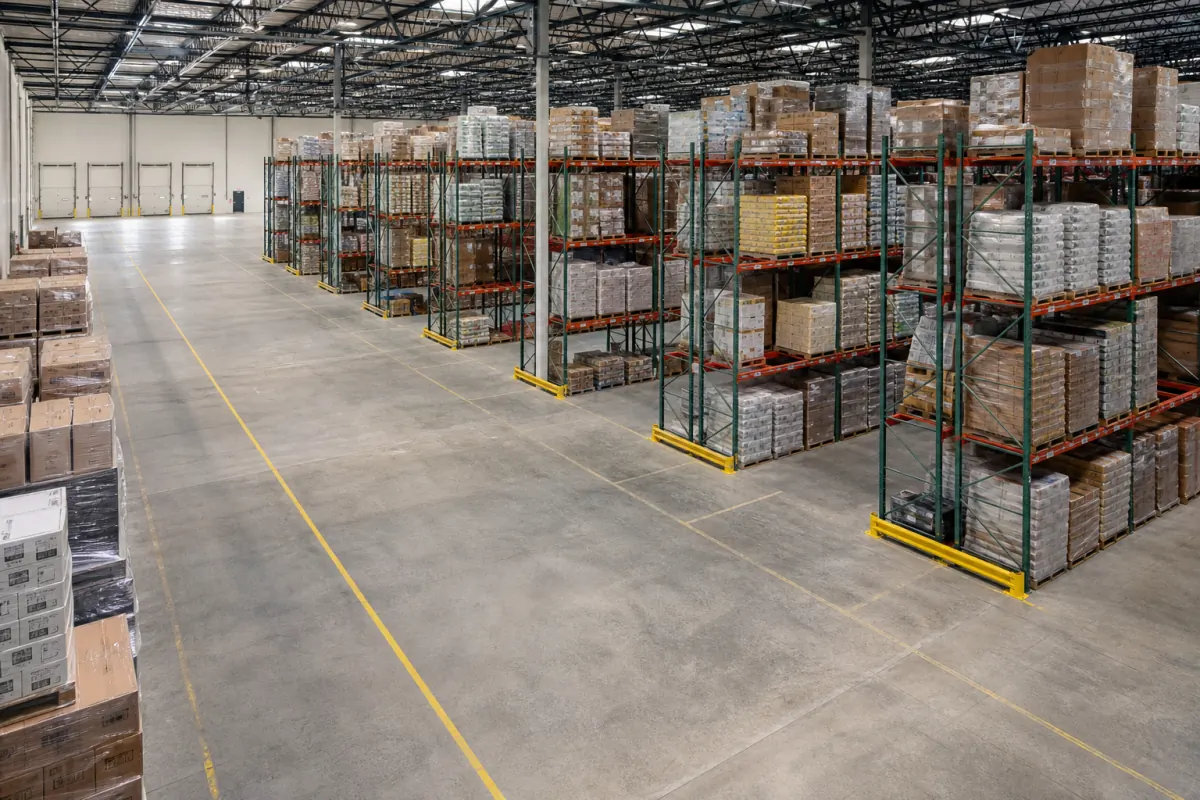
Here is why. A supplier can widen the bays and use fewer uprights, which lowers the price per bay while delivering fewer usable positions and lower capacity per level, because beam capacity always falls as span increases. On paper that quote wins. In your building it stores less.
Cost per position normalizes for bay width, beam levels, and upright count. It is the only figure that makes two differently configured proposals comparable, and it is the number to ask every supplier to state explicitly.
What moves the number
Six variables account for most of the spread between quotes:
Configuration. This is the largest factor and the rest of this article covers it.
New or used. Certified used racking commonly reduces material cost substantially against new. The gap narrows once the full project scope is priced, and on some configurations it closes.
Height. Taller systems need heavier uprights and more bracing, and the cost per position does not stay flat as you go up. It usually improves to a point and then worsens once you cross into heavier gauge or structural components.
Seismic requirements. Along the Wasatch Front this is a real line item, not a rounding error. Heavier base plates, engineered anchor patterns, and additional row bracing all carry cost. See our guide to racking permits and seismic anchoring for what drives it.
Floor condition. A slab that constrains anchor selection changes the base plate design, and occasionally the whole system.
Timeline. Used inventory is often available immediately against multi-week lead times for new. When a lease or a production start date is driving the schedule, availability can outweigh unit cost entirely.
Configuration, and what each one buys you
Selective racking
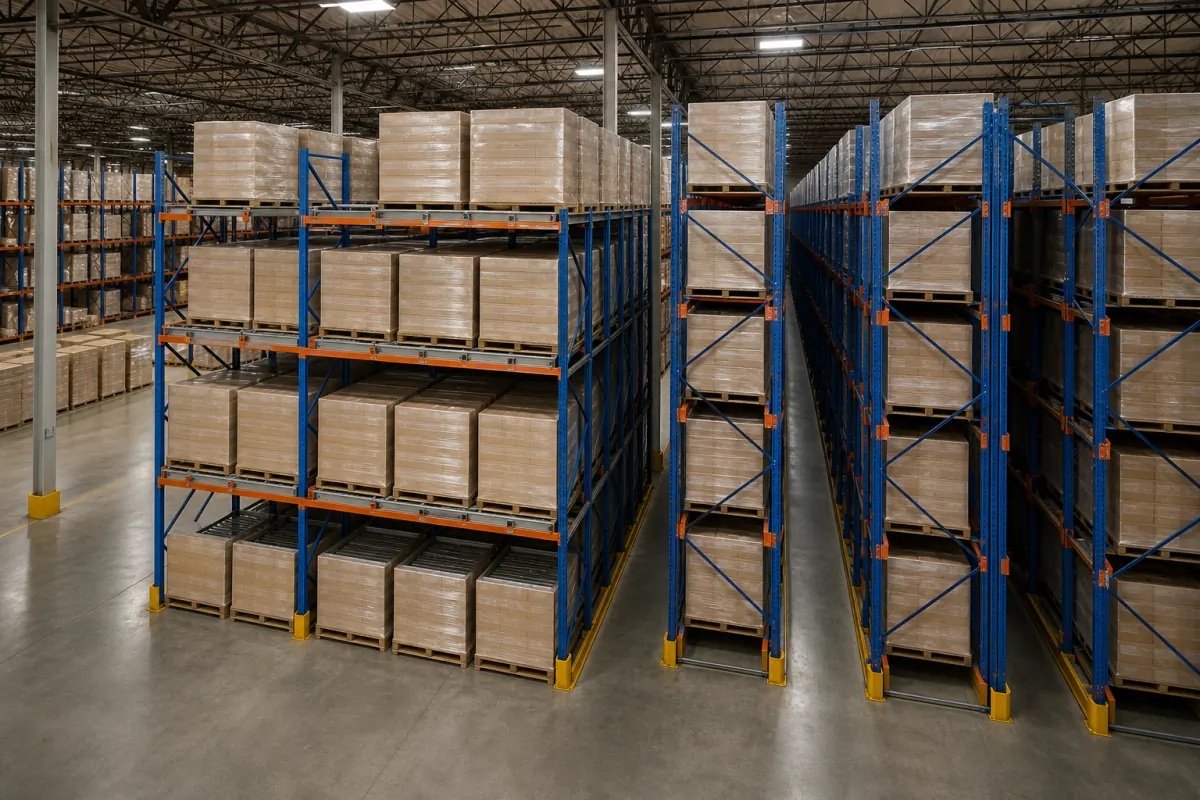
The baseline, and the lowest cost per position of any engineered system. Every pallet is directly accessible from the aisle, which means 100% selectivity and no compromise on SKU access. It is the right answer for most operations, particularly high SKU counts with few pallets each.
The tradeoff is floor space. Selective needs an aisle for every two rows, so a large share of your square footage becomes aisle rather than storage.
Double-deep
Two pallets deep on each side of the aisle, roughly halving the aisle count. Cost per position is modestly above selective, and the density gain is significant.
The hidden cost is equipment: you need a deep-reach truck to access the back position, which is a fleet change rather than a racking change. Selectivity drops to about 50%, so it suits operations with at least two pallets per SKU.
Push-back
Pallets sit on nested carts on inclined rails, two to six deep. Cost per position runs meaningfully above selective, but the density gain is substantial and it needs no special forklift, which is the reason it often beats double-deep on total project cost despite a higher racking price.
Push-back is last-in-first-out within each lane. It suits deep stock per SKU where strict rotation is not required. The economics improve with depth: at two deep it is frequently not worth it, and at four to six deep it usually is.
Drive-in and drive-thru
The forklift drives into the rack structure itself, giving the highest density of any static system. Cost per position is competitive because you are buying frame rather than beams, and the floor space saving is large.
Two real costs offset it. Selectivity drops sharply, since you are accessing lanes rather than positions, and drive-in is strictly last-in-first-out. And the damage tax is genuine: driving a lift truck inside the structure means impacts, and impacts on a drive-in frame are structural rather than cosmetic. Budget for rack protection and a more frequent inspection cadence.
Pallet flow
Pallets load at one end onto gravity rollers and pick from the other, giving true first-in-first-out with high density. It carries the highest cost per position of the systems here, sometimes by a wide margin.
It earns that where throughput justifies it: high-volume food and beverage, date-coded product, and operations where FIFO is a requirement rather than a preference. Below a certain daily throughput the economics do not work.
Cantilever
A different problem rather than a denser version of the same one. Cantilever stores long or awkward material that does not sit on a pallet, and pricing is driven by arm capacity, arm length, upright height, and base depth rather than by pallet count. See the cantilever racking page for how that sizing works.
What quotes leave out
This is where two quotes that look far apart turn out to be close, or the reverse. Check every one of these explicitly:
- Freight. Racking is bulky relative to its value. A low material price sourced from out of state can lose its entire advantage by the time it reaches a Utah dock. This is the single most common reason an online quote does not hold up.
- Installation labor
- Anchors and anchor installation
- Wire decking, which is frequently a fire code requirement rather than an option
- Row spacers and column protection
- Engineered drawings and stamped calculations
- Permit support
- Load capacity labeling
- Teardown and removal of any existing system
- Freight lift or crane where site access requires it
A material-only price with those excluded is not a lower project cost. It is an incomplete one.
Three worked scenarios
These illustrate how the comparison actually plays out. Treat the shape as instructive and the figures as ours to fill in from your own quote history.
A 3PL taking a 40,000 sq ft building. High SKU count, one to two pallets per SKU, mixed clients and constant turnover. Selective racking almost regardless of budget, because the client mix changes and any density system locks in assumptions that will not survive the first contract change. The lever here is aisle width, not configuration.
A food distributor with 300 SKUs and deep stock. Six to twenty pallets per SKU, date-coded product, strict rotation. This is where pallet flow earns its cost, or push-back if the rotation requirement is softer than it first appears. The comparison to run is cost per position against positions gained, and then against the cost of the square footage those positions would otherwise occupy.
A manufacturer with 40 SKUs and very deep stock. Raw material and finished goods, low SKU count, rotation not critical. Drive-in is the density play, and the honest analysis includes rack protection and a higher inspection cadence in the total cost rather than treating damage as someone else’s problem.
How to compare two quotes that look nothing alike
- Convert both to cost per pallet position.
- Confirm both are quoting the same number of positions at the same capacity per level.
- List what each includes and excludes from the section above, and add the missing items at your own estimate.
- Check the beam capacity at the actual span quoted, not the manufacturer’s headline number.
- Ask what lead time each is quoting, and what it costs you if it slips.
- For used, confirm the manufacturer and series are documented, because a beam without a rating cannot be load-labeled or permitted.
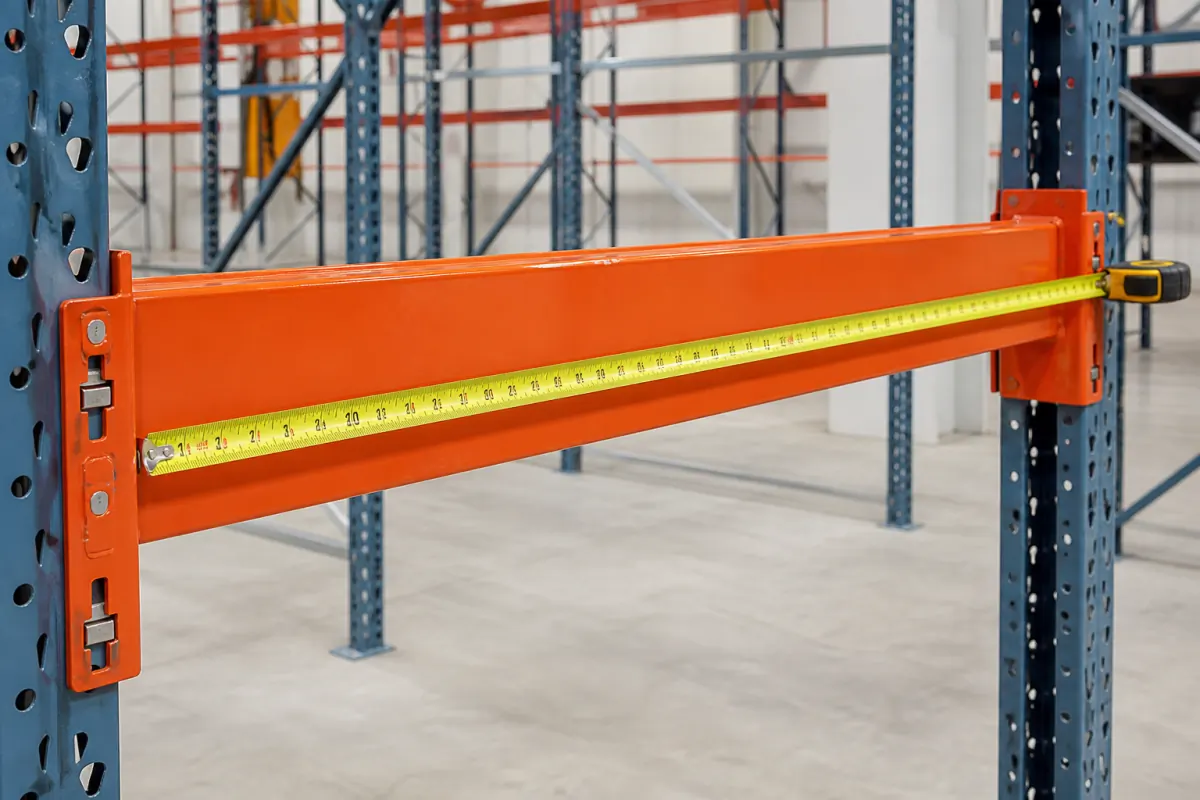
That sequence turns two incomparable documents into a decision.
Getting a real number
We quote installed cost per pallet position with the scope stated, so the comparison against another supplier is direct rather than notional. Send us your pallet count, pallet dimensions and weight, SKU profile, lift equipment, and building dimensions, and we will return a configured quote with the capacity math shown.
Request a quote, or start with the pallet racking guide if you are still deciding between systems. If budget is the constraint, the used pallet racking page covers what used does and does not save.