Vehicle Restraints for Safe Loading Dock Operations
Vehicle Restraints for Loading Dock Safety
Why Choose Vehicle Restraints?
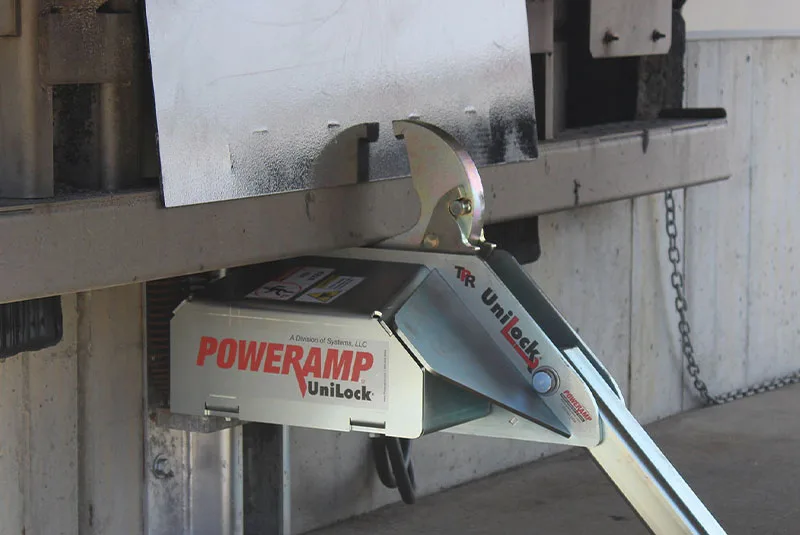
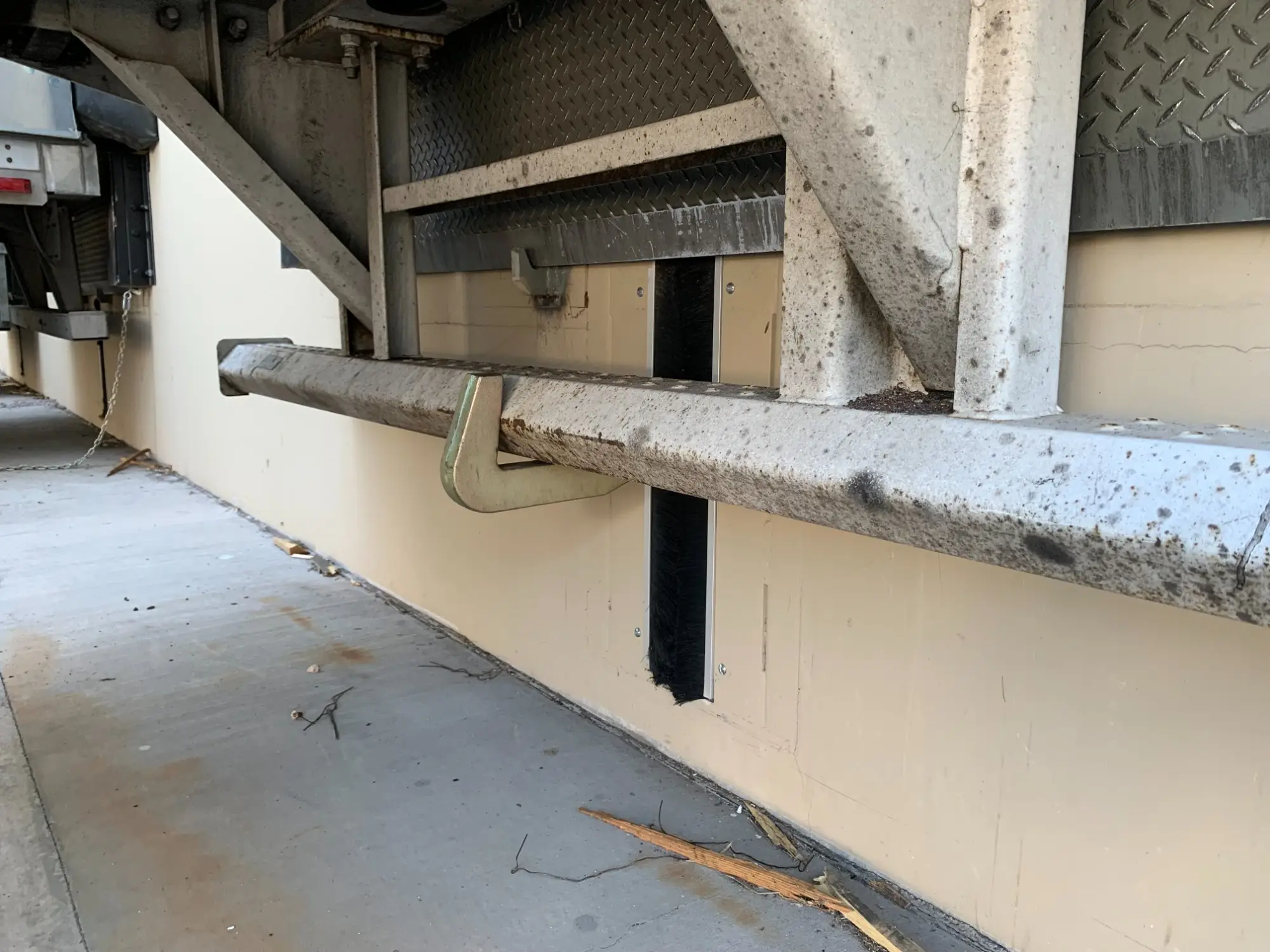
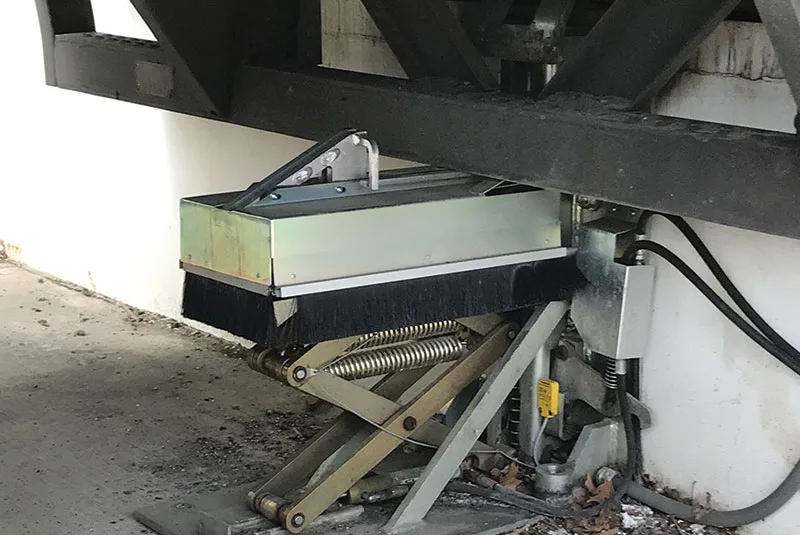
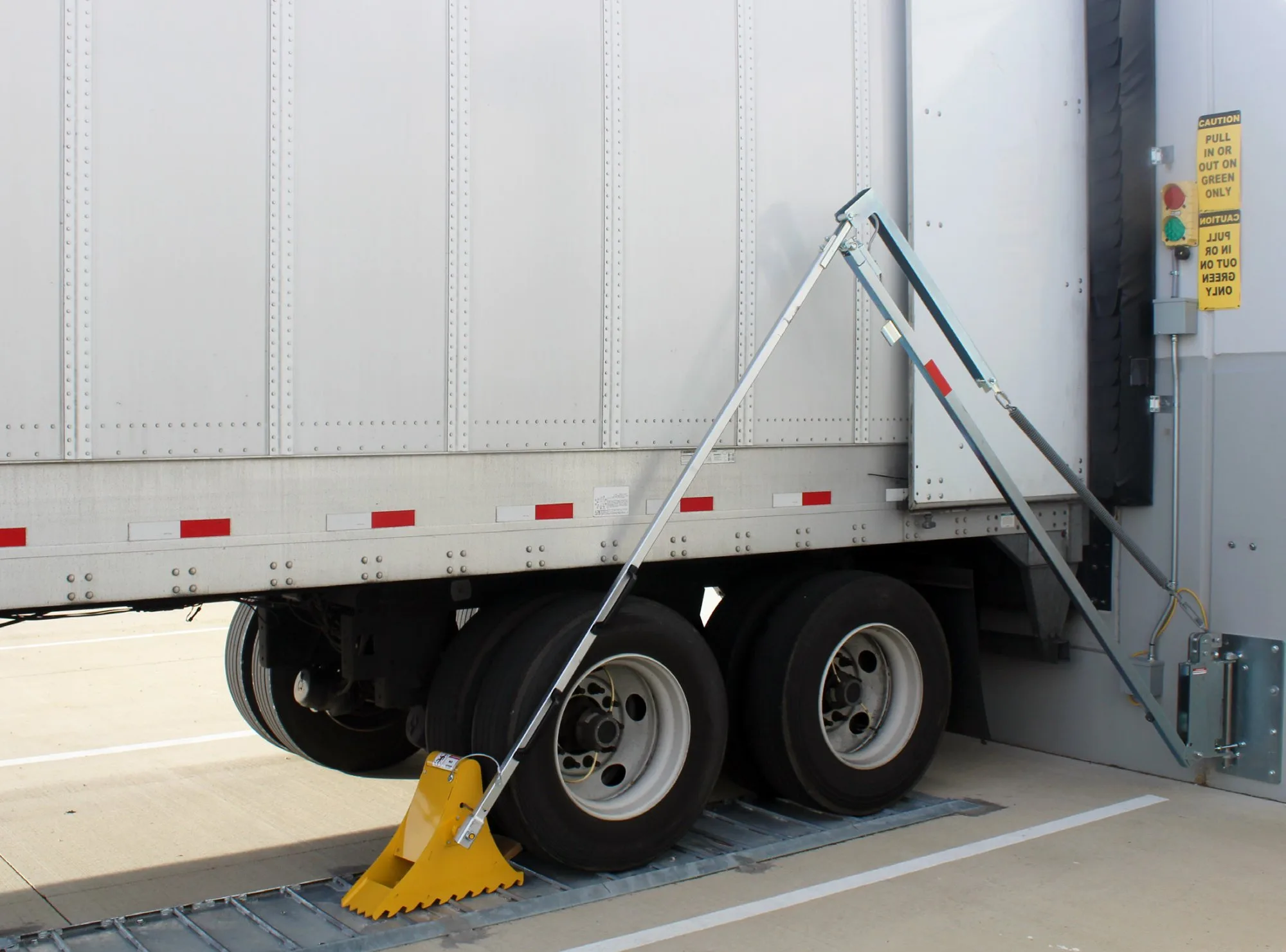
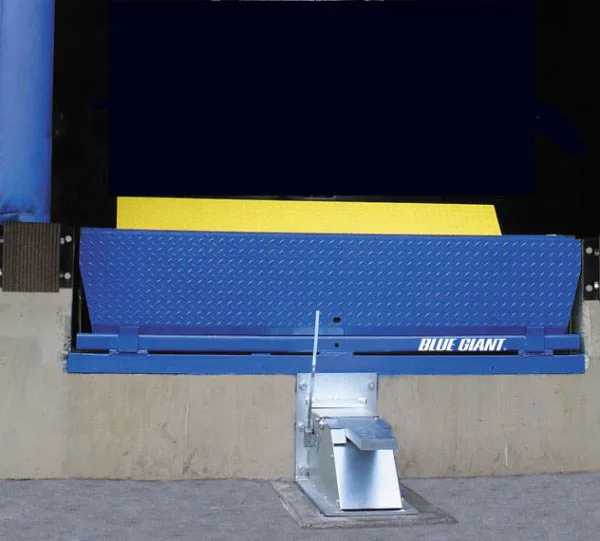
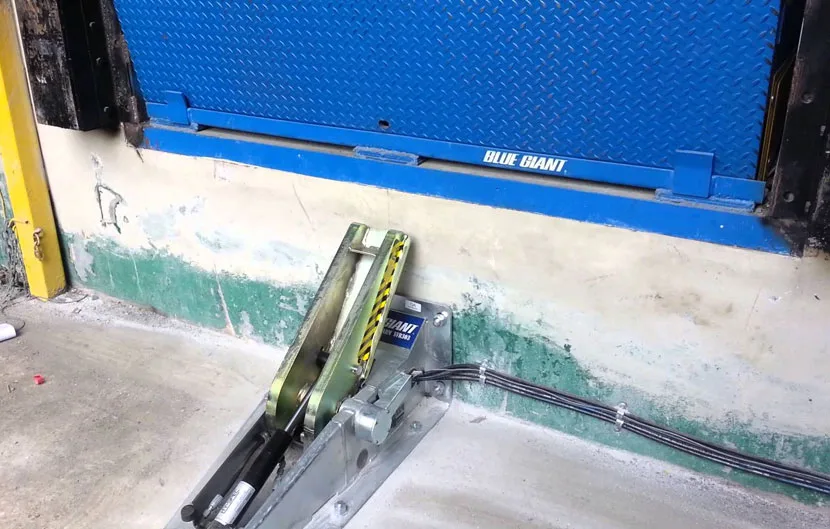
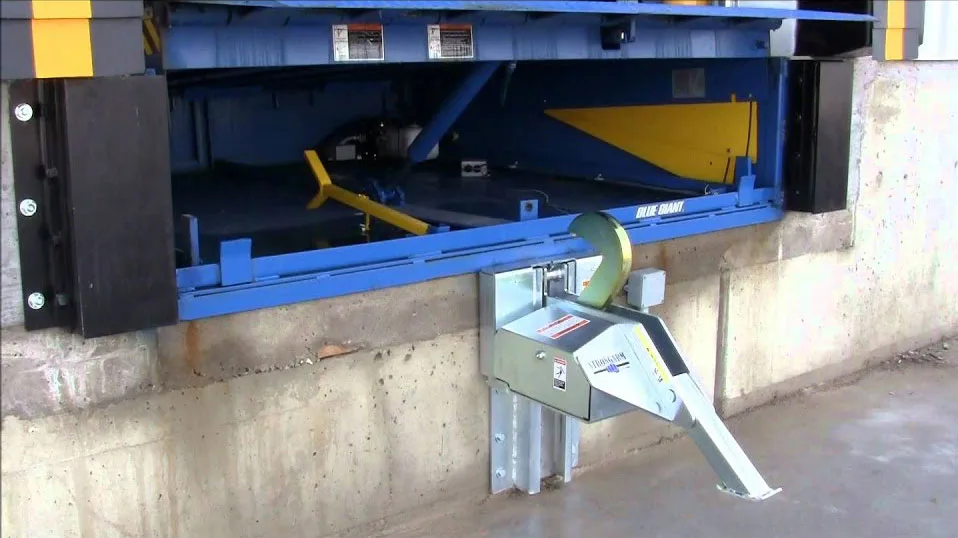
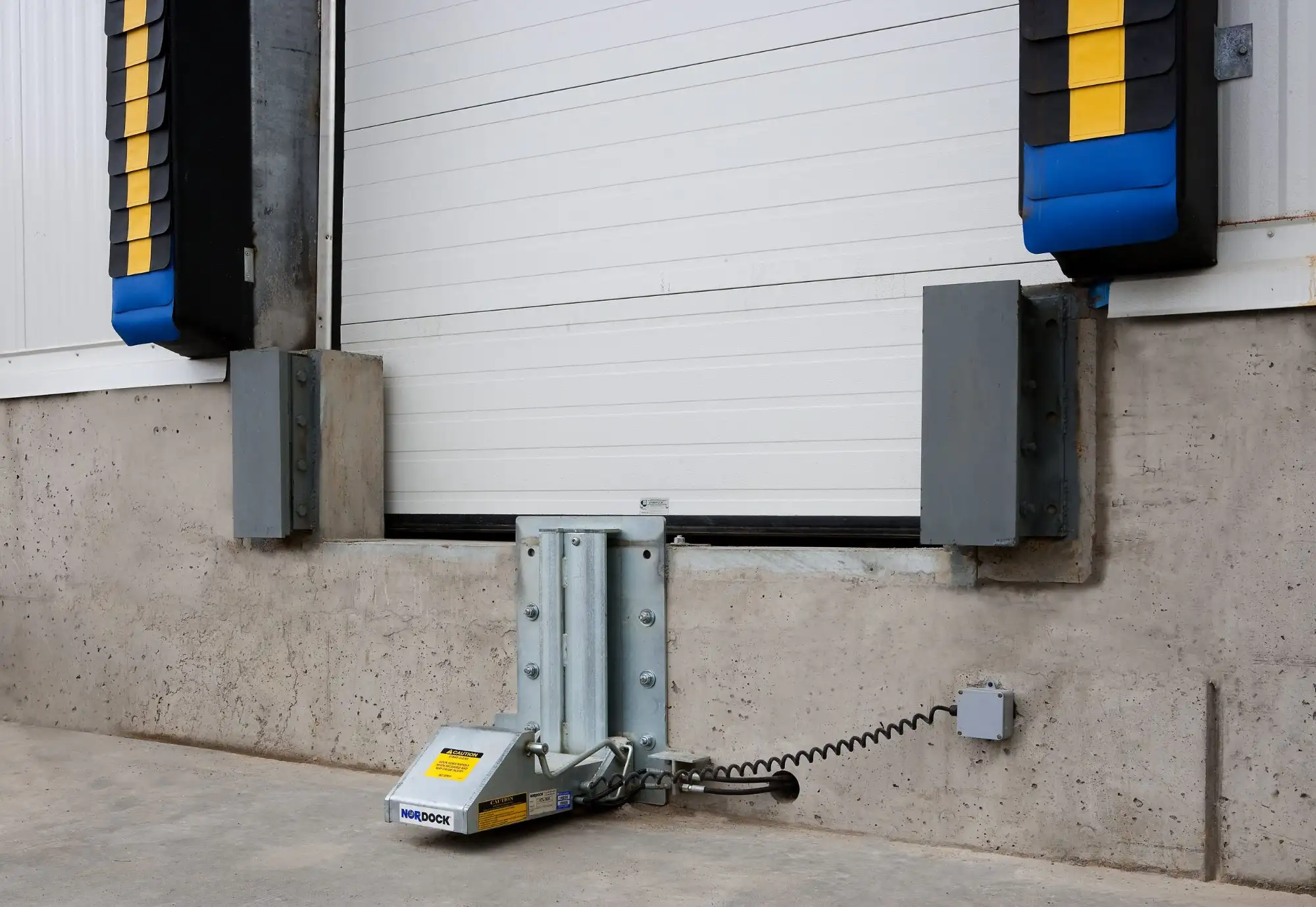
Vehicle restraints are a critical safety device that locks onto the rear-impact guard (ICC bar) of a trailer to prevent it from creeping away from the dock during loading and unloading. Trailer creep, also called trailer walk-away, occurs when repeated forklift impact forces cause the trailer to gradually separate from the dock, creating a dangerous gap that a forklift can fall into. OSHA and ANSI standards recommend vehicle restraints at every dock position where forklifts are used, and many insurance carriers now require them as a condition of coverage. We supply Blue Giant, Nordock, and Poweramp vehicle restraint systems in both surface-mount and pit-mounted configurations. Every restraint system includes traffic communication lights: green to indicate the trailer is secured and safe to enter, red to signal the driver to wait. This light communication system, coordinated with dock door interlocks in many configurations, creates a clear and reliable workflow that eliminates ambiguity between dock workers and truck drivers. Rocky Mountain Warehouse Solutions installs vehicle restraints as standalone upgrades to existing dock positions or as part of complete dock equipment fit-outs. Our technicians handle all concrete anchor work, conduit for light systems, and integration with existing dock levelers and dock doors. We also service and repair restraint systems from all major manufacturers, keeping your dock compliant and operational.
- Prevents trailer creep and walk-away accidents
- Meets OSHA 1910.178 forklift safety standards
- Visual and audible communication lights
- Works with standard ICC bar trailers
- Surface-mount and pit-mounted options
- Compatible with all major leveler brands
- Low-maintenance mechanical and hydraulic options
Technical Details & Buying Guide
Vehicle restraints are available in two primary operating mechanisms: mechanical (hook-style) and hydraulic. Mechanical restraints use a manually or power-actuated hook that engages the ICC bar as the trailer backs in. They are reliable, low-maintenance, and cost-effective for moderate-traffic docks. Hydraulic restraints use a powered mechanism for smoother, more reliable engagement and are preferred for high-volume docks where speed and consistent operation are priorities. Both types are surface-mounted to the dock face using anchor bolts into the concrete bumper block area.
ICC bar compatibility is an important specification consideration. Most trailers built after 1998 comply with FMCSA regulations requiring an ICC bar at 22–30 inches off the ground, which is the standard engagement zone for most restraint models. Older trailers, flatbeds, curtain-side trailers, and some container chassis may not have a compatible ICC bar, in which case wheel chocks must be used as a supplemental restraint. We assess your fleet mix during the quoting process to ensure the restraint model selected is compatible with the trailers your facility regularly receives.
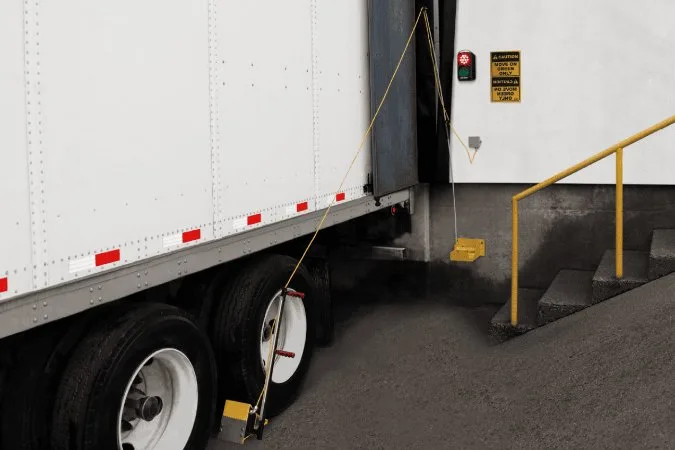
Dock communication light systems are a required component of any vehicle restraint installation. The interior light (visible to dock workers) shows green when the restraint is engaged and red when it is not. The exterior light (visible to truck drivers) shows red when the trailer is secured and the dock is active, preventing the driver from pulling away. These interlocked light systems can also be connected to the dock door opener and leveler controls to create a sequenced interlock that physically prevents the door from opening until the restraint is engaged.
Industries We Serve
Common Use Cases
Frequently Asked Questions
Are vehicle restraints required by OSHA?
OSHA 29 CFR 1910.178(k)(1) requires that trailers be secured before a powered industrial truck enters them. Vehicle restraints are the recognized best practice for trailer securement. Some facilities use wheel chocks, but restraints are preferred because they engage automatically and cannot be forgotten or improperly placed.
What is trailer creep and why is it dangerous?
Trailer creep (also called trailer walk-away) is when a trailer gradually moves away from the dock during loading or unloading due to repeated forklift impact forces. If a trailer separates from the dock while a forklift is inside, the forklift can fall into the gap, a leading cause of serious dock injuries and fatalities.
What if our trailers do not have an ICC bar?
Flatbeds, curtain-side trailers, and some container chassis may not have a compatible ICC bar for a standard hook-style restraint. In these cases, wheel chocks or pit-style restraints that engage the rear wheel are used instead. We evaluate your fleet mix and recommend the best solution for your specific trailer types.
Can vehicle restraints be integrated with dock doors and levelers?
Yes. Most restraint systems can be wired into an interlock with the dock door and leveler controls, creating a safety sequence that requires the restraint to be engaged before the door can open or the leveler can be operated. This eliminates the possibility of workers entering an unsecured trailer.
How long does vehicle restraint installation take?
A single vehicle restraint installation typically takes 2–4 hours per dock position, including anchor bolt installation, wiring for the light communication system, and testing. Installations involving conduit runs for multiple positions or interlock wiring to dock doors may take longer.
Is Vehicle Restraints Right for Your Facility?
- Available options: New, certified used, and custom-configured systems
- Installation: Professional installation and teardown by our trained crews
- Layout support: CAD-based warehouse layout assistance included
- Service area: Utah, Nevada, Idaho, Colorado, Arizona, Wyoming, and Montana
- Response time: Quote within 1 business day. Site visits available.
Available in major service areas
- Vehicle Restraints in Albuquerque, NM
- Vehicle Restraints in Billings, MT
- Vehicle Restraints in Boise, ID
- Vehicle Restraints in Boulder, CO
- Vehicle Restraints in Bozeman, MT
- Vehicle Restraints in Casper, WY
- Vehicle Restraints in Cheyenne, WY
- Vehicle Restraints in Clearfield, UT
- Vehicle Restraints in Colorado Springs, CO
- Vehicle Restraints in Davis County, UT
- Vehicle Restraints in Denver, CO
- Vehicle Restraints in Evanston, WY
- Vehicle Restraints in Flagstaff, AZ
- Vehicle Restraints in Fort Collins, CO
- Vehicle Restraints in Glendale, AZ
- Vehicle Restraints in Grand Junction, CO
- Vehicle Restraints in Henderson, NV
- Vehicle Restraints in Idaho Falls, ID
- Vehicle Restraints in Laramie, WY
- Vehicle Restraints in Las Vegas, NV
- Vehicle Restraints in Layton, UT
- Vehicle Restraints in Lehi, UT
- Vehicle Restraints in Logan, UT
- Vehicle Restraints in Meridian, ID
- Vehicle Restraints in Mesa, AZ
- Vehicle Restraints in Nampa, ID
- Vehicle Restraints in North Las Vegas, NV
- Vehicle Restraints in North Salt Lake, UT
- Vehicle Restraints in Ogden, UT
- Vehicle Restraints in Phoenix, AZ
- Vehicle Restraints in Pocatello, ID
- Vehicle Restraints in Prescott, AZ
- Vehicle Restraints in Provo, UT
- Vehicle Restraints in Pueblo, CO
- Vehicle Restraints in Reno, NV
- Vehicle Restraints in Salt Lake City, UT
- Vehicle Restraints in Scottsdale, AZ
- Vehicle Restraints in Spanish Fork, UT
- Vehicle Restraints in Sparks, NV
- Vehicle Restraints in St. George, UT
- Vehicle Restraints in Twin Falls, ID
- Vehicle Restraints in West Valley City, UT
Related Products
Helpful Warehouse Guides
Ready to upgrade your warehouse?
Our team of warehouse experts is ready to help you find the perfect solution for your facility. Contact us today for a free consultation and layout.