Start with paperwork, not steel
Before you look at a single upright, ask the seller for the manufacturer and the series. Capacity charts are manufacturer-specific, and this is not a technicality. A beam with no documented manufacturer and series cannot be assigned a load rating you can defend, which means it cannot be safely load-labeled, which means it cannot be properly permitted or inspected either.
If the seller cannot tell you what the steel is, you are not buying discounted racking. You are buying steel of unknown capacity, and the correct price for that is scrap.
Also ask what the racking was holding, in what environment, and why it is being sold. A lot coming out of a dry-goods distribution center that outgrew its building is a very different proposition from one coming out of a cold storage facility, a chemical plant, or an operation that went under after an incident.
The four damage modes
Used racking fails in four recognizable ways, and knowing them tells you where to look:
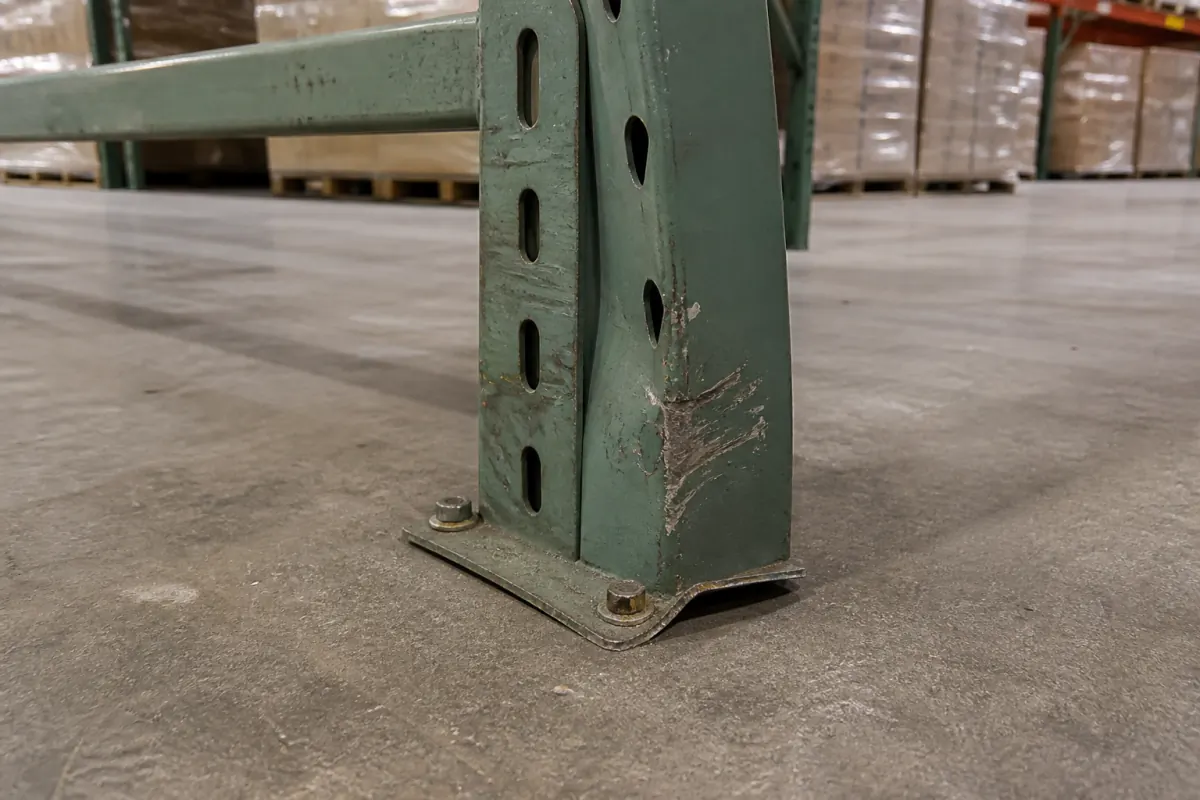
Impact damage. Lift truck contact with uprights and footplates. The most common by a wide margin, and it concentrates in the bottom four feet of aisle-facing columns.
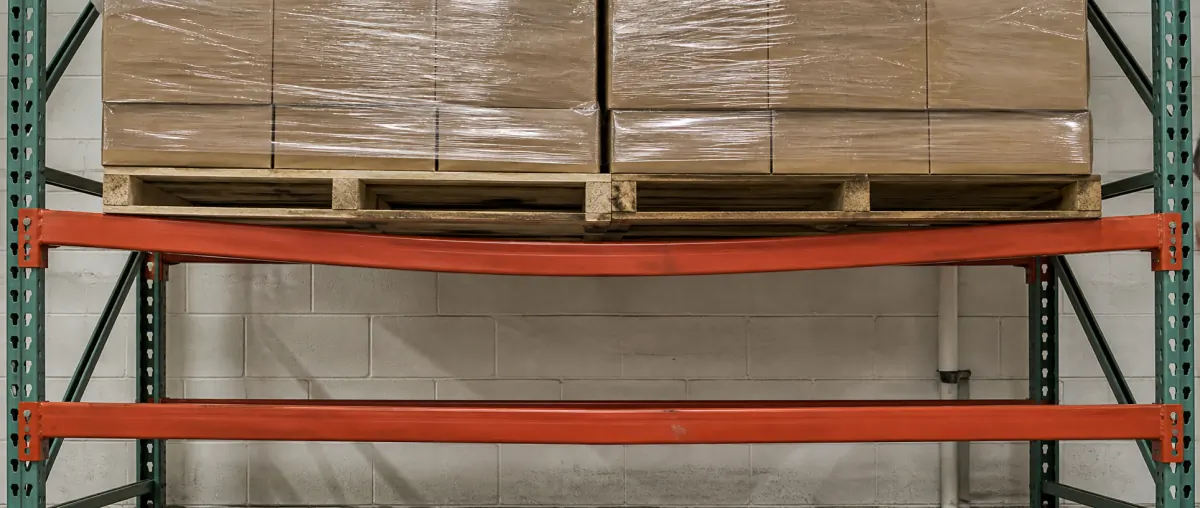
Overload deflection. Beams loaded past their rating take a permanent set. A beam that has yielded does not return to straight when unloaded.
Corrosion. Concentrates at connections and base plates, where moisture sits. Worse in cold storage, washdown, and outdoor-adjacent environments.
Fatigue and prior repair. Systems that were repaired, straightened, or re-welded in place. Straightened steel does not recover its original properties, and a field weld on a rack upright is rarely engineered.
The 12-point field checklist
Work this in order. It takes about twenty minutes for a representative sample of a lot.
1. Upright plumb. Sight down each column and measure deviation from vertical. Out-of-plumb beyond the tolerance in ANSI MH16.1 means the frame has moved under load or been struck.
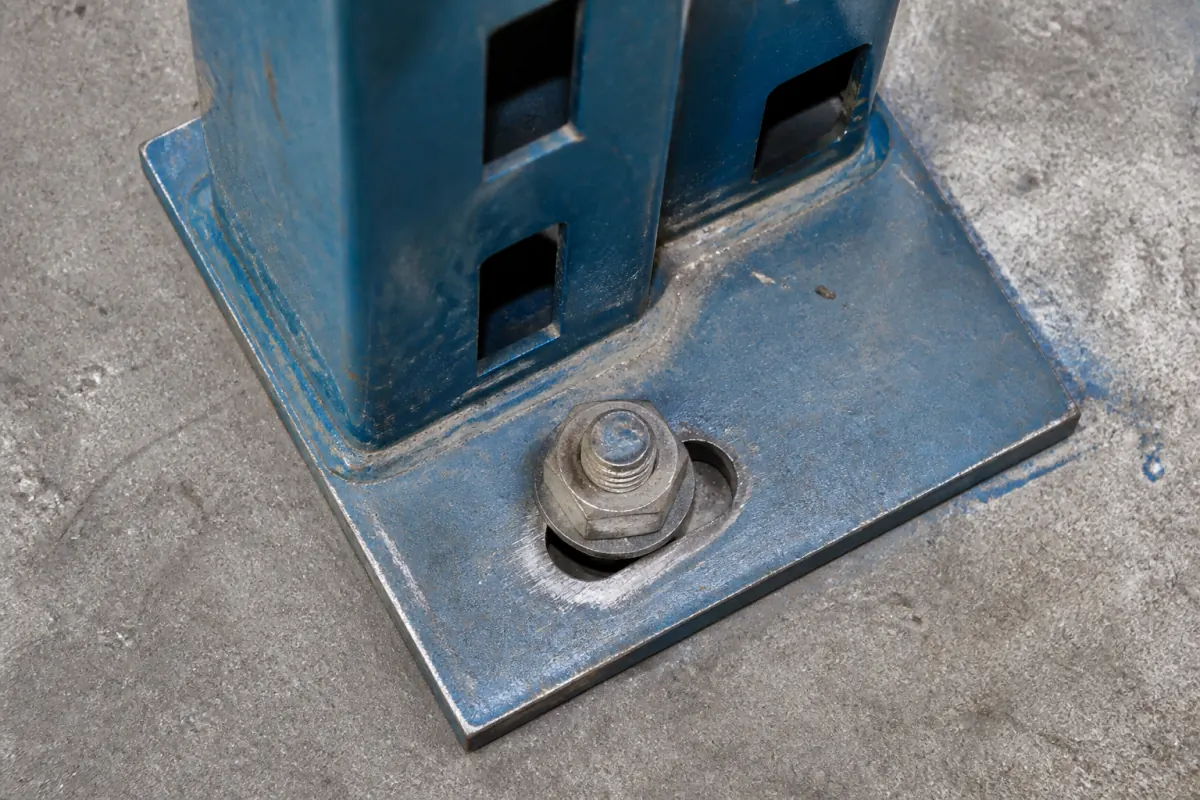
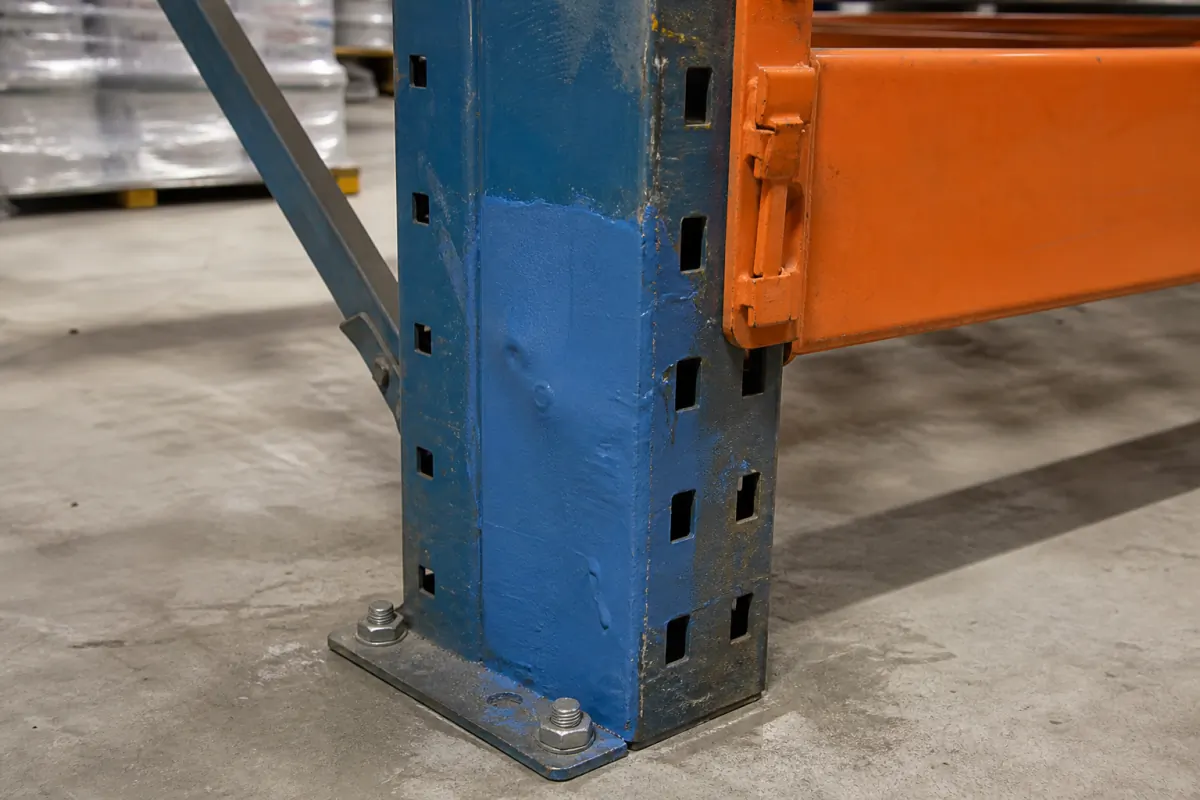
2. Footplates. Look for bending, curling, or deformation. A footplate that is no longer flat is not transferring load into the slab correctly.
3. Anchor holes. Elongated or ovalled holes mean the system has moved against its anchors. That is a load-path problem, not a cosmetic one.
4. Base welds. Check the weld between column and footplate for cracking. This is the single most consequential weld on the frame.
5. Brace connections. Inspect welds and bolted connections between columns and horizontal or diagonal bracing. Cracks or missing braces change the column’s effective unbraced length and its capacity.
6. Column straightness. Look for bowing, denting, or twisting along the column, not just at the base. Damage above the first beam level is easy to miss and just as serious.
7. Beam deflection. Look along each beam unloaded. Permanent set means the beam has yielded and should be rejected regardless of price.
8. Connector lugs. Check for spreading, deformation, or cracking where the beam connector engages the upright. Spread lugs are a disengagement risk.
9. Safety pins or clips. Confirm they are present and correct for the connection type. Missing pins are cheap to fix but tell you how the system was maintained.
10. Corrosion at connections and base plates. Surface rust on a column face is usually cosmetic. Corrosion at a weld, a connection, or a base plate is not.
11. Paint and repaint. Fresh paint on used racking is worth questioning rather than admiring. Repainting is the most common way impact damage and corrosion get sold as serviceable steel. Ask when and why it was painted.
12. Manufacturer consistency across the lot. Confirm the uprights and beams are actually from the same manufacturer and series throughout, not assembled from several sources.
Measuring out-of-plumb and deflection in the field
You do not need specialist equipment. A four-foot level, a plumb bob or laser, and a tape will resolve most questions.
For plumb, measure the horizontal offset from vertical over a known height and express it as a ratio. ANSI MH16.1 gives installation tolerances for out-of-plumb, and a used frame that already exceeds them will not come back into tolerance simply by being reinstalled.
For beam deflection, unload the beam, sight along its length, and measure any residual sag at midspan against a taut line. Deflection under load is normal and expected. Deflection that persists after unloading is permanent set, and that beam is finished.
Why mixed manufacturers matter more than people think
The teardrop hole pattern is close to a North American standard, and this creates a persistent and expensive misunderstanding: because a beam from one manufacturer will physically engage an upright from another, buyers assume the combination is engineered.
It is not. Beams and uprights are designed, tested, and rated as systems. The connector geometry, the lug engagement depth, the column’s hole reinforcement, and the load path are all specific to a manufacturer’s design. Mixing invalidates the capacity ratings you would otherwise rely on for load labeling, permitting, and inspection.
If a mixed lot is unavoidable, the system has to be engineered around the lowest documented rating in the assembly, not an average and certainly not the highest. That usually erases the savings that made the lot attractive.
What is never worth buying used
- Beams with permanent deflection. No repair restores the rating.
- Uprights with prior straightening. Straightened steel does not recover its properties.
- Anything with field weld repair that was not engineered and documented.
- Components with no identifiable manufacturer or series.
- Wire decking with bent or missing support channels, which is cheap enough new that used rarely justifies the risk.
- Anchors. Always new, always specified to the slab.
When to bring in a professional
Get an independent inspection when the lot is large enough that a mistake is expensive, when the racking is being bought in place and you are inheriting an installation rather than components, when the manufacturer cannot be identified from markings, or when you are buying into a configuration you have not run before.
We inspect used racking on site across Utah whether or not we are the ones selling it, and we will tell you when a lot is not worth buying. That is a cheaper conversation than the alternative.
The costs that outlive the discount
A sound used lot is genuinely good value. The reason to inspect carefully is that the failure cases are not proportional: a bad lot does not cost you a little more than a good one, it costs you more than buying new.
Freight on racking is high relative to its value, so a lot that turns out to be unusable has already cost you the shipping. Mismatched components mean buying replacements at retail. Missing capacity documentation means the system cannot be labeled or permitted. And the engineering, anchors, and permit work are identical whether the steel is new or used, so those costs do not scale down with the discount.
Our used pallet racking page covers what we hold, how we inspect before sale, and how used compares to new once the full project is priced. The cost guide covers how to normalize two quotes onto the same basis, and the permits and seismic guide covers the documentation a Utah installation needs regardless of where the steel came from.
If you are evaluating a lot now and want a second opinion before you commit, send us the details.