The short answer
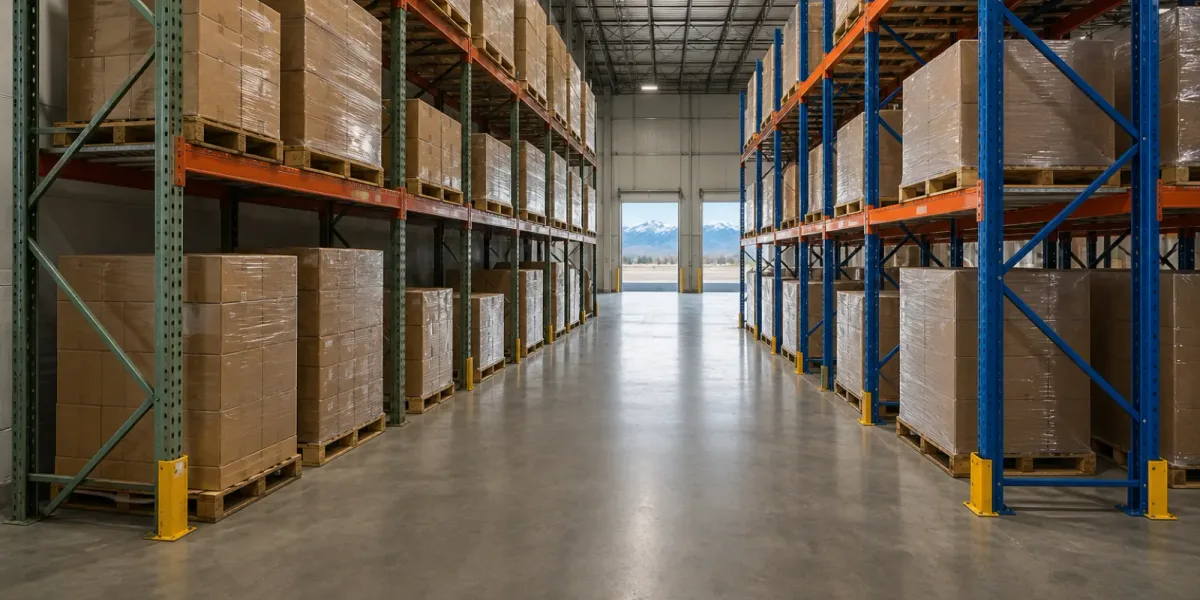
Used pallet racking typically saves 30 to 50 percent on the steel. It saves nothing on engineering, anchors, permits, installation labor, or freight — and those items are a larger share of a finished project than most buyers expect. Used wins clearly on budget and on lead time. It loses when the lot is unidentifiable, when the configuration does not match your building, or when you need components that should never be bought secondhand.
Where used racking actually comes from
This matters more than buyers realize, because the source tells you what you are getting.
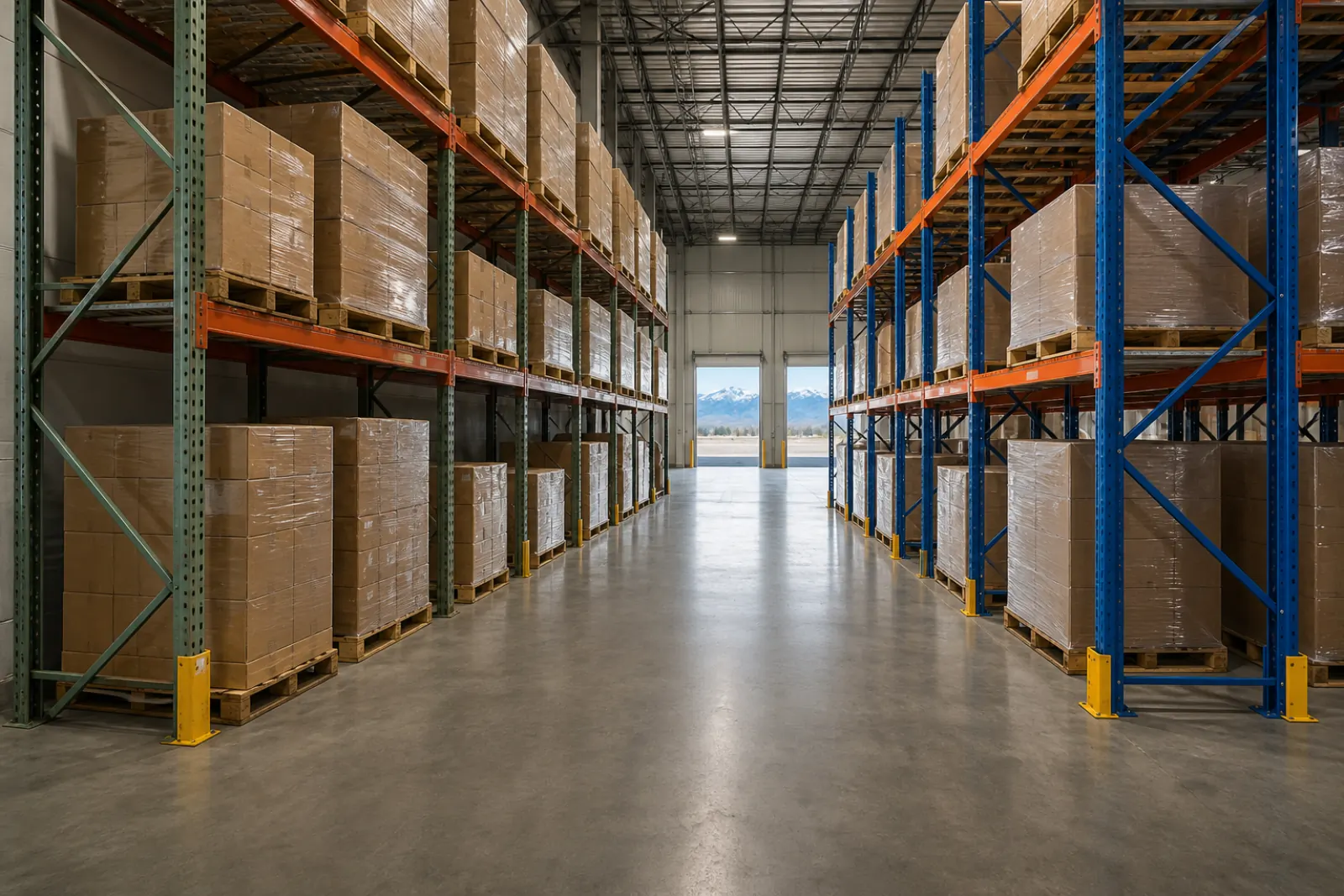
Facility closures and relocations produce the best lots: a single manufacturer, a single series, uniform heights, and usually a known service history. This is where we source most of our own inventory.
Reconfigurations produce partial lots. A company going from selective to push-back sells off beams and uprights that may be perfectly sound but incomplete as a system.
Broker inventory is the most variable. It has often changed hands more than once, and the further a lot travels from its original building, the less anyone can tell you about what it held or what hit it.
We buy racking directly out of buildings we tear down, which is why we can usually say what a lot stored and how it was used. If you are on the other side of that transaction and have racking to sell or remove, that is a service worth knowing about — a teardown is frequently cheaper than paying to have steel scrapped.
How a lot gets graded
Not all used racking is one category, and price should reflect that.
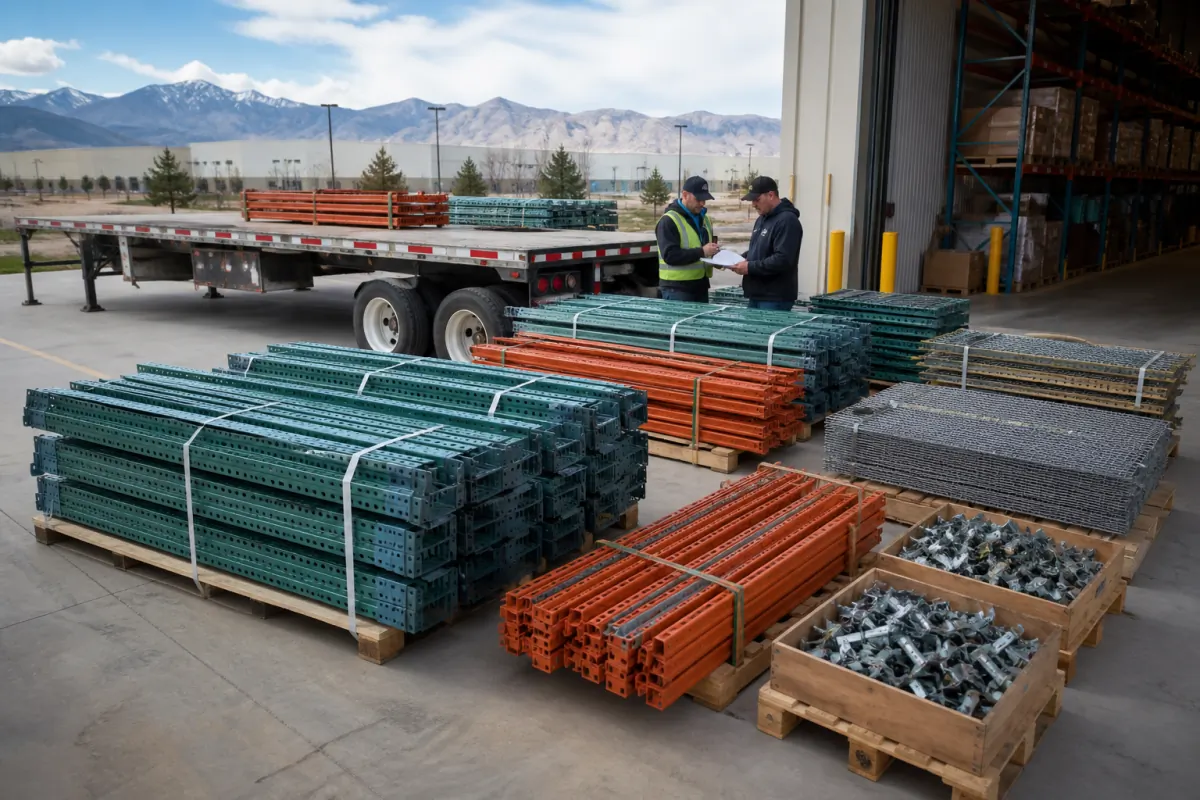
Grade A is structurally sound with cosmetic wear only. Straight columns, undamaged footplates, no permanent beam deflection, documented manufacturer and series. This is what belongs in a load-bearing production system.
Grade B shows minor impact damage within repairable tolerance, or mixed cosmetic condition. Usable with engineered repair or in lower-demand positions, and priced accordingly.
Reject is anything with permanent beam set, prior straightening, undocumented field welds, or no identifiable manufacturer. We scrap this rather than sell it, and you should walk away from anyone who does not.
The single most important grading question is not visual. It is whether the manufacturer and series are documented, because capacity charts are manufacturer-specific. A beam with no traceable rating cannot be load-labeled, which means it cannot be permitted or inspected either.
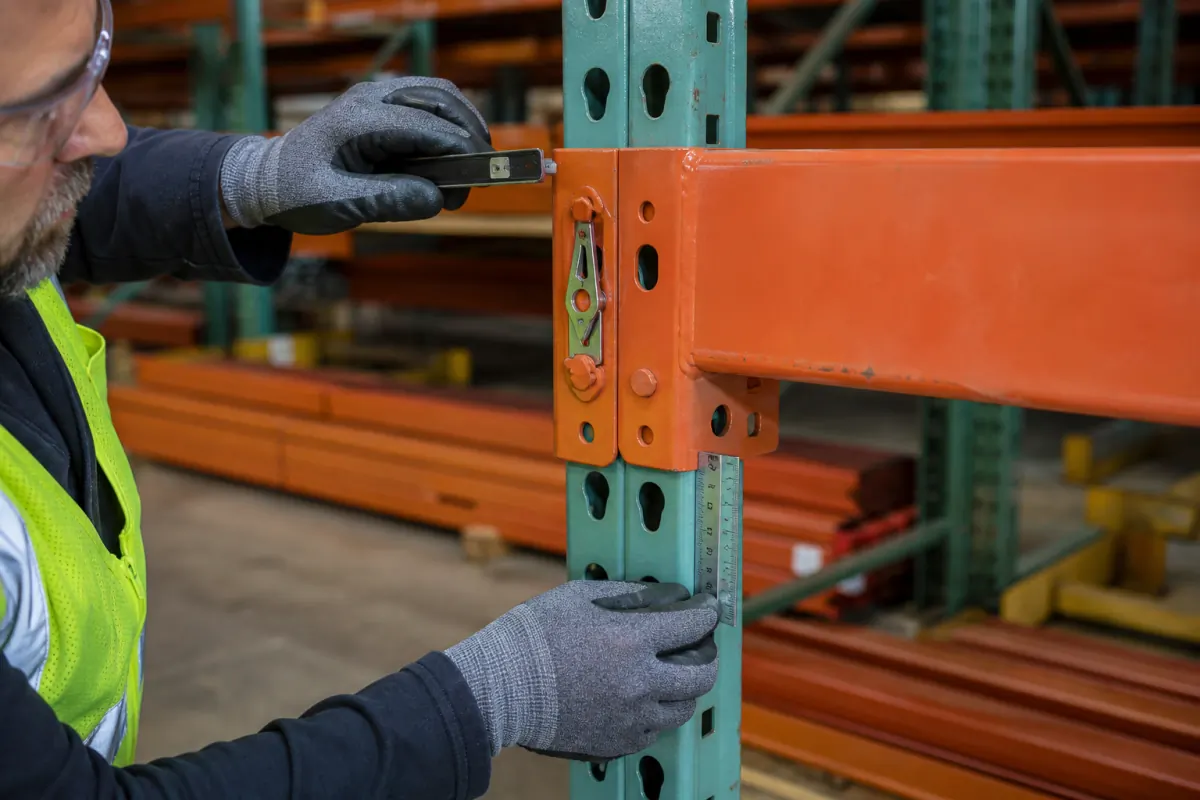
For the full field checklist — the four damage modes, how to measure out-of-plumb and permanent set, and what is never worth buying used — see how to inspect used pallet racking before you buy.
The costs that do not scale down
Here is where the 30 to 50 percent headline gets complicated. These line items cost the same whether the steel is new or used:
- Engineering and stamped drawings
- Anchor calculations, and the anchors themselves, which should always be new
- Permit fees and review time
- Installation labor
- Load capacity labeling and as-built documentation
- Rack protection, guards and end-of-aisle protectors
And two that can cost more on a used project: freight, because racking is bulky relative to its value and a cheap lot two states away frequently is not cheap once it arrives; and component reconciliation, when a lot turns out to be short on beams or missing row spacers and you are buying the balance at retail.
Run the comparison on installed cost per pallet position, not on material price. Our cost guide covers how to normalize two quotes that are structured differently.
Lead time is often the deciding factor
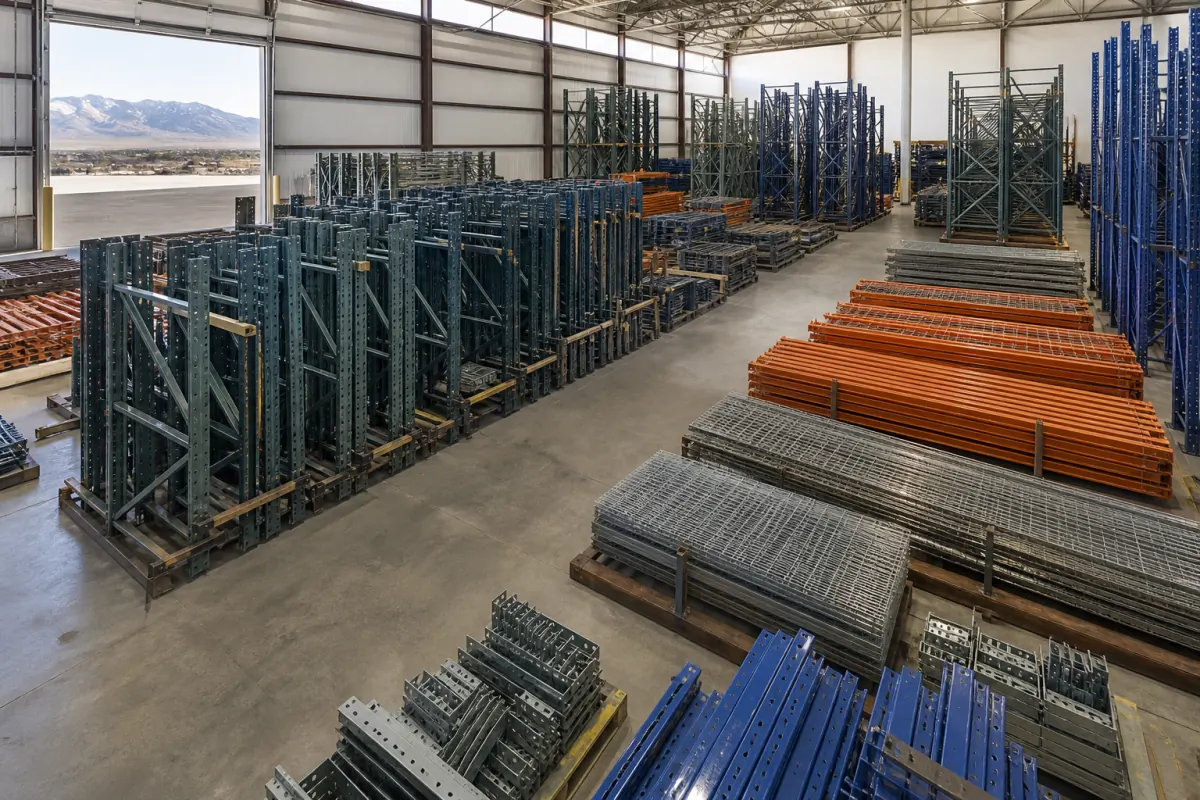
This is the argument that settles more decisions than price does. New racking commonly runs multi-week lead times, longer for non-standard configurations or during steel market volatility. Used inventory that is already on the ground can ship this week.
When a lease start date, a peak season, a production launch, or a customer contract is driving the schedule, availability outranks unit cost. We have had customers choose used purely on timing and treat the savings as incidental.
When new is the better call
Be honest about the cases where used does not serve you:
- You need a specific configuration — unusual bay widths, particular beam capacities, or heights that a used lot does not cover. Forcing a building to fit available steel wastes more in lost positions than the discount returns.
- You need a large uniform system. Above a certain size, matched used inventory gets hard to source, and a mixed-manufacturer system is not a system.
- The application is demanding. Cold storage, seismic-critical installs at height, and heavy-duty cycling favor new steel with a full warranty and current documentation.
- You are buying components that should be new anyway — anchors always, wire decking usually, and any part with visible repair.
What to ask before you commit
- What is the manufacturer and series, and is a capacity chart available?
- What did this racking store, and why is it being sold?
- Is the lot complete — beams, uprights, footplates, row spacers, safety pins?
- Are heights and bay widths uniform across the lot?
- Has it been repainted, and if so, when and why?
- What is the delivered price, and from where?
- Who provides the engineered drawings and anchor calculations?
Question five catches more problems than the rest combined. Fresh paint on used racking is worth asking about rather than admiring.
Getting a real comparison
Send us your pallet count, pallet dimensions and loaded weight, and building dimensions, and we will price the same layout both ways — new and from current used inventory — with installed cost per pallet position shown for each. That is the only comparison that answers the question.
Request a quote, or see what we currently hold on the used pallet racking page.