The short answer
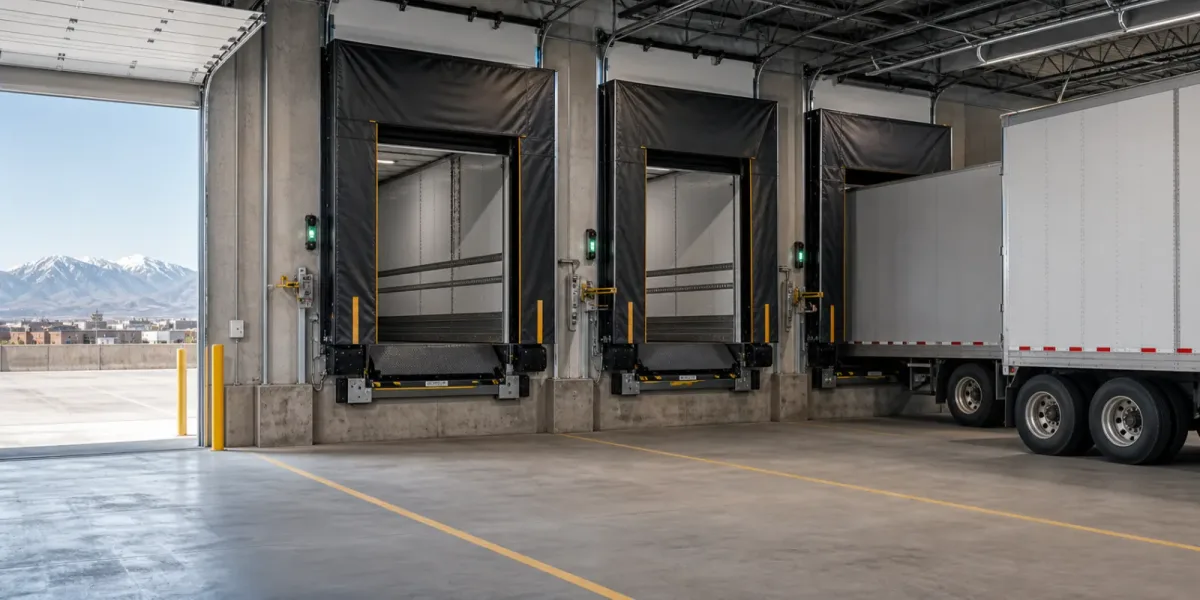
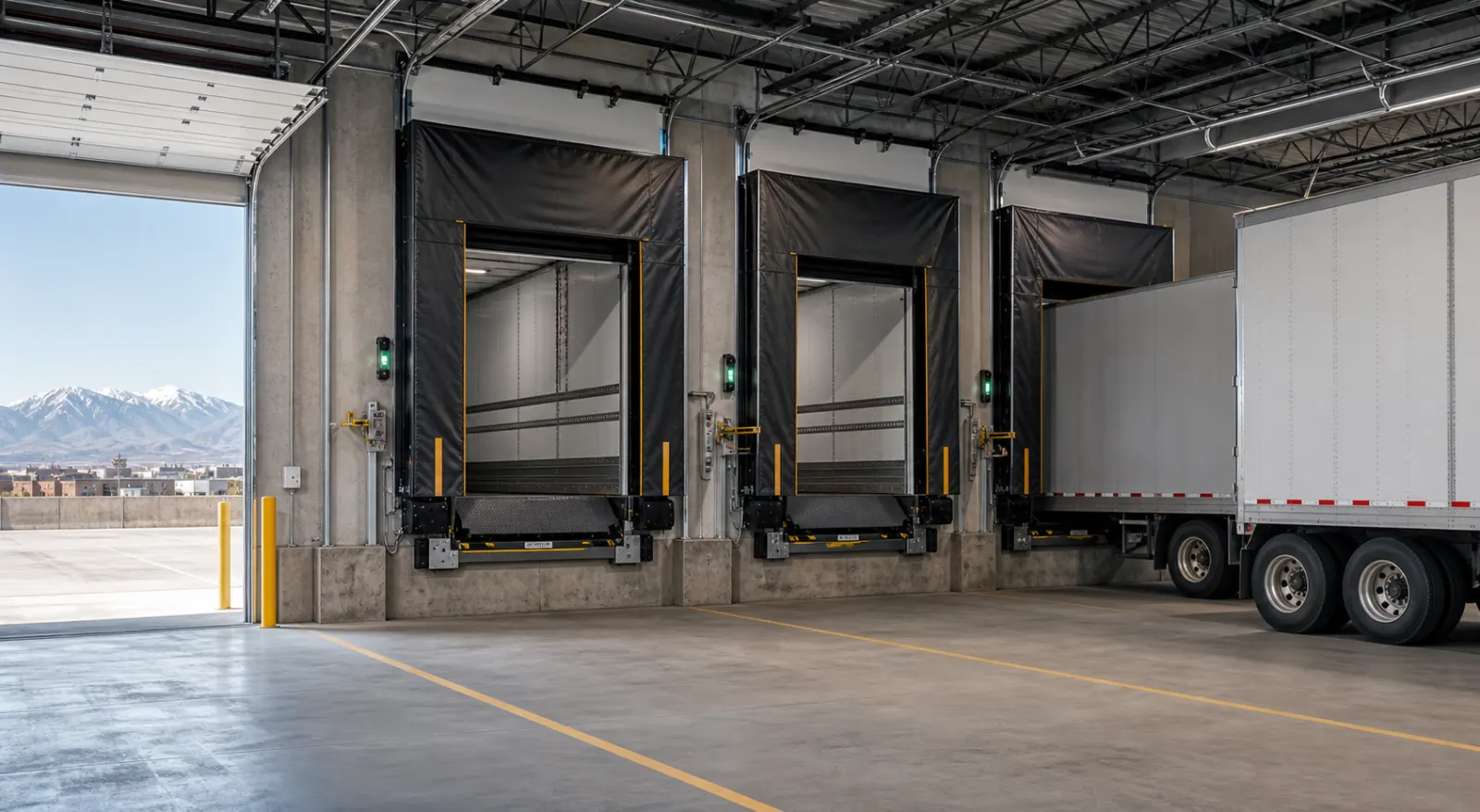
A loading dock is a system of five components — leveler, seal or shelter, restraint, door, and bumpers — and the weakest one sets the throughput of the whole position. A high-capacity leveler behind a worn seal leaks conditioned air all winter; a tight dock without a restraint leaves the most dangerous dock event unaddressed. Specify against three inputs: daily trailer count, trailer mix, and climate. Everything below follows from those.
Levelers: cycle count decides, not door size
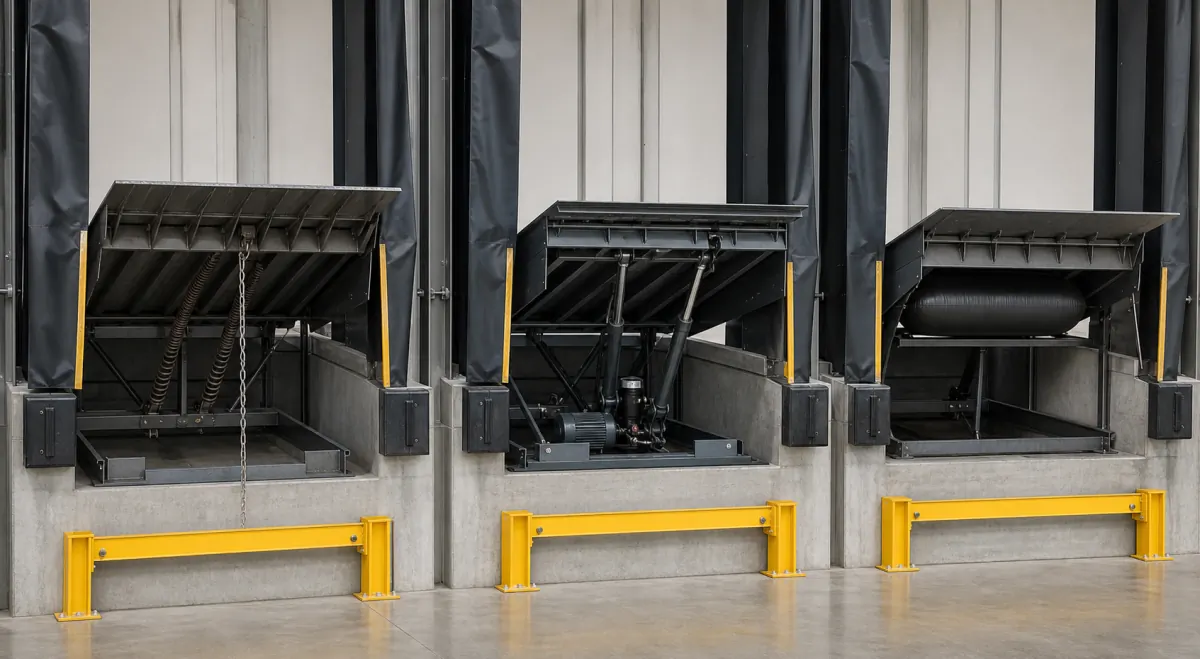
The leveler bridges the gap between dock floor and trailer bed, and the three drive types fail differently.
Mechanical levelers are spring-operated with a pull chain. Lowest cost, no power required — and springs fatigue with cycles. At a few trailers a day they last for years; at fulfillment duty they become a repair schedule.
Hydraulic levelers run on a cylinder and power unit. They cost more and tolerate high daily cycle counts without the fatigue and manual effort that kill mechanical units early. Above roughly a dozen trailers a day per position, hydraulic usually pays for itself in avoided service calls.
Air-powered levelers lift on an inflatable bag — fewer moving parts than mechanical, less cost than hydraulic, a legitimate middle path for moderate duty.
Two sizing rules that get shortcut: capacity must cover the loaded forklift plus its load crossing the plate — not the pallet weight alone — and the service range must reach both the highest and lowest trailer beds you actually receive. A leveler that cannot reach a low bed gets operated at an unsafe grade rather than not at all. If your fleet has widened as you added e-commerce or LTL freight, re-measure; a unit sized correctly at installation may no longer cover what backs in today.
Seals or shelters: a climate and fleet decision
Compression seals are foam pads the trailer presses into, giving the tightest thermal envelope available. They suit refrigerated freight and cold climates — and they wear with every docking, and they assume a consistent trailer size.
Shelters frame the opening with fabric curtains that wipe the trailer’s sides and top, accommodating a wide range of trailer dimensions with far less contact wear, and leaving the full door opening accessible.
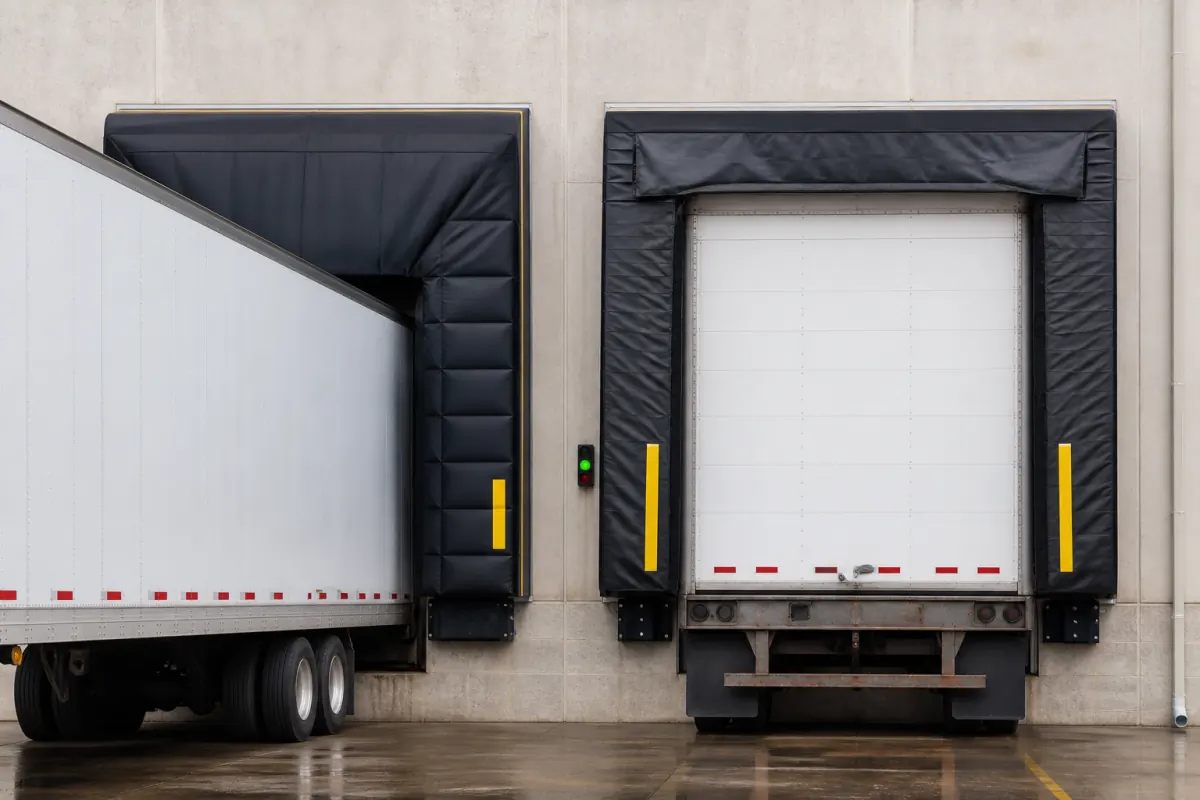
The practical split: seals where the thermal envelope is the priority and the fleet is uniform (cold storage, food distribution), shelters where trailer variety is the reality. In a cold-winter market a worn seal is a measurable heating cost across the season, not a cosmetic issue — which is why we put seal condition on every pre-winter dock inspection.
Restraints: the highest-consequence component
Trailer creep and early departure — a truck pulling away while a forklift is inside — are the highest-consequence events at any dock. Wheel chocks depend on a person placing them correctly on every trailer, every time. A vehicle restraint locks onto the trailer’s rear impact guard mechanically and holds until released.
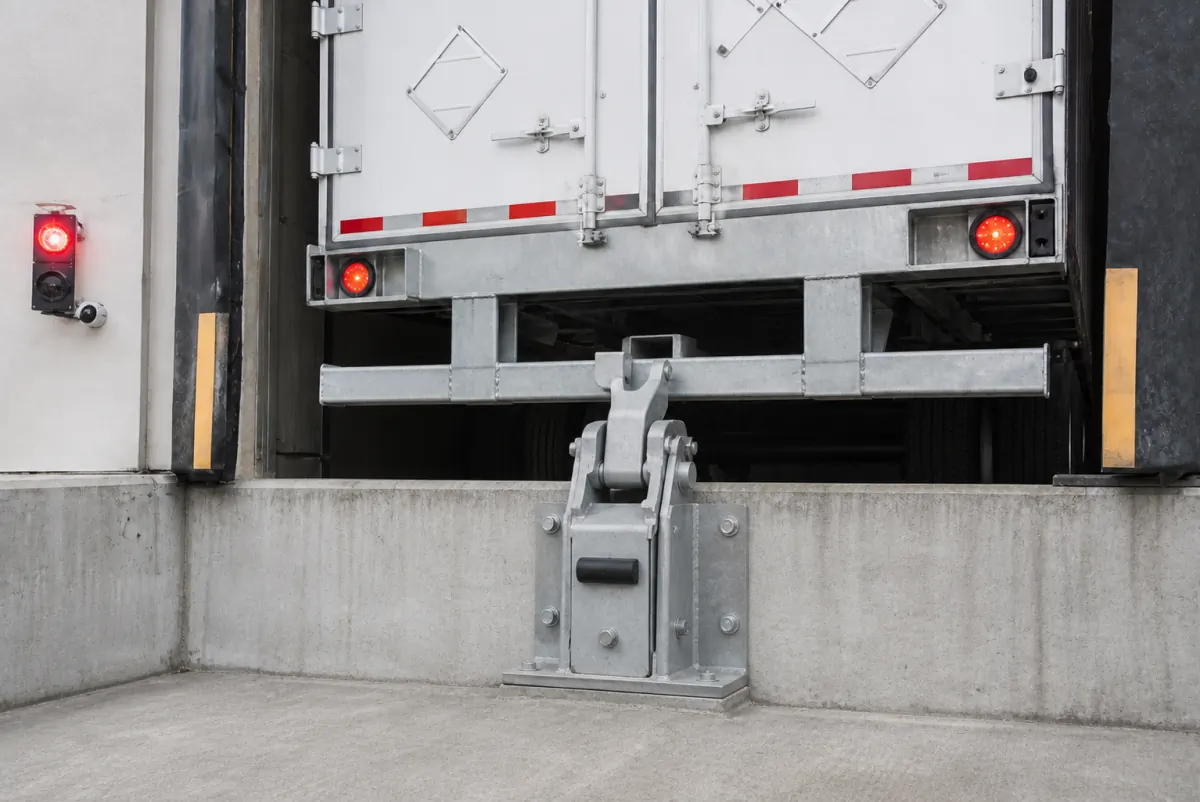
The communication lights are half the system: red outside tells the driver the trailer is locked, green inside tells the crew it is safe to enter. Interlocking the restraint with the leveler and door — so the leveler will not deploy until the restraint engages — closes the loop.
Doors, bumpers, and the parts nobody budgets
Dock bumpers absorb the impact of every docking trailer and are the cheapest component to replace and the most expensive to ignore, since a worn bumper transfers impact into the building structure. Dock lights, guard rails at open pits, and high-speed doors where the dock opens into conditioned or high-traffic space round out the position. None of these is glamorous; all of them show up in the downtime math when they fail.
Sizing a position, in order
- Daily trailer count per position — this picks the leveler drive
- Trailer mix — bed height range and width variety pick the service range and seal-vs-shelter
- Climate — thermal envelope requirement and winter service planning
- What crosses the plate — loaded forklift weight sets capacity
- Restraint and light interlocks — specified together, not added later
- Maintenance cadence — twice yearly minimum, quarterly at high cycle counts, plus a pre-winter inspection in October
For what fails on each leveler type and the repair-or-replace decision, see the dock equipment maintenance guide. For supply and installation across Utah and the Mountain West, start at the dock equipment page or request a quote — send your trailer count, fleet mix, and door dimensions and we will spec the full position.