Vehicle Restraints in Meridian, ID
Meridian's food processing plants need restraint-and-door interlocks that hold the cold-chain seal through every load cycle without relying on a worker remembering to check the light. The sequence should make it physically impossible to open the door before the trailer engages. Construction supply operations along I-84 more often deal with flatbed deliveries needing supplemental wheel chocks instead.
Vehicle Restraints Solutions for Meridian Warehouses
Meridian is the fastest-growing city in Idaho and a major industrial hub in the Treasure Valley. The city's industrial parks along I-84 and Ten Mile Road host distribution centers, food processing plants, and light manufacturing operations serving the broader Boise metro.
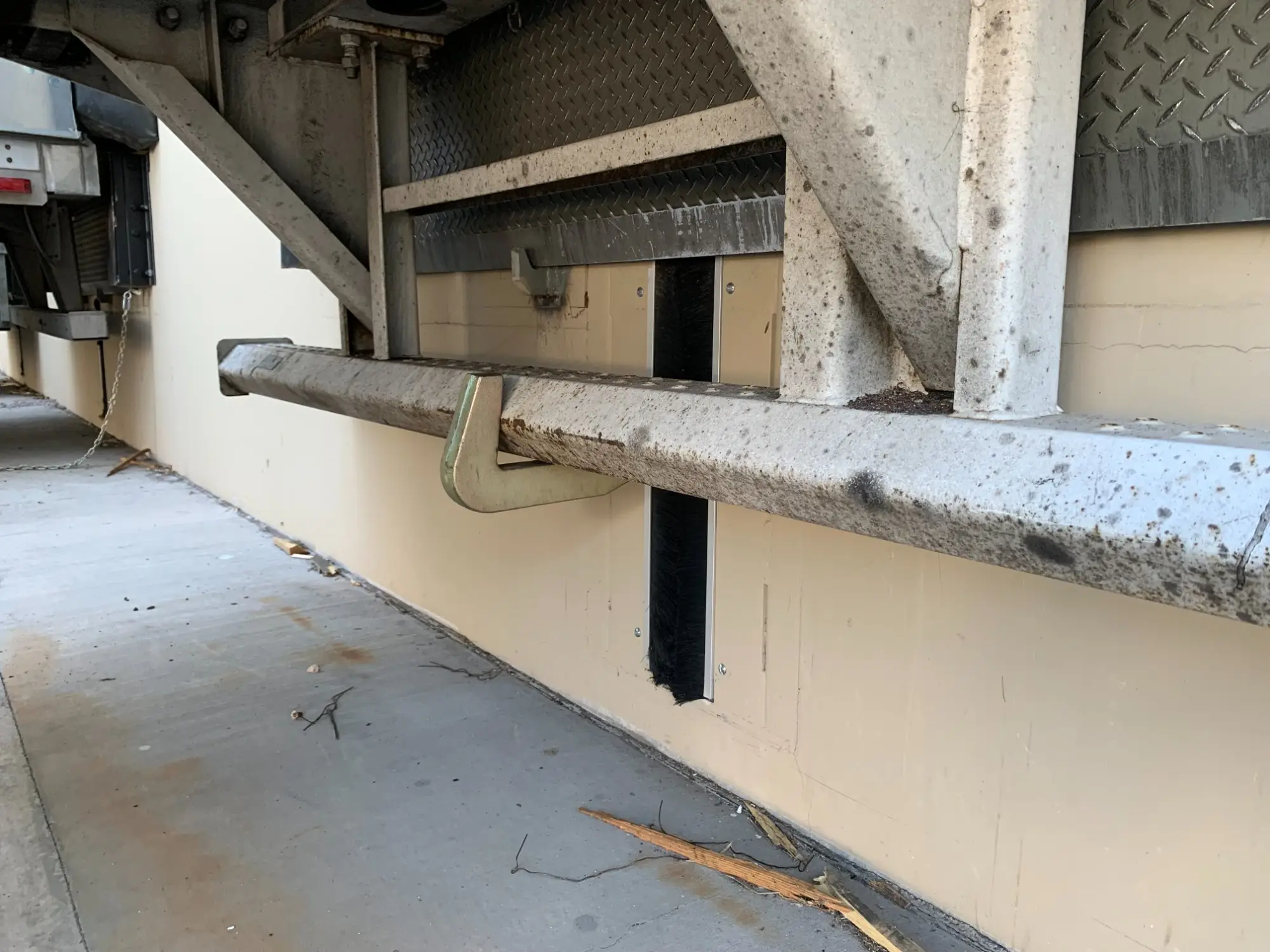
Vehicle restraints are a critical safety device that locks onto the rear-impact guard (ICC bar) of a trailer to prevent it from creeping away from the dock during loading and unloading. Trailer creep, also called trailer walk-away, occurs when repeated forklift impact forces cause the trailer to gradually separate from the dock, creating a dangerous gap that a forklift can fall into. OSHA and ANSI standards recommend vehicle restraints at every dock position where forklifts are used, and many insurance carriers now require them as a condition of coverage.
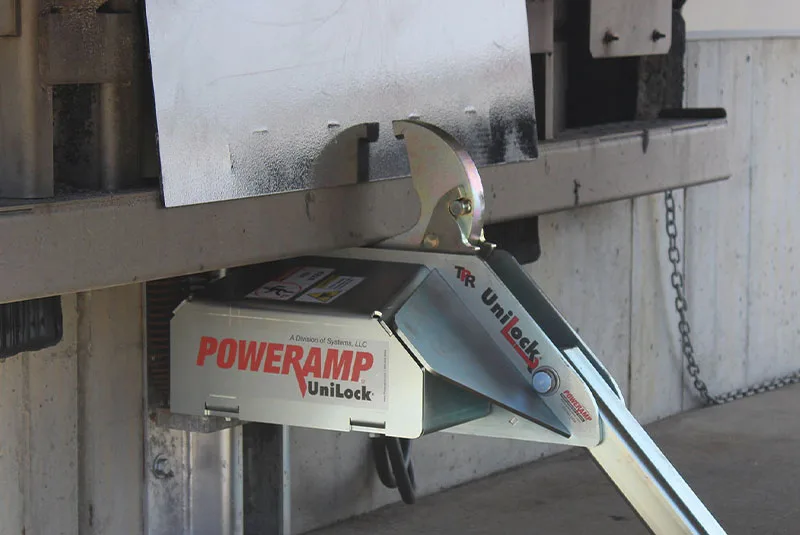
We supply Blue Giant, Nordock, and Poweramp vehicle restraint systems in both surface-mount and pit-mounted configurations. Every restraint system includes traffic communication lights: green to indicate the trailer is secured and safe to enter, red to signal the driver to wait. This light communication system, coordinated with dock door interlocks in many configurations, creates a clear and reliable workflow that eliminates ambiguity between dock workers and truck drivers.
Rocky Mountain Warehouse Solutions installs vehicle restraints as standalone upgrades to existing dock positions or as part of complete dock equipment fit-outs. Our technicians handle all concrete anchor work, conduit for light systems, and integration with existing dock levelers and dock doors. We also service and repair restraint systems from all major manufacturers, keeping your dock compliant and operational.
Codes, Compliance, and Enforcement in ID
Idaho's seismic picture is uneven, and it drives real differences in racking design between the population centers we serve. Eastern and central Idaho sit within the Intermountain Seismic Belt, the same broad zone that produced the 1983 Borah Peak earthquake, and Idaho Falls and Pocatello carry meaningfully more seismic design load than most buyers expect. The Treasure Valley around Boise, Meridian, and Nampa is more moderate. Because the hazard varies across the state rather than sitting at a single statewide level, we size base plates, anchor patterns, and bracing from the specific site rather than applying one Idaho specification everywhere.
Building stock is the other Idaho variable. The Treasure Valley has grown fast enough that we routinely work in both new tilt-up construction with clean slabs and generous clear height, and in older converted agricultural and light-industrial buildings with lower ceilings, irregular column bays, and slabs that were never poured with rack anchoring in mind. Those two situations produce different designs for the same product, and the slab assessment matters before anything is ordered. Permitting is handled by local jurisdictions such as Ada and Canyon counties and the individual cities, with thresholds and submittal expectations set locally, so we confirm requirements with the authority having jurisdiction during layout.
Idaho does not operate its own OSHA-approved State Plan, so workplace safety is enforced directly by federal OSHA. We design every Idaho installation to federal OSHA expectations and to RMI ANSI MH16.1, with engineered load capacity labeling and post-installation inspection documentation. The state's food processing sector is the dominant influence on how systems get specified here: washdown environments, cold and frozen storage, sanitation protocols that rule out certain finishes and decking, and seasonal harvest peaks that make installation timing genuinely constrained rather than merely inconvenient.
Technical Specifications & Buying Guide
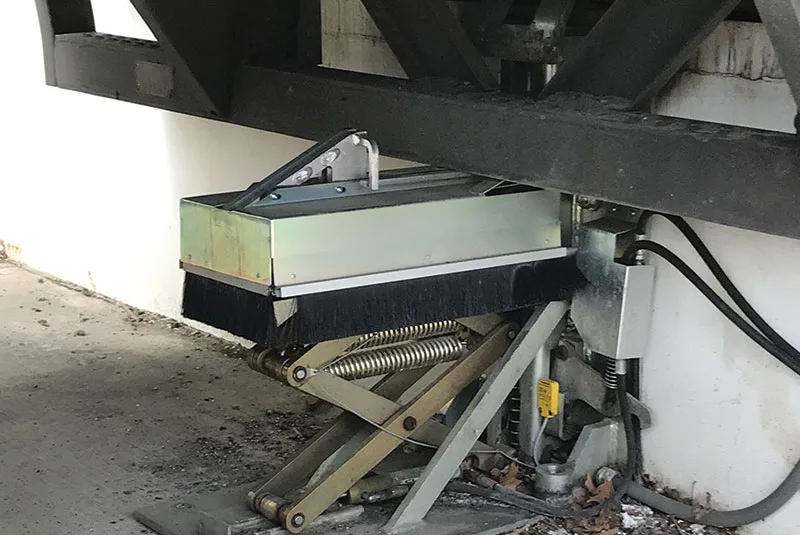
Vehicle restraints are available in two primary operating mechanisms: mechanical (hook-style) and hydraulic. Mechanical restraints use a manually or power-actuated hook that engages the ICC bar as the trailer backs in. They are reliable, low-maintenance, and cost-effective for moderate-traffic docks. Hydraulic restraints use a powered mechanism for smoother, more reliable engagement and are preferred for high-volume docks where speed and consistent operation are priorities. Both types are surface-mounted to the dock face using anchor bolts into the concrete bumper block area.
ICC bar compatibility is an important specification consideration. Most trailers built after 1998 comply with FMCSA regulations requiring an ICC bar at 22–30 inches off the ground, which is the standard engagement zone for most restraint models. Older trailers, flatbeds, curtain-side trailers, and some container chassis may not have a compatible ICC bar, in which case wheel chocks must be used as a supplemental restraint. We assess your fleet mix during the quoting process to ensure the restraint model selected is compatible with the trailers your facility regularly receives.
Dock communication light systems are a required component of any vehicle restraint installation. The interior light (visible to dock workers) shows green when the restraint is engaged and red when it is not. The exterior light (visible to truck drivers) shows red when the trailer is secured and the dock is active, preventing the driver from pulling away. These interlocked light systems can also be connected to the dock door opener and leveler controls to create a sequenced interlock that physically prevents the door from opening until the restraint is engaged.
Key Benefits of Vehicle Restraints in Meridian
- Prevents trailer creep and walk-away accidents
- Meets OSHA 1910.178 forklift safety standards
- Visual and audible communication lights
- Works with standard ICC bar trailers
- Surface-mount and pit-mounted options
- Compatible with all major leveler brands
- Low-maintenance mechanical and hydraulic options
Industries We Serve in Meridian
Distribution and logistics
Vehicle Restraints systems tailored for the operational requirements of distribution and logistics facilities in Meridian.
Food and beverage
Vehicle Restraints systems tailored for the operational requirements of food and beverage facilities in Meridian.
Manufacturing
Vehicle Restraints systems tailored for the operational requirements of manufacturing facilities in Meridian.
E-commerce fulfillment
Vehicle Restraints systems tailored for the operational requirements of e-commerce fulfillment facilities in Meridian.
Third-party logistics
Vehicle Restraints systems tailored for the operational requirements of third-party logistics facilities in Meridian.
Retail distribution
Vehicle Restraints systems tailored for the operational requirements of retail distribution facilities in Meridian.
Common Use Cases in Meridian
All active forklift dock positions
Meridian warehouses relying on Vehicle Restraints for all active forklift dock positions benefit from our engineered layouts and expert installation.
High-volume shipping docks
Rocky Mountain Warehouse Solutions specializes in Vehicle Restraints for high-volume shipping docks, serving facilities across Meridian and the Mountain West.
Safety compliance upgrades
From layout planning to final installation, we deliver Vehicle Restraints optimized for safety compliance upgrades in Meridian.
New dock construction
We configure Vehicle Restraints systems that solve real new dock construction challenges for Meridian operations of every size.
Dock modernization projects
Our Meridian installations for dock modernization projects are engineered to perform under real operational conditions, not just spec sheets.
Why Meridian Businesses Choose Rocky Mountain Warehouse Solutions
We understand Mountain West warehouse conditions — seismic zones, temperature swings, high-clearance facilities — and design every Vehicle Restraints system in Meridian accordingly.
As a Mountain West-based company, we serve Meridian with the same speed and attention we give our Utah customers. Local support matters, especially when projects move fast.
Whether your Meridian operation runs one shift or three, Vehicle Restraints systems from Rocky Mountain Warehouse Solutions are built to handle the throughput demands of active warehouse environments.
Our Meridian project timeline is built around your schedule. We phase installations when needed to keep your operation running, and our crews work efficiently to minimize disruption.
Frequently Asked Questions About Vehicle Restraints in Meridian
Are vehicle restraints required by OSHA?
OSHA 29 CFR 1910.178(k)(1) requires that trailers be secured before a powered industrial truck enters them. Vehicle restraints are the recognized best practice for trailer securement. Some facilities use wheel chocks, but restraints are preferred because they engage automatically and cannot be forgotten or improperly placed.
Rocky Mountain Warehouse Solutions serves Meridian, ID and surrounding Ada County businesses. Contact us for local pricing and availability.
What is trailer creep and why is it dangerous?
Trailer creep (also called trailer walk-away) is when a trailer gradually moves away from the dock during loading or unloading due to repeated forklift impact forces. If a trailer separates from the dock while a forklift is inside, the forklift can fall into the gap, a leading cause of serious dock injuries and fatalities.
Rocky Mountain Warehouse Solutions serves Meridian, ID and surrounding Ada County businesses. Contact us for local pricing and availability.
What if our trailers do not have an ICC bar?
Flatbeds, curtain-side trailers, and some container chassis may not have a compatible ICC bar for a standard hook-style restraint. In these cases, wheel chocks or pit-style restraints that engage the rear wheel are used instead. We evaluate your fleet mix and recommend the best solution for your specific trailer types.
Rocky Mountain Warehouse Solutions serves Meridian, ID and surrounding Ada County businesses. Contact us for local pricing and availability.
Can vehicle restraints be integrated with dock doors and levelers?
Yes. Most restraint systems can be wired into an interlock with the dock door and leveler controls, creating a safety sequence that requires the restraint to be engaged before the door can open or the leveler can be operated. This eliminates the possibility of workers entering an unsecured trailer.
Rocky Mountain Warehouse Solutions serves Meridian, ID and surrounding Ada County businesses. Contact us for local pricing and availability.
How long does vehicle restraint installation take?
A single vehicle restraint installation typically takes 2–4 hours per dock position, including anchor bolt installation, wiring for the light communication system, and testing. Installations involving conduit runs for multiple positions or interlock wiring to dock doors may take longer.
Rocky Mountain Warehouse Solutions serves Meridian, ID and surrounding Ada County businesses. Contact us for local pricing and availability.
Is Idaho covered by federal OSHA or a state plan?
Idaho does not operate its own OSHA-approved State Plan, so workplace safety here is enforced directly by federal OSHA. We design every Idaho installation to meet federal OSHA's standards for warehouse racking and storage systems.
Get a Free Quote for Vehicle Restraints in Meridian
Rocky Mountain Warehouse Solutions makes it easy to move forward on Vehicle Restraints in Meridian. One call gets you a site visit, a layout proposal, and a detailed quote.
Related Products in Meridian
Request a Quote for Vehicle Restraints in Meridian
Our team can help you choose the right warehouse solution, plan the layout, and move your project forward.
Get a Free Quote