Modular Offices in St. George, UT
St. George's rapid growth means more businesses here are installing modular offices as a first step rather than waiting on a permitted construction timeline that would slow down a fast-scaling operation.
Modular Offices Solutions for St. George Warehouses
St. George is Utah's fastest-growing metro area and the commercial hub of Washington County. The city's rapidly expanding population and proximity to Las Vegas and the I-15 corridor are driving significant warehouse and distribution growth in southern Utah.
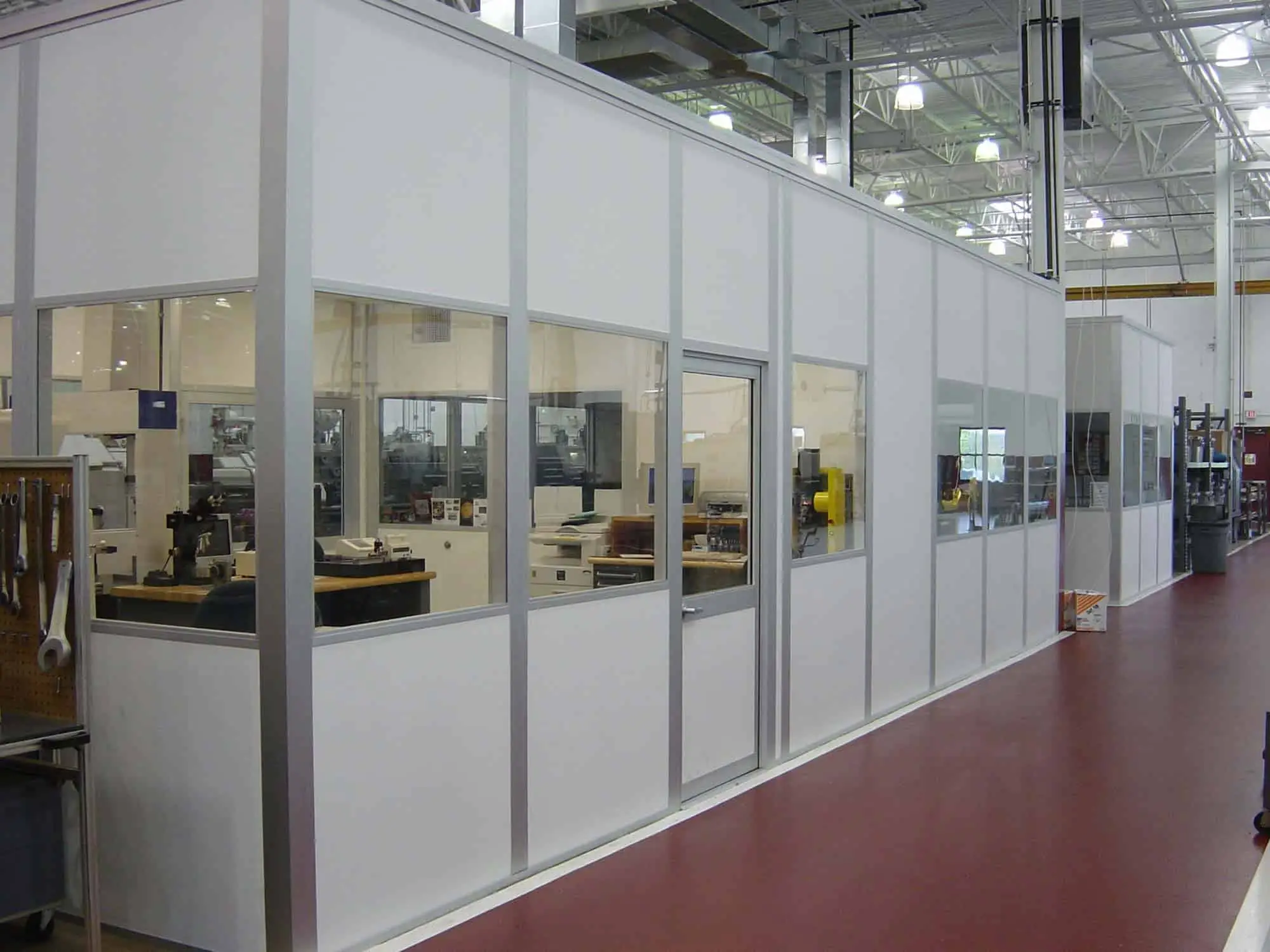
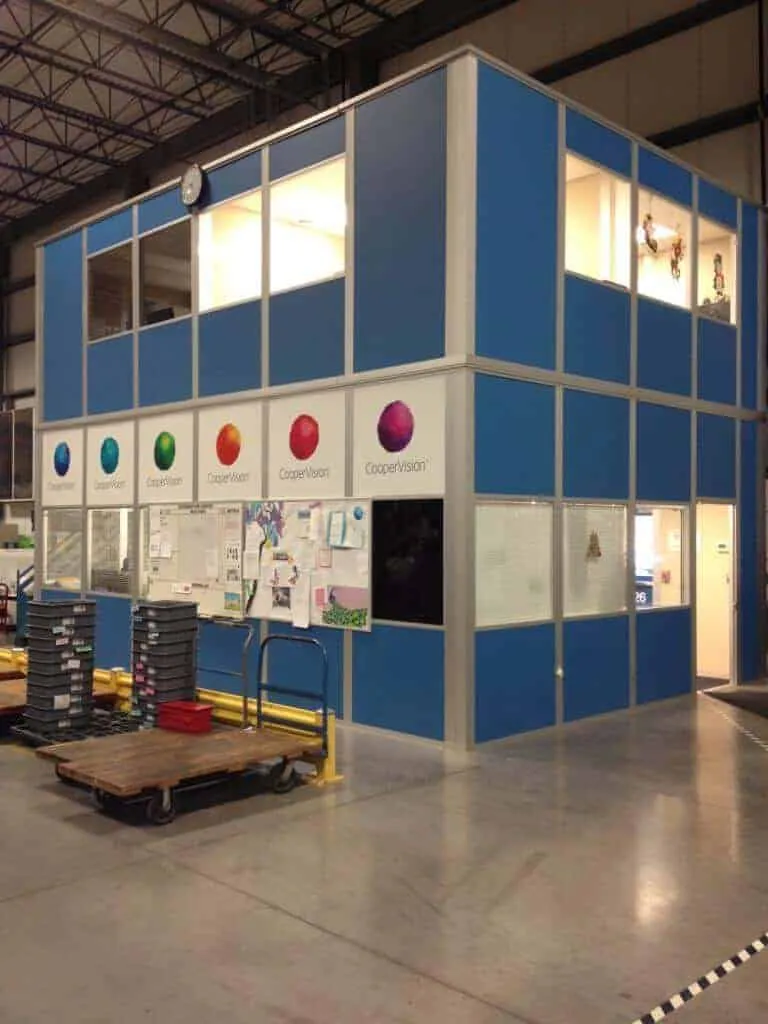
Modular inplant offices allow you to create private, climate-controlled office space inside your warehouse or manufacturing facility without permanent construction. Systems are built from steel-framed panels with drywall or polystyrene fill, standard door and window configurations, and can be single or multi-story. Installation takes days instead of months, and systems can be relocated or reconfigured as your needs change, a critical advantage for operations that may outgrow a space or relocate to a new facility. Our primary modular building brands are Porta-King and PortaFab.
The business case for a modular office over traditional construction is compelling in most industrial environments. Conventional construction in an occupied warehouse requires coordination with general contractors, extended timelines of 2–4 months, significant disruption to operations, and the creation of a permanent building improvement that stays with the building when you leave. A modular office can be installed by our crew in 2–5 days with minimal operational disruption, is classified as personal property rather than real property in most jurisdictions, and moves with your business to the next facility.
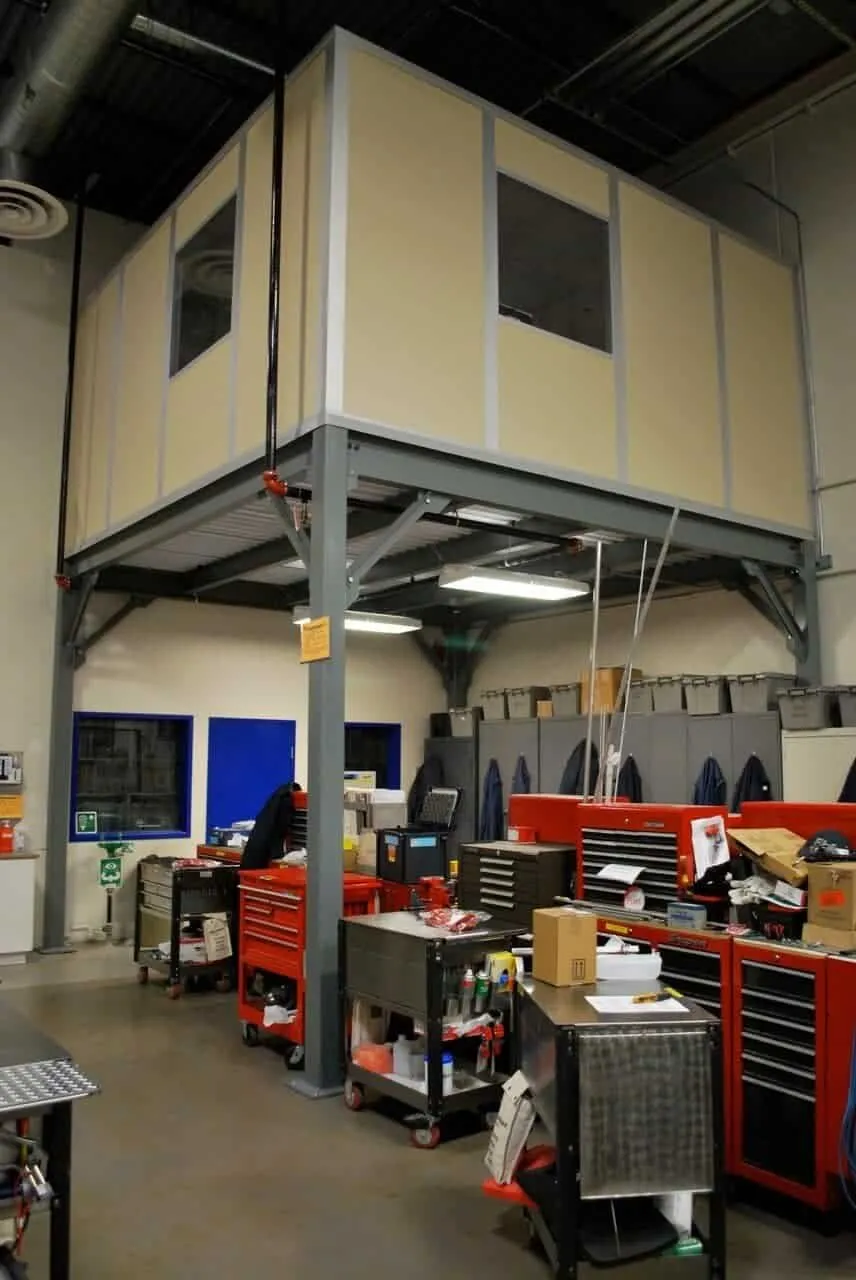
Rocky Mountain Warehouse Solutions designs and installs modular offices for supervisors, foremen, quality control, security, dispatch, and administrative functions in industrial environments throughout Utah and the Mountain West. We handle the complete project from floor plan design to panel fabrication, electrical rough-in coordination, HVAC unit installation, and final commissioning. Two-story configurations are available for facilities where preserving ground-level storage floor area is a priority.
Washington County: a different Utah entirely
Washington County is not on the Wasatch fault, and treating St. George as a Wasatch Front project produces the wrong specification. Southwest Utah sits in the transition between the Basin and Range province and the Colorado Plateau, with the Hurricane fault zone as the dominant local feature. The seismic hazard here is genuine but different in character and generally lower than along the Front, which usually means anchor and base plate engineering is less of a budget driver than it is three hundred miles north.
Climate is the larger difference. St. George is a hot desert environment with more in common with Las Vegas or the Phoenix basin than with Salt Lake City. Sustained summer heat affects hydraulic dock equipment duty cycles, drives powder coat and galvanizing selection on any outdoor cantilever or yard storage, and narrows the practical working window for installation crews on a live site. Dock seals and shelters here are specified against heat load and dust rather than against snow and ice, which is the opposite of what we design for in Cache or Weber County.
The county's economy is driven by sustained population growth, which concentrates demand in building materials, construction supply, retail distribution, and healthcare logistics rather than in heavy manufacturing. Permitting runs through Washington County and the cities of St. George, Washington, and Hurricane. Washington County is established territory for us. We run the I-15 corridor regularly, and delivery, installation crews, and ongoing service are scheduled here as a standard part of our operation.
Codes, Compliance, and Enforcement in UT
Utah is a state where storage racking is engineered, not just assembled. Steel storage racks are treated as nonbuilding structures under ASCE 7 with their own design provisions, and much of Utah's warehouse square footage sits in parts of the state where seismic load is a governing design factor rather than a formality. In practice that means engineered base plates, anchor patterns calculated against the actual slab rather than a catalog default, limits on unbraced upright height, and in taller configurations additional row bracing or a deliberate seismic separation from the building structure. How much of that applies depends heavily on where in Utah the facility sits, which is why we work the seismic question at the county and site level rather than quoting a single statewide answer.
Permitting in Utah is local. There is no statewide storage rack permit threshold; county and municipal building departments set their own requirements for when an installation needs a permit, stamped drawings, anchor calculations, and load capacity documentation. Review practice varies noticeably between jurisdictions, so we confirm requirements with the authority having jurisdiction over your specific building during layout rather than after the racking is on site. Slab condition is the input buyers most often overlook: anchor pull-out values depend on concrete depth, compressive strength, and proximity to joints and slab edges, so an older building can drive a different base plate design than a new tilt-up shell in the same city.
Workplace safety enforcement is genuinely statewide. Utah operates its own OSHA-approved State Plan through Utah Occupational Safety and Health, a division of the Utah Labor Commission, rather than relying on federal OSHA. There is no rack-specific OSHA standard anywhere in the country, but storage systems are reachable through general materials handling and storage requirements and the general duty obligation to provide a workplace free of recognized hazards. We design to RMI ANSI MH16.1, provide engineered load capacity labeling on every installation, and retain the anchor, as-built, and inspection documentation that a UOSH inspector, an insurer, or a plan reviewer is likely to ask for.
Technical Specifications & Buying Guide
Modular office panels are constructed with a structural steel perimeter frame infilled with either polyurethane foam or rockwool insulation, providing R-11 to R-22 insulation values depending on panel thickness. Standard panel thickness is 4 inches for single-story applications. Exterior surfaces are typically 20-gauge embossed or smooth steel, powder-coated in standard colors. Interior surfaces are smooth white 24-gauge steel or drywall-finish panels for a more traditional office appearance. Panel-to-panel connections use steel interlocking mullions and are sealed with fire-rated caulk for air infiltration and sound control.
Electrical, data, and HVAC rough-in is incorporated into the panel system during installation. Electrical conduit runs inside the wall cavity to standard outlet and switch box locations, with panels connecting to a main electrical feed provided by the building's electrician. HVAC is typically provided by a ductless mini-split unit sized for the office footprint and the industrial ambient temperature of the surrounding warehouse environment. Window openings are pre-framed in the panels and fitted with insulated tempered glass units in standard or custom sizes. Walk doors are steel-faced insulated units with commercial hardware and keyed locksets.
Two-story modular offices require a structural steel mezzanine floor system beneath the upper level, engineered for the combined dead load of the upper floor panels and the live load of occupants, furniture, and equipment. Upper story panels connect to the mezzanine deck using base track anchors, and the upper story is designed as a self-contained structural unit. Access to the upper level is via steel stairway with handrails and a landing gate. Two-story configurations are popular in facilities with 20+ feet of clear height, allowing an office footprint of 600–1,200 sq ft to accommodate an upper level with the same footprint and preserving the full warehouse floor below for storage or production operations.
Key Benefits of Modular Offices in St. George
- No permanent construction permit in most jurisdictions
- Installed in days vs months
- Relocatable when your facility needs change
- Two-story options for elevated offices
- HVAC, electrical, and data rough-in available
- Soundproofing options for noisy environments
- Powder-coated steel exterior for durability
Industries We Serve in St. George
Manufacturing
Modular Offices systems tailored for the operational requirements of manufacturing facilities in St. George.
Distribution and logistics
Modular Offices systems tailored for the operational requirements of distribution and logistics facilities in St. George.
Government and military
Modular Offices systems tailored for the operational requirements of government and military facilities in St. George.
E-commerce fulfillment
Modular Offices systems tailored for the operational requirements of e-commerce fulfillment facilities in St. George.
Automotive
Modular Offices systems tailored for the operational requirements of automotive facilities in St. George.
Food and beverage
Modular Offices systems tailored for the operational requirements of food and beverage facilities in St. George.
Common Use Cases in St. George
Supervisor and foreman offices
From layout planning to final installation, we deliver Modular Offices optimized for supervisor and foreman offices in St. George.
Security and guard booths
We configure Modular Offices systems that solve real security and guard booths challenges for St. George operations of every size.
Break rooms and restrooms
Our St. George installations for break rooms and restrooms are engineered to perform under real operational conditions, not just spec sheets.
Control rooms and server rooms
When St. George facilities need Modular Offices for control rooms and server rooms, we provide turnkey solutions that cover design, procurement, installation, and documentation.
Clean room environments
Facilities in St. George use our Modular Offices systems for clean room environments because we deliver configurations that actually match how their operation works.
Temporary office during renovation
Modular Offices systems we install in St. George for temporary office during renovation are sized for your current needs and designed to scale as your operation grows.
Why St. George Businesses Choose Rocky Mountain Warehouse Solutions
Rocky Mountain Warehouse Solutions has completed over 500 projects and installed over 1,200 systems across the Mountain West, including St. George and the surrounding region.
We offer free warehouse layout assessments for St. George facilities — our team visits your site, measures your space, and delivers a proposed configuration before you commit to anything.
We've learned what St. George warehouse managers need most: fast response, accurate quotes, and installation crews who show up on time and finish the job right. That's what every Modular Offices project gets.
Our process begins with a site visit to your St. George facility. We measure your space, assess your current storage, and design a Modular Offices configuration that maximizes your usable cube while meeting all safety and code requirements.
Frequently Asked Questions About Modular Offices in St. George
Do modular offices require a building permit?
Requirements vary by jurisdiction. In most cases, single-story modular offices below a certain square footage (typically 200–400 sq ft) do not require a building permit. Multi-story structures and larger single-story offices typically require a permit. We navigate local requirements across Utah and the Mountain West and handle permit submissions when required.
Rocky Mountain Warehouse Solutions serves St. George, UT and surrounding Washington County businesses. Contact us for local pricing and availability.
Can modular offices be two stories?
Yes. Two-story modular offices are popular in high-bay facilities because they create elevated office space over the warehouse floor, preserving ground-level storage area. Two-story systems are engineered with a structural mezzanine floor, proper egress stairway, guardrails, and upper-level load ratings for office occupancy.
Rocky Mountain Warehouse Solutions serves St. George, UT and surrounding Washington County businesses. Contact us for local pricing and availability.
What HVAC options are available for inplant offices?
Most modular inplant offices use ductless mini-split heat pump systems that provide both heating and cooling independent of the warehouse HVAC. This allows the office to maintain 70–72°F regardless of warehouse temperature, important in facilities that operate at high or low ambient temperatures. We size the HVAC unit based on office square footage, panel insulation value, and the thermal environment of the surrounding facility.
Rocky Mountain Warehouse Solutions serves St. George, UT and surrounding Washington County businesses. Contact us for local pricing and availability.
Can modular offices be relocated to a new facility?
Yes. Modular offices are designed for disassembly and relocation. Panels are unbolted and removed from the anchor track, transported to the new facility, and reinstalled. Electrical and HVAC connections are disconnected and reconnected at the new location. Full relocation of a 400–800 sq ft office typically takes 2–3 days.
Rocky Mountain Warehouse Solutions serves St. George, UT and surrounding Washington County businesses. Contact us for local pricing and availability.
What soundproofing is available for noisy environments?
Standard 4-inch polyurethane foam panels provide moderate sound attenuation. For facilities with high ambient noise (metal fabrication, stamping, heavy machinery), upgraded panels with rockwool insulation and additional mass-loaded vinyl layers provide significantly higher STC ratings. We can also specify acoustic ceiling tile and double-glazed windows for additional noise reduction.
Rocky Mountain Warehouse Solutions serves St. George, UT and surrounding Washington County businesses. Contact us for local pricing and availability.
Which OSHA agency oversees warehouse safety compliance in Utah?
Utah operates its own OSHA-approved State Plan through Utah Occupational Safety and Health (UOSH), a division of the Utah Labor Commission, rather than relying on federal OSHA directly. We design and document every Utah installation to meet UOSH's workplace safety standards.
Get a Free Quote for Modular Offices in St. George
Contact us today to discuss your Modular Offices needs in St. George. We'll help you find the right configuration, the right timeline, and the right price for your project.
Related Products in St. George
Request a Quote for Modular Offices in St. George
Our team can help you choose the right warehouse solution, plan the layout, and move your project forward.
Get a Free Quote