Drive-In Racking in Idaho Falls, ID
Idaho Falls' food processors occasionally use drive-in for frozen bulk product where density matters more than rotation speed, since freezer cubic footage costs enough that maximizing pallet positions per square foot pays for itself quickly.
Drive-In Racking Solutions for Idaho Falls Warehouses
Idaho Falls is Eastern Idaho's primary commercial and industrial center, located along I-15 at the crossroads of major agricultural and energy industries. The city serves as a distribution hub for a large rural region and hosts significant food processing, energy sector, and government facilities.
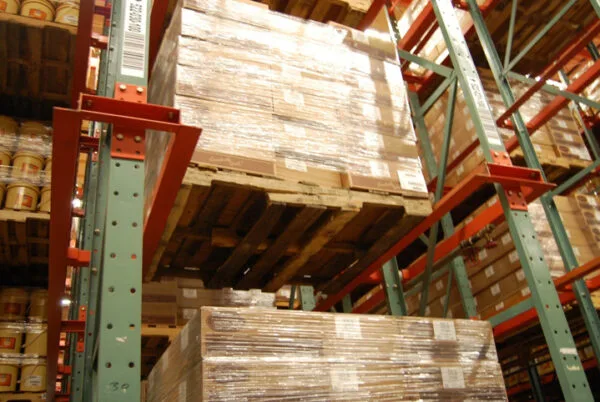
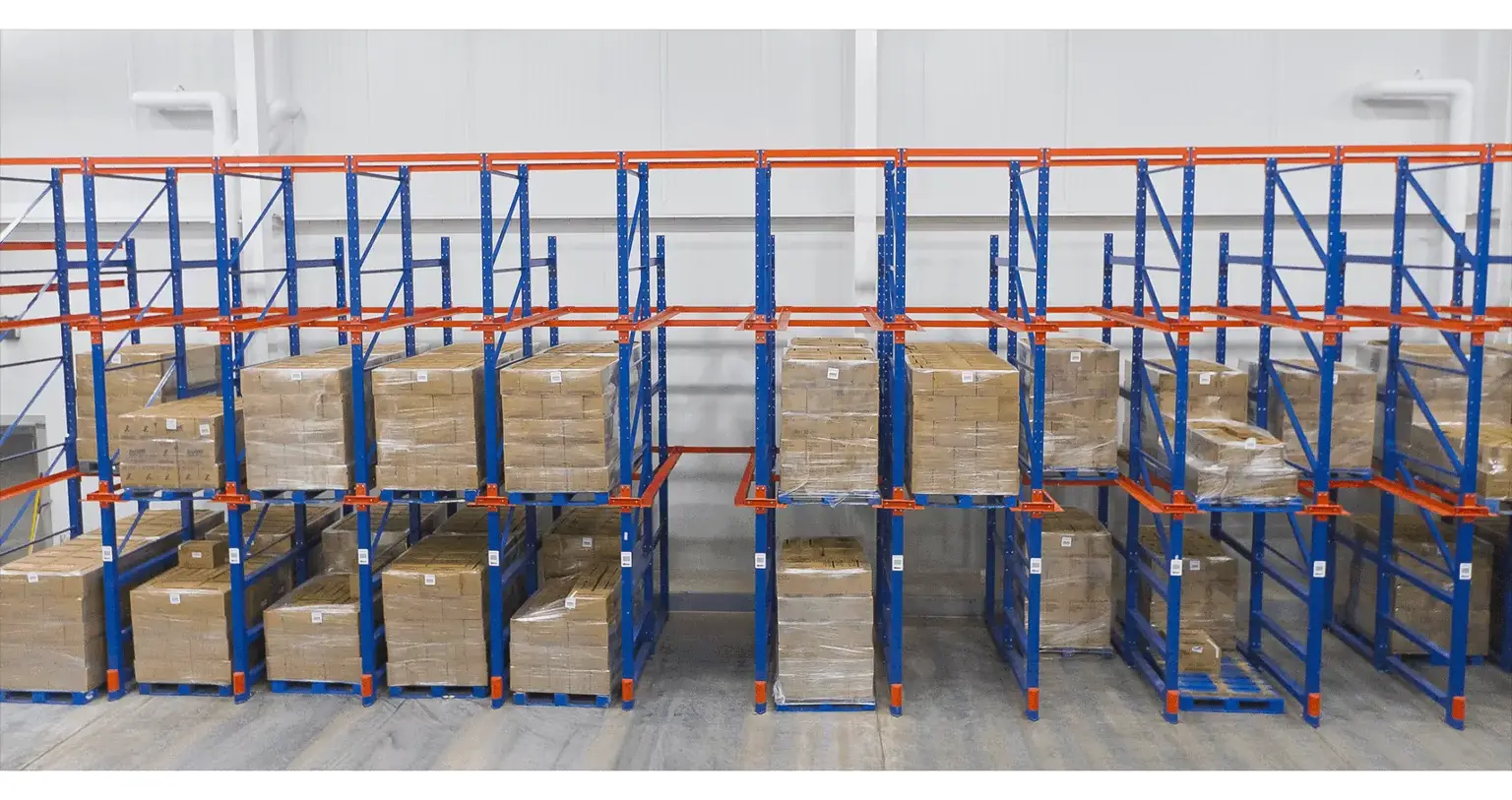
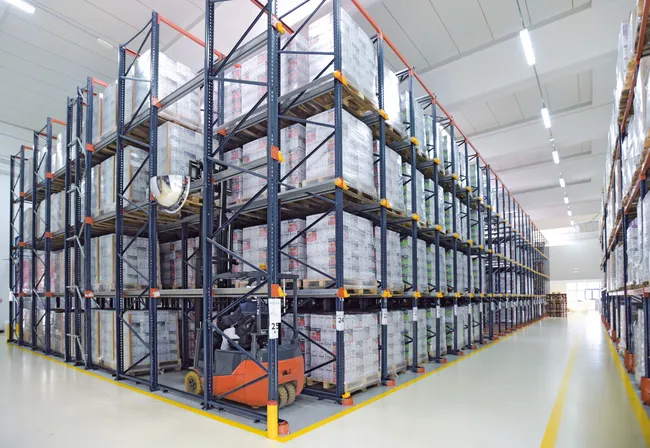
Drive-in racking achieves the highest storage density of any forklift-accessible system by eliminating aisles between storage positions. Forklifts drive directly into the rack structure on continuous rail guides to place or retrieve pallets at the rear, center, or front of the lane. Because all access is from one end only, drive-in is a last-in, first-out (LIFO) system: the last pallet loaded in a lane is the first one retrieved. This makes it ideal for non-perishable products stored in large quantities per SKU, seasonal inventory, and raw materials where product rotation is not a requirement.
The storage density advantage of drive-in racking is substantial. A facility that transitions from selective pallet racking to drive-in racking for a single-SKU bulk storage area can increase pallet positions in the same floor space by 60–80%, depending on lane depth and configuration. This density benefit makes drive-in a compelling choice for cold storage facilities where refrigerated cubic footage is expensive, for seasonal goods distributors managing large quantities of a single product for limited periods, and for manufacturers managing raw material buffer stock.
Rocky Mountain Warehouse Solutions designs drive-in systems with the structural robustness required for the operating conditions of a drive-in environment. Because forklifts operate inside the rack structure, column damage is more frequent and more serious than in selective racking. Our systems include heavy-gauge uprights, rail guides with replaceable wear caps, and column protectors on all exposed upright faces. We also engineer the system for your specific forklift model to ensure adequate clearances throughout the lane.
Codes, Compliance, and Enforcement in ID
Idaho's seismic picture is uneven, and it drives real differences in racking design between the population centers we serve. Eastern and central Idaho sit within the Intermountain Seismic Belt, the same broad zone that produced the 1983 Borah Peak earthquake, and Idaho Falls and Pocatello carry meaningfully more seismic design load than most buyers expect. The Treasure Valley around Boise, Meridian, and Nampa is more moderate. Because the hazard varies across the state rather than sitting at a single statewide level, we size base plates, anchor patterns, and bracing from the specific site rather than applying one Idaho specification everywhere.
Building stock is the other Idaho variable. The Treasure Valley has grown fast enough that we routinely work in both new tilt-up construction with clean slabs and generous clear height, and in older converted agricultural and light-industrial buildings with lower ceilings, irregular column bays, and slabs that were never poured with rack anchoring in mind. Those two situations produce different designs for the same product, and the slab assessment matters before anything is ordered. Permitting is handled by local jurisdictions such as Ada and Canyon counties and the individual cities, with thresholds and submittal expectations set locally, so we confirm requirements with the authority having jurisdiction during layout.
Idaho does not operate its own OSHA-approved State Plan, so workplace safety is enforced directly by federal OSHA. We design every Idaho installation to federal OSHA expectations and to RMI ANSI MH16.1, with engineered load capacity labeling and post-installation inspection documentation. The state's food processing sector is the dominant influence on how systems get specified here: washdown environments, cold and frozen storage, sanitation protocols that rule out certain finishes and decking, and seasonal harvest peaks that make installation timing genuinely constrained rather than merely inconvenient.
Technical Specifications & Buying Guide
Drive-in racking uses a different structural approach than selective pallet racking. Instead of horizontal cross-bracing between upright frames, drive-in systems use top tie horizontal bracing above the top pallet position and continuous pallet rail guides that run the full depth of the lane. Upright frames are typically spaced 4–5 feet apart along the lane depth, supporting the continuous pallet rails on which pallet loads sit. Forklift clearance inside the lane is a critical specification: minimum 6 inches of clearance on each side of the forklift mast, plus additional clearance for the loaded pallet width, determines the rail-to-rail dimension and upright column placement.
Pallet rail height per level must accommodate the tallest loaded pallet dimension plus a minimum lift clearance of 3–4 inches for placing and retrieving pallets. In high-bay drive-in systems, multiple levels of pallet rails can be configured. However, the practical number of levels is limited by the total lane depth, as very deep lanes at multiple levels require precise forklift operation and are best suited for experienced operators. Single-level drive-in systems are common for very heavy loads (4,000–6,000 lbs per pallet) where stacking height is limited.
Forklift requirements for drive-in racking are more specific than for selective racking. Standard counterbalance forklifts are compatible with drive-in systems, but mast type is critical: a full free-lift mast is required to raise loads above the top rail without the inner mast section contacting the top tie beam. Reach trucks are generally not used in drive-in systems due to their extended reach carriage, which reduces clearances inside the lane. We verify forklift compatibility and recommend mast specifications during the quoting and design process to prevent operational problems after installation.
Key Benefits of Drive-In Racking in Idaho Falls
- Highest storage density of any forklift system
- Fewer aisles means more storage positions
- Ideal for single-SKU, high-volume storage
- Compatible with counterbalance and reach trucks
- Cost-effective for bulk seasonal storage
- Can serve as freezer or cooler high-density storage
- Available in multiple lane depths
Industries We Serve in Idaho Falls
Cold storage and frozen food
Drive-In Racking systems tailored for the operational requirements of cold storage and frozen food facilities in Idaho Falls.
Beverage distribution
Drive-In Racking systems tailored for the operational requirements of beverage distribution facilities in Idaho Falls.
Building materials
Drive-In Racking systems tailored for the operational requirements of building materials facilities in Idaho Falls.
Seasonal goods
Drive-In Racking systems tailored for the operational requirements of seasonal goods facilities in Idaho Falls.
Agriculture
Drive-In Racking systems tailored for the operational requirements of agriculture facilities in Idaho Falls.
Manufacturing
Drive-In Racking systems tailored for the operational requirements of manufacturing facilities in Idaho Falls.
Common Use Cases in Idaho Falls
Seasonal inventory overflow
Drive-In Racking systems we install in Idaho Falls for seasonal inventory overflow are sized for your current needs and designed to scale as your operation grows.
Single-SKU bulk product
Our team helps Idaho Falls businesses implement Drive-In Racking solutions tailored specifically for single-sku bulk product at any scale.
Beverage pallet storage
We design and install Drive-In Racking configurations built for the demands of beverage pallet storage in Idaho Falls warehouses.
Frozen food storage maximization
Idaho Falls warehouses relying on Drive-In Racking for frozen food storage maximization benefit from our engineered layouts and expert installation.
Raw material staging
Rocky Mountain Warehouse Solutions specializes in Drive-In Racking for raw material staging, serving facilities across Idaho Falls and the Mountain West.
Cold storage optimization
From layout planning to final installation, we deliver Drive-In Racking optimized for cold storage optimization in Idaho Falls.
Why Idaho Falls Businesses Choose Rocky Mountain Warehouse Solutions
Our Idaho Falls customers consistently tell us the same things: fast quotes, crews that show up on time, and systems that perform exactly as designed.
Rocky Mountain Warehouse Solutions backs every Drive-In Racking installation in Idaho Falls with post-installation support, safety documentation, and load capacity labeling.
The Idaho Falls industrial market has grown significantly in recent years, and storage efficiency has become a competitive advantage. Drive-In Racking gives local operations a practical way to increase capacity without signing a new lease.
Our process begins with a site visit to your Idaho Falls facility. We measure your space, assess your current storage, and design a Drive-In Racking configuration that maximizes your usable cube while meeting all safety and code requirements.
Frequently Asked Questions About Drive-In Racking in Idaho Falls
What is the difference between drive-in and drive-through racking?
Drive-in racking is accessed from one end only, with LIFO rotation. Drive-through racking is accessed from both ends, enabling FIFO rotation. Drive-through requires an aisle on each end of the bay, slightly reducing storage density but improving product rotation for date-sensitive or high-turnover products.
Rocky Mountain Warehouse Solutions serves Idaho Falls, ID and surrounding Bonneville County businesses. Contact us for local pricing and availability.
How deep can drive-in lanes be?
Drive-in lanes can be as deep as your building allows, but practical depth is typically 6–12 pallets. Very deep lanes create selectivity issues and require significant forklift travel time per retrieval. For lanes deeper than 10 pallets, we evaluate whether pallet flow racking might be a more operationally efficient choice.
Rocky Mountain Warehouse Solutions serves Idaho Falls, ID and surrounding Bonneville County businesses. Contact us for local pricing and availability.
What forklift do I need for drive-in racking?
Standard counterbalance forklifts work well in drive-in systems, but must have a full free-lift mast to raise loads above the top rail without the mast contacting overhead structure. Mast height and carriage width must be sized for the specific lane width and height. We verify forklift specs during the design process.
Rocky Mountain Warehouse Solutions serves Idaho Falls, ID and surrounding Bonneville County businesses. Contact us for local pricing and availability.
Is drive-in racking safe?
Drive-in racking is safe when properly designed, installed, and operated. Because forklifts work inside the rack structure, operator training is critical. We include operator training recommendations with every installation. Heavy-gauge uprights, column protectors on all rail support columns, and replaceable wear caps on pallet rails reduce the impact of the inevitable minor contacts that occur in drive-in operations.
Rocky Mountain Warehouse Solutions serves Idaho Falls, ID and surrounding Bonneville County businesses. Contact us for local pricing and availability.
Can drive-in racking be reconfigured for different lane depths?
Drive-in racking is more difficult to reconfigure than selective racking because lane depth is built into the structural frame design. However, lanes can be shortened by removing rear upright sections and rails. Major reconfigurations, such as changing lane depth significantly or converting to a different storage system, typically require re-engineering and partial reinstallation.
Rocky Mountain Warehouse Solutions serves Idaho Falls, ID and surrounding Bonneville County businesses. Contact us for local pricing and availability.
Is Idaho covered by federal OSHA or a state plan?
Idaho does not operate its own OSHA-approved State Plan, so workplace safety here is enforced directly by federal OSHA. We design every Idaho installation to meet federal OSHA's standards for warehouse racking and storage systems.
Get a Free Quote for Drive-In Racking in Idaho Falls
Ready to improve storage in your Idaho Falls facility? Contact Rocky Mountain Warehouse Solutions for a free assessment and same-week quote on Drive-In Racking systems.
Related Products in Idaho Falls
Request a Quote for Drive-In Racking in Idaho Falls
Our team can help you choose the right warehouse solution, plan the layout, and move your project forward.
Get a Free Quote