Pallet Racking in Idaho Falls, ID
Idaho Falls' food processors and national laboratory logistics operations sit at opposite ends of the compliance spectrum, but both need racking layouts documented well enough to pass an audit: sanitary and lot-tracking standards for food, security and inventory-control standards for government facilities. We build the documentation into the installation from day one rather than treating it as an afterthought.
Pallet Racking Solutions for Idaho Falls Warehouses
Idaho Falls is Eastern Idaho's primary commercial and industrial center, located along I-15 at the crossroads of major agricultural and energy industries. The city serves as a distribution hub for a large rural region and hosts significant food processing, energy sector, and government facilities.
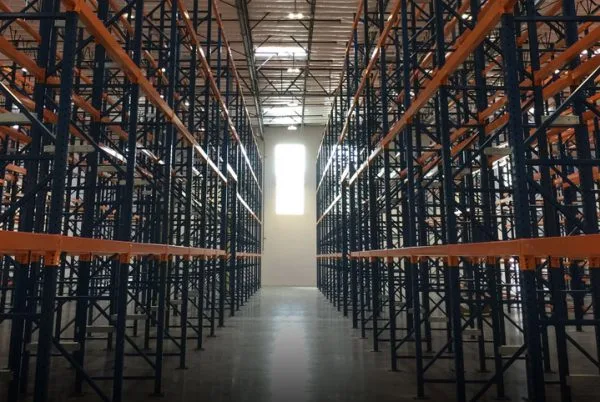
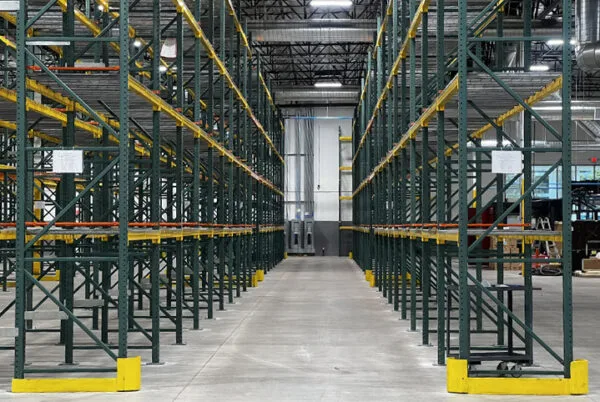
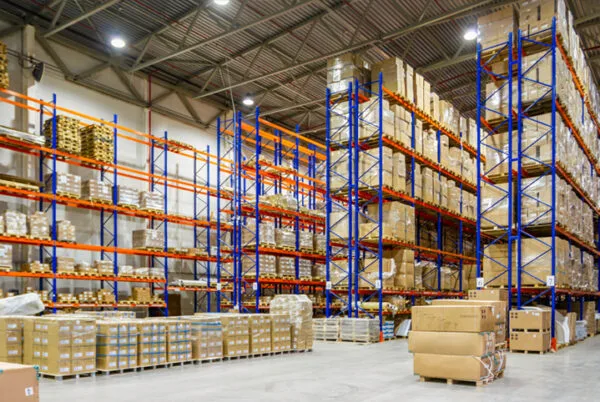
Selective pallet racking is the backbone of modern warehouse storage, and for good reason. It provides direct access to every single pallet position without moving other inventory, making it the most versatile and widely used racking system in North America. Our systems are engineered to ANSI MH16.1 standards using teardrop-style uprights and step beams, providing universal compatibility with wire decking, pallet supports, and safety accessories. We supply new and certified used racking from leading manufacturers including Interlake, Unarco, and Lyon, and every project includes a compliant load capacity label and a post-installation inspection.
The flexibility of selective racking makes it suitable for virtually any warehouse operation. Whether you are running a fast-moving consumer goods distribution center, a pharmaceutical warehouse with strict FIFO requirements, or a cold storage facility that demands reliable performance at sub-zero temperatures, selective racking adapts to your needs. Beam spacing, bay width, and upright height can all be customized to match your pallet dimensions, lift equipment, and building constraints.
Rocky Mountain Warehouse Solutions has installed thousands of pallet racking bays across Utah, Nevada, Colorado, Arizona, Idaho, and Wyoming. Our team handles everything from initial layout and engineering to delivery, installation, and permit support. We also offer certified used racking programs that can reduce material costs by 40–60% compared to new while maintaining full safety compliance.
Most racking projects are decided by two numbers before any product is chosen: how many SKUs you carry, and how many pallets you hold per SKU. A high SKU count with few pallets each points to selective racking and full accessibility. A low SKU count with deep inventory per SKU justifies denser systems that trade selectivity for cube. Getting that decision right matters more than any component choice that follows, because a dense system installed for the wrong inventory profile costs throughput every day it operates.
Codes, Compliance, and Enforcement in ID
Idaho's seismic picture is uneven, and it drives real differences in racking design between the population centers we serve. Eastern and central Idaho sit within the Intermountain Seismic Belt, the same broad zone that produced the 1983 Borah Peak earthquake, and Idaho Falls and Pocatello carry meaningfully more seismic design load than most buyers expect. The Treasure Valley around Boise, Meridian, and Nampa is more moderate. Because the hazard varies across the state rather than sitting at a single statewide level, we size base plates, anchor patterns, and bracing from the specific site rather than applying one Idaho specification everywhere.
Building stock is the other Idaho variable. The Treasure Valley has grown fast enough that we routinely work in both new tilt-up construction with clean slabs and generous clear height, and in older converted agricultural and light-industrial buildings with lower ceilings, irregular column bays, and slabs that were never poured with rack anchoring in mind. Those two situations produce different designs for the same product, and the slab assessment matters before anything is ordered. Permitting is handled by local jurisdictions such as Ada and Canyon counties and the individual cities, with thresholds and submittal expectations set locally, so we confirm requirements with the authority having jurisdiction during layout.
Idaho does not operate its own OSHA-approved State Plan, so workplace safety is enforced directly by federal OSHA. We design every Idaho installation to federal OSHA expectations and to RMI ANSI MH16.1, with engineered load capacity labeling and post-installation inspection documentation. The state's food processing sector is the dominant influence on how systems get specified here: washdown environments, cold and frozen storage, sanitation protocols that rule out certain finishes and decking, and seasonal harvest peaks that make installation timing genuinely constrained rather than merely inconvenient.
Technical Specifications & Buying Guide
Pallet racking systems are defined by several key specifications: upright gauge (typically 11-gauge through 7-gauge structural), beam capacity (2,000 to 10,000+ lbs per pair), and bay width (typically 96 to 144 inches). Upright height ranges from 8 feet in low-clearance facilities to 50 feet or more in high-bay automated warehouses. The teardrop hole pattern, the North American industry standard, allows beams from most manufacturers to interconnect, simplifying expansions and repairs over the life of the system. Column capacity is determined by the upright height-to-gauge ratio and the distance between horizontal braces.
When specifying a pallet racking system, critical inputs include pallet weight when loaded, pallet footprint dimensions (48×40 is standard but many variations exist), total pallet positions required, lift equipment type (counterbalance, reach truck, order picker, or VNA), and available clear height under sprinklers. Aisle width is driven by your forklift model and must provide adequate operating clearance per manufacturer specs. A narrow-aisle reach truck environment operates in 8–9 foot aisles versus the 11–12 feet required by a standard counterbalance forklift. That difference can add 20–30% more pallet positions in the same building footprint.
Seismic design requirements vary significantly across our Mountain West service area, from the active Wasatch Fault zone in Utah and the Intermountain Seismic Belt running through Idaho, Wyoming, and Montana, to the comparatively lower-risk regions of Arizona and New Mexico. Every pallet racking system we design accounts for the specific seismic design category at that facility's location, with additional bracing, anchor bolt engineering, and base plate design applied wherever project-specific seismic loads require it, to ensure full compliance with IBC and RMI ANSI MH16.1 standards. We also recommend annual rack inspections to identify and address impact damage before it leads to structural compromise.
Compare quotes on cost per pallet position rather than on total price or price per bay, because bay pricing hides the variables that matter. A quote using wider bays and fewer uprights looks cheaper per bay while delivering fewer usable positions and lower capacity per level. Cost per position normalizes for bay width, beam levels, and upright count, and it is the only figure that makes two differently configured proposals comparable. Confirm what is actually included: freight, installation labor, anchors, wire decking, row spacers, column protection, engineered drawings, permit support, and load capacity labeling are frequently quoted separately, and a low material price with those items excluded is not a lower project cost.
Aisle width is the highest-leverage variable in a layout and the one most often set by habit rather than analysis. A standard counterbalance forklift typically needs 11 to 13 feet of clear aisle, a reach truck operates in roughly 8 to 9 feet, and very narrow aisle equipment works in 6 feet or less with wire guidance or rail. Moving from counterbalance to reach truck in the same building commonly recovers 20 to 30 percent more pallet positions, though it changes the equipment fleet, the operator training, and the floor flatness requirement. Clear height is the second lever: usable rack height is governed by the distance to sprinkler deflectors and the applicable fire protection scheme, not by the building roof, and commodity classification and in-rack sprinkler requirements can cap a system well below the physical ceiling. Both constraints should be confirmed before a layout is priced, since discovering them afterward usually means re-engineering the entire system.
Key Benefits of Pallet Racking in Idaho Falls
- Direct access to every pallet position
- ANSI MH16.1 compliant construction
- Compatible with standard forklifts and reach trucks
- Scalable: add bays as your inventory grows
- Available in new and certified used condition
- Custom heights from 8 ft to 50 ft
- Engineered load capacity labels included
Industries We Serve in Idaho Falls
Distribution and logistics
Pallet Racking systems tailored for the operational requirements of distribution and logistics facilities in Idaho Falls.
E-commerce fulfillment
Pallet Racking systems tailored for the operational requirements of e-commerce fulfillment facilities in Idaho Falls.
Food and beverage
Pallet Racking systems tailored for the operational requirements of food and beverage facilities in Idaho Falls.
Manufacturing
Pallet Racking systems tailored for the operational requirements of manufacturing facilities in Idaho Falls.
Pharmaceutical
Pallet Racking systems tailored for the operational requirements of pharmaceutical facilities in Idaho Falls.
Retail distribution
Pallet Racking systems tailored for the operational requirements of retail distribution facilities in Idaho Falls.
Common Use Cases in Idaho Falls
Bulk palletized inventory
When Idaho Falls facilities need Pallet Racking for bulk palletized inventory, we provide turnkey solutions that cover design, procurement, installation, and documentation.
Fast-moving SKU storage
Our Idaho Falls installations for fast-moving sku storage are engineered to perform under real operational conditions, not just spec sheets.
Cold storage warehouses
We configure Pallet Racking systems that solve real cold storage warehouses challenges for Idaho Falls operations of every size.
Pick-module integration
From layout planning to final installation, we deliver Pallet Racking optimized for pick-module integration in Idaho Falls.
Multi-level rack systems
Rocky Mountain Warehouse Solutions specializes in Pallet Racking for multi-level rack systems, serving facilities across Idaho Falls and the Mountain West.
Dock-to-rack staging
Idaho Falls warehouses relying on Pallet Racking for dock-to-rack staging benefit from our engineered layouts and expert installation.
Why Idaho Falls Businesses Choose Rocky Mountain Warehouse Solutions
We're a family-owned Mountain West business — every Idaho Falls project gets the same personal attention and accountability as our flagship installations.
Rocky Mountain Warehouse Solutions backs every Pallet Racking installation in Idaho Falls with post-installation support, safety documentation, and load capacity labeling.
For Idaho Falls operations dealing with peak-season overflow, SKU proliferation, or simply running out of room, Pallet Racking provides an immediate, cost-effective solution that scales as your business grows.
Getting started is straightforward. Contact us, describe your Idaho Falls facility and storage needs, and we'll schedule a free on-site assessment. You'll receive a detailed quote — typically within 48 hours — that includes product specs, installation timeline, and total project cost.
Frequently Asked Questions About Pallet Racking in Idaho Falls
What is selective pallet racking?
Selective pallet racking is a storage system where each pallet position is directly accessible by a forklift from the aisle. It is the most widely used racking system in North American warehouses due to its flexibility, low cost per pallet position, and ability to accommodate a wide variety of SKUs without moving other inventory.
Rocky Mountain Warehouse Solutions serves Idaho Falls, ID and surrounding Bonneville County businesses. Contact us for local pricing and availability.
How much weight can pallet racking hold?
Load capacity depends on upright gauge, beam length, and beam profile. Typical selective rack systems support 2,000 to 8,000 lbs per pallet elevation. We provide engineered load capacity labels for every installation showing the maximum allowable load per bay and level.
Rocky Mountain Warehouse Solutions serves Idaho Falls, ID and surrounding Bonneville County businesses. Contact us for local pricing and availability.
Do you sell used pallet racking?
Yes. We carry certified used pallet racking that has been inspected, straightened, and graded. Used racking can reduce project costs by 40–60% compared to new material, and when properly inspected and rated, performs equivalently to new rack for most applications.
Rocky Mountain Warehouse Solutions serves Idaho Falls, ID and surrounding Bonneville County businesses. Contact us for local pricing and availability.
How long does pallet rack installation take?
A typical 10,000 sq ft rack installation takes 1–3 days depending on configuration complexity and the number of bays. Our crews work efficiently and can often phase installations to keep portions of your facility operational during the project.
Rocky Mountain Warehouse Solutions serves Idaho Falls, ID and surrounding Bonneville County businesses. Contact us for local pricing and availability.
What is teardrop pallet racking?
Teardrop refers to the teardrop-shaped hole pattern on upright columns. This is the North American industry standard and allows step beams from most manufacturers to be interchanged, making it easy to reconfigure, add to, or repair your system using parts from multiple suppliers.
Rocky Mountain Warehouse Solutions serves Idaho Falls, ID and surrounding Bonneville County businesses. Contact us for local pricing and availability.
What aisle width do I need for pallet racking?
Aisle width depends on your forklift type. Standard counterbalance forklifts require 11–12 foot aisles. Reach trucks operate in 8.5–10 foot aisles. Very narrow aisle (VNA) turret trucks can work in 5–6 foot aisles but require wire guidance or rail guidance systems. We verify forklift compatibility for every project.
Rocky Mountain Warehouse Solutions serves Idaho Falls, ID and surrounding Bonneville County businesses. Contact us for local pricing and availability.
Can pallet racking be installed in a seismic zone?
Yes. The Mountain West is a seismically active region, and our installations comply with IBC seismic requirements and RMI ANSI MH16.1 seismic design provisions. This includes engineering anchor bolts, base plates, and bracing for the specific seismic zone of your facility.
Rocky Mountain Warehouse Solutions serves Idaho Falls, ID and surrounding Bonneville County businesses. Contact us for local pricing and availability.
What does pallet racking cost per pallet position?
Cost per pallet position is the figure worth comparing, and it varies with configuration far more than with quantity. New selective racking sits at the low end of the engineered-system range, and certified used racking commonly reduces material cost substantially against new. Denser systems such as drive-in, push-back, and pallet flow cost more per position but deliver more positions per square foot, so the right comparison is cost per position against positions gained. Freight is a meaningful line item in the Mountain West because racking is bulky relative to its value, which is one reason regional supply frequently beats a lower online material price. We quote installed cost per position so the comparison is direct.
Rocky Mountain Warehouse Solutions serves Idaho Falls, ID and surrounding Bonneville County businesses. Contact us for local pricing and availability.
Do I need a permit to install pallet racking?
In most cases yes, though the threshold is set locally rather than by the state. County and municipal building departments decide when a storage rack installation requires a permit, stamped drawings, anchor calculations, and load capacity documentation, and requirements differ noticeably between neighboring jurisdictions. In higher seismic design categories, which cover much of our service area, engineered drawings and anchor specifications are commonly expected as part of the review. We confirm requirements with the authority having jurisdiction during layout rather than after delivery, because a rack that has to be modified to pass inspection is far more expensive than one designed for it.
Rocky Mountain Warehouse Solutions serves Idaho Falls, ID and surrounding Bonneville County businesses. Contact us for local pricing and availability.
How do I know if used pallet racking is safe to buy?
Ask for the manufacturer and series first, since capacity charts are manufacturer-specific and a beam without a documented rating cannot be safely load-labeled. Inspect uprights for out-of-plumb deviation, damaged or deformed footplates, elongated anchor holes, cracked welds at the base and brace connections, and beam deflection that does not recover when unloaded. Check connector lugs for spreading and confirm safety pins are present. Fresh paint on used racking is worth questioning, because it can conceal impact damage and corrosion. Mixing components from different manufacturers is a common and serious error: a teardrop hole pattern does not guarantee that two makers' beams and uprights are engineered to work together.
Rocky Mountain Warehouse Solutions serves Idaho Falls, ID and surrounding Bonneville County businesses. Contact us for local pricing and availability.
How often should pallet racking be inspected?
An annual documented inspection is the widely accepted baseline, supplemented by routine visual checks by warehouse staff who are trained to report impact damage immediately. There is no rack-specific OSHA standard, but storage systems are reachable through general materials handling requirements and the general duty obligation, and insurers increasingly expect documented inspection programs. Damage classification matters: some deflection is repairable in place with engineered repair kits, some requires component replacement, and some requires unloading the bay immediately. We offer on-site rack safety inspections and provide the documentation your insurer or building department is likely to request.
Rocky Mountain Warehouse Solutions serves Idaho Falls, ID and surrounding Bonneville County businesses. Contact us for local pricing and availability.
Is Idaho covered by federal OSHA or a state plan?
Idaho does not operate its own OSHA-approved State Plan, so workplace safety here is enforced directly by federal OSHA. We design every Idaho installation to meet federal OSHA's standards for warehouse racking and storage systems.
Get a Free Quote for Pallet Racking in Idaho Falls
Rocky Mountain Warehouse Solutions makes it easy to move forward on Pallet Racking in Idaho Falls. One call gets you a site visit, a layout proposal, and a detailed quote.
Related Products in Idaho Falls
Request a Quote for Pallet Racking in Idaho Falls
Our team can help you choose the right warehouse solution, plan the layout, and move your project forward.
Get a Free Quote