Introduction
Choosing the right warehouse storage system is one of the most important decisions you’ll make for your operation. The wrong choice can lead to inefficiency, safety issues, and wasted money. The right choice can transform your warehouse into a lean, efficient operation.
In this guide, we’ll walk you through the different types of warehouse storage systems, their pros and cons, and how to choose the right one for your business.
Types of Warehouse Storage Systems
1. Pallet Racking (Selective Racking)
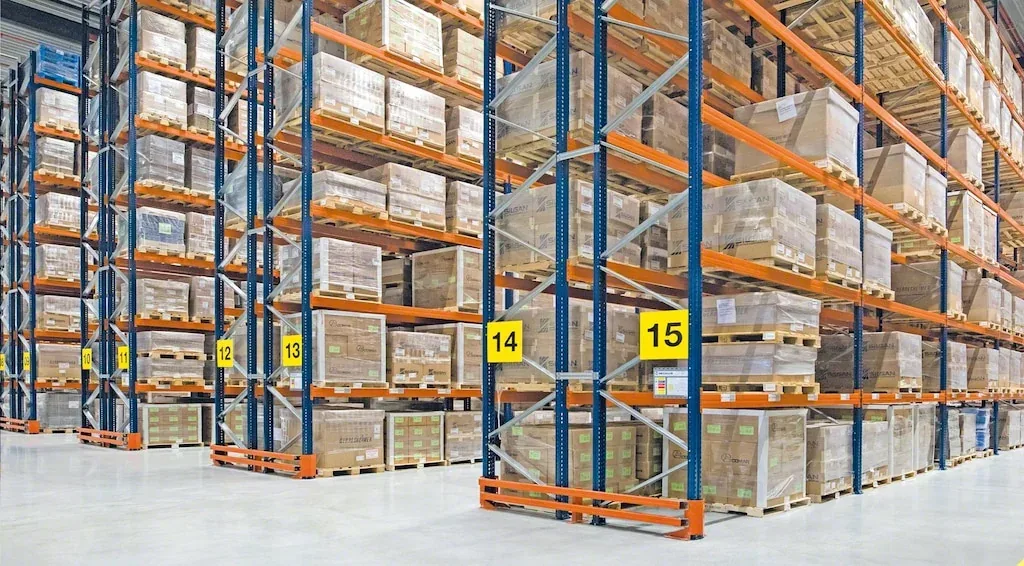
Pallet racking is the most common warehouse storage system. It’s versatile, affordable, and works for most inventory types.
- Best for: Mixed inventory with frequent picking
- Pros: Flexible, affordable, easy to install
- Cons: Lower density than other systems
- Cost: $$ (most affordable)
2. Cantilever Racking
Cantilever racking is designed for long, bulky items like lumber, pipes, and steel bars.
- Best for: Long materials and irregular shapes
- Pros: Easy access, flexible configurations
- Cons: Lower weight capacity than pallet racking
- Cost: $$ (moderate)
3. Drive-In Racking
Drive-in racking allows forklifts to enter the racking structure, maximizing storage density.
- Best for: Bulk storage of similar products
- Pros: High density, space-efficient
- Cons: Limited aisle access, LIFO only
- Cost: $$$ (expensive)
4. Push-Back Racking
Push-back racking uses nested carts on inclined rails for flexible, high-density storage.
- Best for: High-density storage with flexible access
- Pros: Good density, LIFO workflow
- Cons: More expensive than pallet racking
- Cost: $$$ (expensive)
5. Pallet Flow Racking
Pallet flow racking uses gravity-fed rollers for FIFO (first-in, first-out) operations.
- Best for: High-volume, fast-moving inventory
- Pros: FIFO workflow, efficient picking
- Cons: More expensive, requires slope
- Cost: $$$ (expensive)
How to Choose the Right System
Step 1: Analyze Your Inventory
- What types of products do you store?
- How many SKUs do you have?
- What’s your inventory turnover rate?
- What are your weight requirements?
Step 2: Evaluate Your Space
- How much floor space do you have?
- How high can you stack?
- What’s your aisle width?
- Do you need future expansion room?
Step 3: Consider Your Operations
- How frequently do you pick inventory?
- Do you need FIFO or LIFO?
- What’s your forklift type and size?
- What’s your budget?
Step 4: Calculate ROI
Compare the cost of each system against the benefits:
- Storage capacity increase
- Productivity improvement
- Safety benefits
- Maintenance costs
Conclusion
The right warehouse storage system can transform your operation. Take time to analyze your needs, compare options, and consult with experts. The investment will pay dividends in efficiency, safety, and profitability.
Ready to upgrade your warehouse? Contact Rocky Mountain Warehouse Solutions for a free consultation.