Steel Fabrication in West Valley City, UT
Custom fabrication requests in West Valley City come mostly from the food and beverage manufacturing base and from auto parts and building materials operations working in buildings that were laid out for something else. Food and beverage work carries the most specific requirements: equipment platforms, conveyor supports, and access structures here frequently need stainless or specialized epoxy coatings, and more importantly connection details that avoid crevices, ledges, and hollow sections where moisture and product residue collect. A structurally sound platform with a detail that traps residue is a sanitation finding rather than a cosmetic issue, so we design against that requirement alongside the load requirement. The city's older industrial stock produces the second category: platforms and supports fitted around existing floor trenches, irregular column bays, and structural additions made piecemeal over decades. Field measurement comes first on those, because as-built conditions reliably differ from drawings and a platform fabricated two inches off is scrap rather than a punch-list item. Anything supporting personnel needs guardrail, egress, and live load rating reviewed by West Valley City's building department, plus connection and anchorage design consistent with the Salt Lake City segment seismic requirements.
Steel Fabrication Solutions for West Valley City Warehouses
West Valley City is Utah's second-largest city and a major industrial hub, with significant warehouse and distribution activity concentrated along the I-215 and Bangerter Highway corridors. The city's central location within the Salt Lake Valley makes it a preferred address for regional distribution operations.
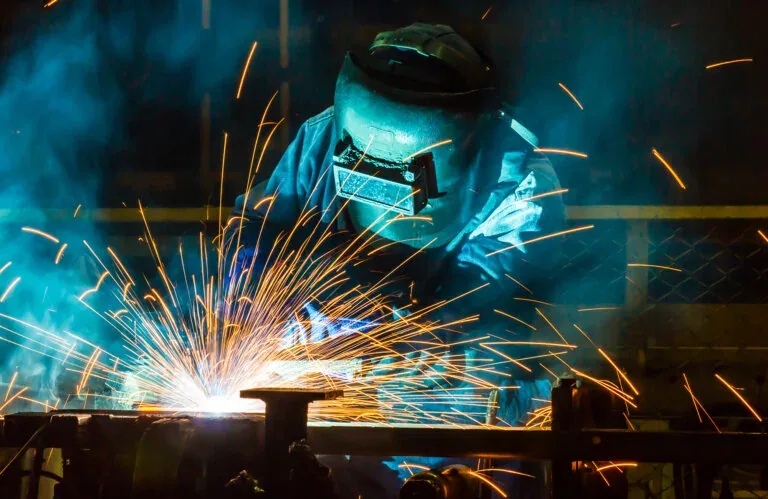
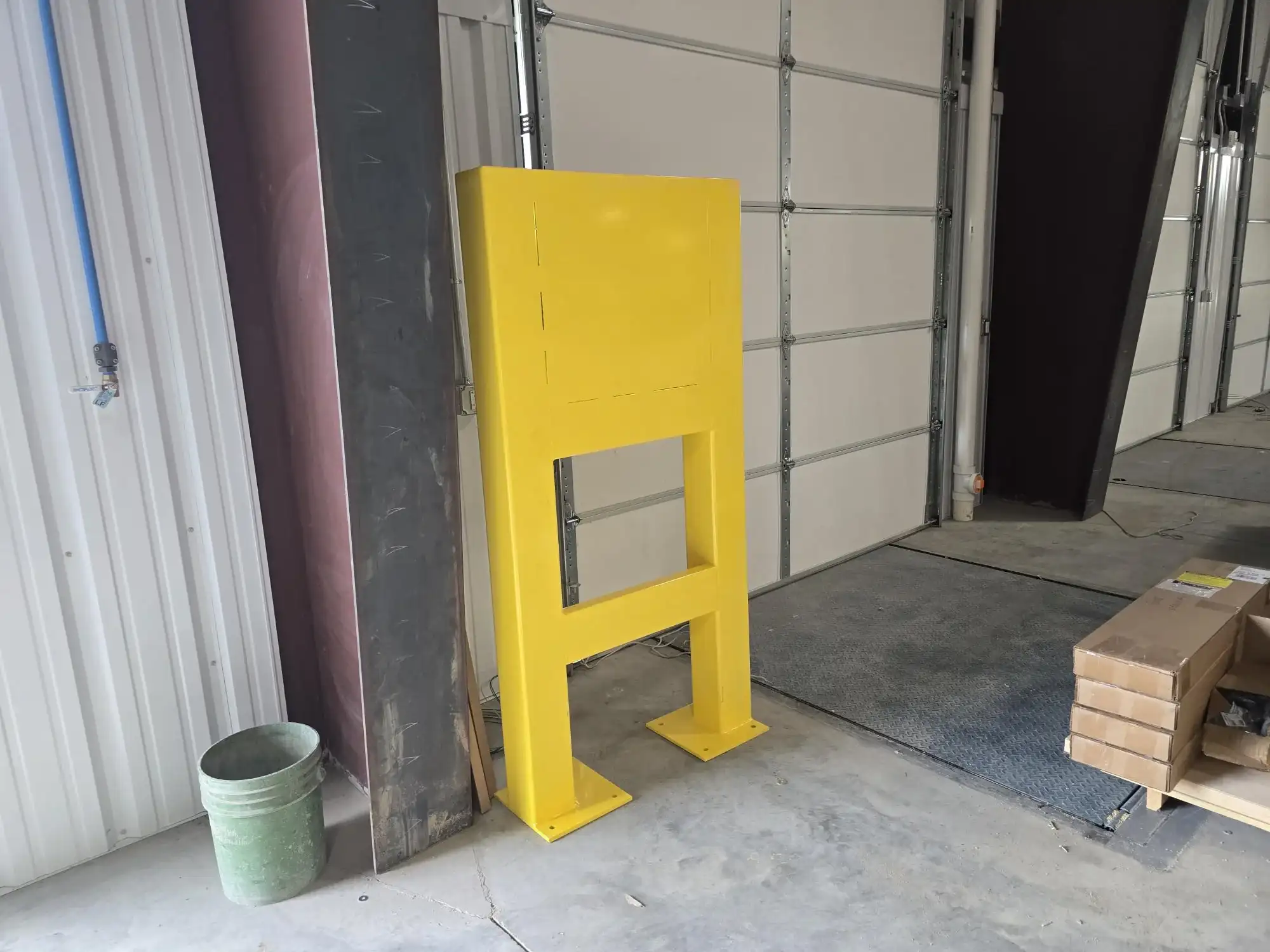
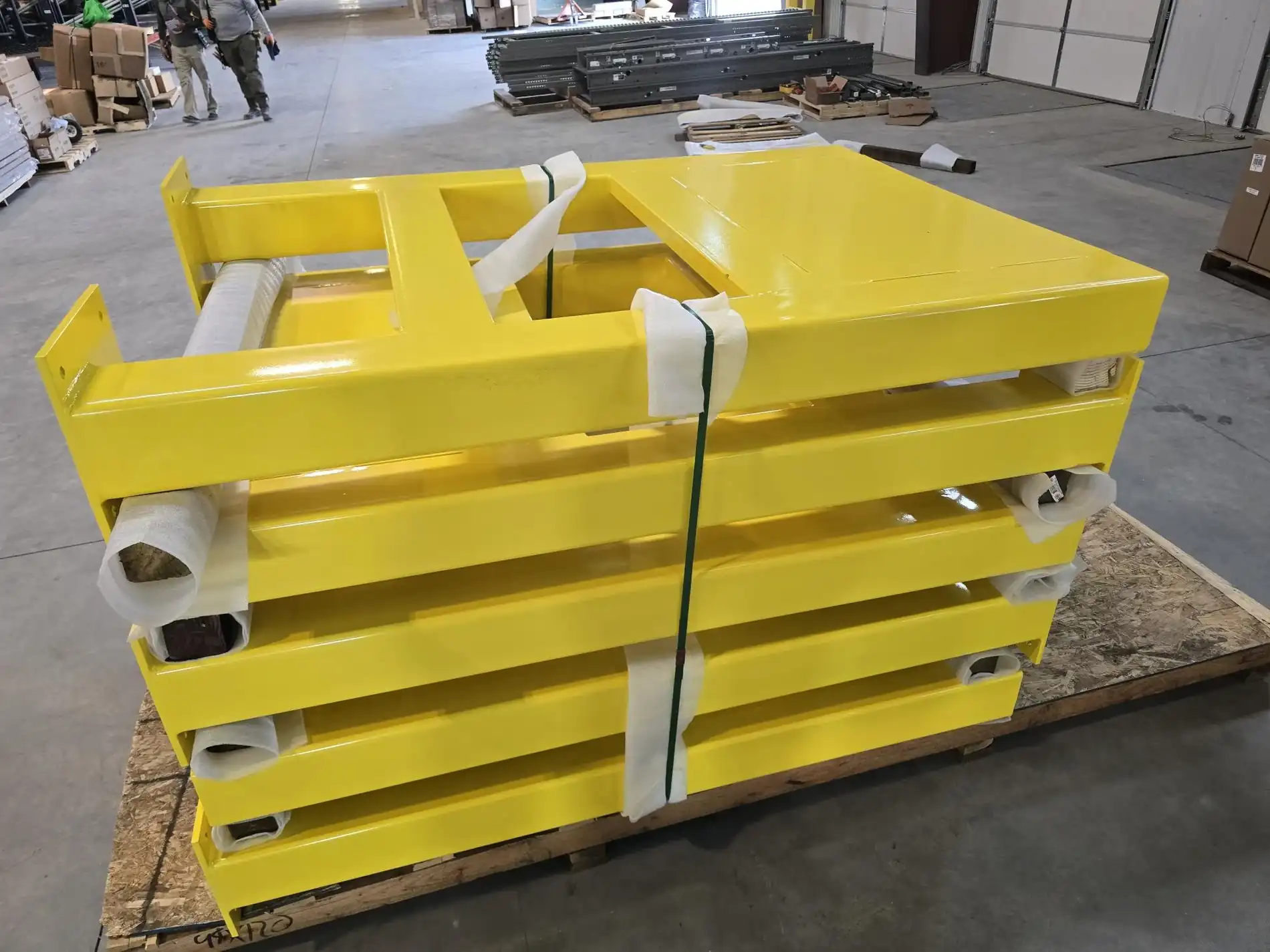
When off-the-shelf solutions do not fit your unique application, our custom steel fabrication capabilities deliver purpose-built structures. We fabricate equipment platforms, work decks, conveyor supports, custom rack components, steel staircases, guard rails, and specialty storage fixtures. Our fabrication partner delivers precision-welded structural steel to your specifications, and our installation crews bring those structures on-site and into service. If you can draw it or describe it, we can build it.
Custom steel fabrication fills the gaps that standard products cannot address. A conveyor support structure that must bridge an existing concrete trench, an elevated equipment platform that must integrate with existing mezzanine framing, a custom rack section that fits an irregular building column bay: these are the kinds of challenges that our fabrication capabilities solve. Every custom project is reviewed by our engineering team for structural adequacy, weldability, and installation feasibility before fabrication begins.
Rocky Mountain Warehouse Solutions serves manufacturing plants, distribution centers, food processing facilities, energy and mining operations, and government facilities across the Mountain West. Our fabrication lead times are typically faster than national fabricators because we maintain a local relationship with our fabrication partner and handle project management in-house. From initial concept to installed structure, we manage the entire process so you do not need to coordinate between multiple vendors.
Custom fabrication is usually the right answer when a standard product would need to be modified so heavily that its engineering no longer applies. Cutting down a catalog rack section to fit an irregular column bay voids the manufacturer's capacity rating; fabricating a purpose-built section to the same load requirement does not. We take that route when the building, the equipment, or the process genuinely does not accommodate a standard configuration, and we say so when a standard product would serve you better and cost less.
Salt Lake County: seismic design, permitting, and site conditions
Salt Lake County sits directly over the Salt Lake City segment of the Wasatch fault zone, one of the most active segments in the system, and it also holds the densest concentration of warehouse and distribution square footage in the state. Storage racking here is designed to the higher end of the seismic range we work in, which in practice means engineered base plates, anchor patterns calculated against the actual slab, tighter limits on unbraced upright height, and in taller configurations additional row bracing or a deliberate seismic separation from the building structure.
Site conditions vary more inside this county than buyers expect. The northwest quadrant around the I-80 and I-215 corridors carries a large stock of older industrial buildings where slab thickness, compressive strength, and saw-cut joint layout genuinely constrain anchor selection, while the newer tilt-up development on the west side of the valley generally offers clean slabs and the clear height to justify taller systems. We assess the floor before specifying base plates rather than after, because an anchor that fails an edge-distance check changes the whole base design.
Permitting is administered by Salt Lake County and by the individual municipalities inside it, including Salt Lake City, West Valley City, Sandy, Murray, West Jordan, South Jordan, and Draper, each running its own building department and its own review practice. Thresholds for when a storage rack installation requires a permit and stamped drawings are set at that level, so we confirm with the specific jurisdiction during layout. Our own facility is in Bluffdale, at the south end of the county, so site visits, delivery, and warranty service happen on our own schedule rather than a freight carrier's.
Codes, Compliance, and Enforcement in UT
Utah is a state where storage racking is engineered, not just assembled. Steel storage racks are treated as nonbuilding structures under ASCE 7 with their own design provisions, and much of Utah's warehouse square footage sits in parts of the state where seismic load is a governing design factor rather than a formality. In practice that means engineered base plates, anchor patterns calculated against the actual slab rather than a catalog default, limits on unbraced upright height, and in taller configurations additional row bracing or a deliberate seismic separation from the building structure. How much of that applies depends heavily on where in Utah the facility sits, which is why we work the seismic question at the county and site level rather than quoting a single statewide answer.
Permitting in Utah is local. There is no statewide storage rack permit threshold; county and municipal building departments set their own requirements for when an installation needs a permit, stamped drawings, anchor calculations, and load capacity documentation. Review practice varies noticeably between jurisdictions, so we confirm requirements with the authority having jurisdiction over your specific building during layout rather than after the racking is on site. Slab condition is the input buyers most often overlook: anchor pull-out values depend on concrete depth, compressive strength, and proximity to joints and slab edges, so an older building can drive a different base plate design than a new tilt-up shell in the same city.
Workplace safety enforcement is genuinely statewide. Utah operates its own OSHA-approved State Plan through Utah Occupational Safety and Health, a division of the Utah Labor Commission, rather than relying on federal OSHA. There is no rack-specific OSHA standard anywhere in the country, but storage systems are reachable through general materials handling and storage requirements and the general duty obligation to provide a workplace free of recognized hazards. We design to RMI ANSI MH16.1, provide engineered load capacity labeling on every installation, and retain the anchor, as-built, and inspection documentation that a UOSH inspector, an insurer, or a plan reviewer is likely to ask for.
Technical Specifications & Buying Guide
Structural steel fabrication uses material certified to ASTM standards: A36 for general structural shapes, A572 Grade 50 for higher-strength applications, and HSS (hollow structural sections) in round, square, and rectangular profiles for columns, frames, and guardrail systems. Welding is performed to AWS D1.1 Structural Welding Code, with weld procedures and welder qualifications maintained for the material and process used. Finished structures are typically primed or powder-coated for corrosion resistance, with stainless steel or epoxy coating options available for food-grade or chemical-resistant applications.
Engineering is an integral part of the custom fabrication process. For structures that will be permitted or that carry significant loads, a licensed structural engineer reviews the design for code compliance, specifies connections, and stamps the drawings for permit submission. Load calculations account for dead load (the structure itself), live load (product, equipment, or personnel), seismic loads per IBC for the local zone, and any dynamic loads from conveyor systems, forklifts, or vibrating equipment. Anchor bolt design and the connection of the structure to the building floor or wall is a critical engineering element, as improperly designed anchor connections are a common failure point in field-fabricated structures.
Fabrication tolerances and shop drawings are provided prior to manufacturing so clients can verify dimensions before steel is cut. Field measurement of existing conditions is included in our process for projects that must integrate with existing equipment, building structure, or utility locations. On-site fitting and welding is available for structures that cannot be fully assembled in the shop, and our installation crews are trained in safe rigging and structural erection procedures.
Custom structural work follows a defined sequence, and skipping steps is where fabrication projects go wrong. Field measurement comes first, because as-built conditions rarely match drawings in older industrial buildings, and a platform fabricated to a drawing dimension that is two inches off in the field becomes scrap. Engineering review follows, covering structural adequacy for the specified live and dead loads, connection design, weldability, and the practical question of whether the finished assembly can be moved into the building and lifted into position through the openings that exist. Shop fabrication and finish come next, then field installation and, where the structure supports personnel or equipment, load verification and documentation. Elevated work platforms and mezzanine-integrated structures carry additional code requirements for guardrail, egress, and live load rating that are set by the building department rather than by the fabricator.
Finish selection should be made against the environment rather than by default. Standard powder coat suits dry indoor use. Hot-dip galvanizing is appropriate for outdoor structures, unheated spaces, and anywhere with sustained moisture exposure, and it is considerably cheaper to specify at fabrication than to remediate after corrosion appears. Food processing and washdown environments frequently require stainless steel or specialized epoxy coatings, along with connection details that avoid crevices where moisture and product residue collect. Structures in higher seismic design categories require connection and anchorage design consistent with the building's seismic requirements, which is a design input rather than an afterthought. Our fabrication work is structural: platforms, work decks, conveyor supports, custom rack components, staircases, guard rails, and specialty fixtures built from structural shapes and plate. If you are not sure whether your project fits that description, describe it to us and we will scope it. We would rather have the conversation than have you guess.
Key Benefits of Steel Fabrication in West Valley City
- Custom-engineered for your specific application
- Structural steel, not light gauge sheet metal
- Designed and stamped by professional engineers
- Fabricated to AISC standards
- Powder-coat or primer finish options
- Installed by our trained crews
- Faster lead times than national fabricators
Industries We Serve in West Valley City
Manufacturing
Steel Fabrication systems tailored for the operational requirements of manufacturing facilities in West Valley City.
Distribution and logistics
Steel Fabrication systems tailored for the operational requirements of distribution and logistics facilities in West Valley City.
Food and beverage
Steel Fabrication systems tailored for the operational requirements of food and beverage facilities in West Valley City.
Energy and mining
Steel Fabrication systems tailored for the operational requirements of energy and mining facilities in West Valley City.
Government and military
Steel Fabrication systems tailored for the operational requirements of government and military facilities in West Valley City.
Construction
Steel Fabrication systems tailored for the operational requirements of construction facilities in West Valley City.
Common Use Cases in West Valley City
Equipment support platforms
Our West Valley City installations for equipment support platforms are engineered to perform under real operational conditions, not just spec sheets.
Conveyor support structures
We configure Steel Fabrication systems that solve real conveyor support structures challenges for West Valley City operations of every size.
Custom rack components
From layout planning to final installation, we deliver Steel Fabrication optimized for custom rack components in West Valley City.
Steel staircases and catwalks
Rocky Mountain Warehouse Solutions specializes in Steel Fabrication for steel staircases and catwalks, serving facilities across West Valley City and the Mountain West.
Guard rail and safety systems
West Valley City warehouses relying on Steel Fabrication for guard rail and safety systems benefit from our engineered layouts and expert installation.
Specialty material handling fixtures
We design and install Steel Fabrication configurations built for the demands of specialty material handling fixtures in West Valley City warehouses.
Why West Valley City Businesses Choose Rocky Mountain Warehouse Solutions
Rocky Mountain Warehouse Solutions has completed over 500 projects and installed over 1,200 systems across the Mountain West, including West Valley City and the surrounding region.
We carry new and certified-used Steel Fabrication inventory, giving West Valley City businesses flexible options that match their budget without compromising safety or compliance.
Whether your West Valley City operation runs one shift or three, Steel Fabrication systems from Rocky Mountain Warehouse Solutions are built to handle the throughput demands of active warehouse environments.
Our West Valley City project timeline is built around your schedule. We phase installations when needed to keep your operation running, and our crews work efficiently to minimize disruption.
Frequently Asked Questions About Steel Fabrication in West Valley City
What materials do you fabricate?
We work primarily with structural steel (A36 and A572 grades) and HSS tubing in square, rectangular, and round profiles. We can also incorporate stainless steel for food-grade applications and aluminum for weight-sensitive or corrosion-prone structures. All materials are sourced from certified domestic mills with mill certifications available on request.
Rocky Mountain Warehouse Solutions serves West Valley City, UT and surrounding Salt Lake County businesses. Contact us for local pricing and availability.
Do you provide engineer-stamped drawings?
Yes. Structural fabrications used as load-bearing structures or that will be submitted for a building permit are engineered and stamped by a licensed structural engineer. We coordinate with local authorities having jurisdiction (AHJ) for permit submission and respond to plan check comments.
Rocky Mountain Warehouse Solutions serves West Valley City, UT and surrounding Salt Lake County businesses. Contact us for local pricing and availability.
How long does custom steel fabrication take?
Lead times vary by project complexity. Simple equipment frames or guardrail systems can be fabricated in 1–2 weeks. Larger structures with engineering, permit requirements, and complex connections typically take 3–6 weeks from final design approval to delivery. We provide schedule commitments at the time of quoting.
Rocky Mountain Warehouse Solutions serves West Valley City, UT and surrounding Salt Lake County businesses. Contact us for local pricing and availability.
Can you match existing structures or finish colors?
Yes. For additions to existing structures, we match member sizes, connection styles, and finish colors as closely as possible. For powder-coat color matching, we use standard RAL or custom-matched colors. For structural steel additions that will be load-bearing connections to existing steel, we verify the existing member capacity before designing the connection.
Rocky Mountain Warehouse Solutions serves West Valley City, UT and surrounding Salt Lake County businesses. Contact us for local pricing and availability.
What is the difference between a fabricated structure and a modular system?
Modular systems (like mezzanines and wire partitions) are manufactured in standard sizes and configurations for quick installation at lower cost. Custom fabrication is for applications where standard products do not fit, or where the load, span, or geometry requires a purpose-designed structure. We recommend modular systems when they fit the application. Custom fabrication is for the cases they cannot.
Rocky Mountain Warehouse Solutions serves West Valley City, UT and surrounding Salt Lake County businesses. Contact us for local pricing and availability.
When does custom fabrication make more sense than a standard product?
Custom fabrication is the right answer when the building or process genuinely prevents a standard product from working: an equipment platform that must integrate with existing mezzanine framing, a conveyor support that has to bridge an existing floor trench, a rack section that fits an irregular column bay, or a work deck sized around non-standard machinery. It is the wrong answer when a standard product would fit with minor accommodation, because catalog products carry engineered capacity ratings, established lead times, and lower cost. Modifying a standard product heavily is usually the worst of both options, since field modification voids the manufacturer's capacity rating without providing the engineering that a purpose-built structure would.
Rocky Mountain Warehouse Solutions serves West Valley City, UT and surrounding Salt Lake County businesses. Contact us for local pricing and availability.
What information do you need to quote a custom fabrication project?
A sketch or description of what the structure needs to do, the loads it will carry including both live and dead load, the space it has to fit within, and photographs of the existing conditions around it. Existing drawings help but are rarely sufficient on their own, since as-built conditions in older industrial buildings frequently differ from the documents. For anything supporting personnel or equipment we will field-measure before fabrication regardless, but early photos and dimensions let us give a realistic budget range and lead time before committing to a site visit.
Rocky Mountain Warehouse Solutions serves West Valley City, UT and surrounding Salt Lake County businesses. Contact us for local pricing and availability.
Which OSHA agency oversees warehouse safety compliance in Utah?
Utah operates its own OSHA-approved State Plan through Utah Occupational Safety and Health (UOSH), a division of the Utah Labor Commission, rather than relying on federal OSHA directly. We design and document every Utah installation to meet UOSH's workplace safety standards.
Get a Free Quote for Steel Fabrication in West Valley City
Don't let storage constraints limit your West Valley City operation. Steel Fabrication from Rocky Mountain Warehouse Solutions is a proven, cost-effective solution — contact us to get started.
Related Products in West Valley City
Request a Quote for Steel Fabrication in West Valley City
Our team can help you choose the right warehouse solution, plan the layout, and move your project forward.
Get a Free Quote