Safety and Protection in Salt Lake City, UT
When a Salt Lake City-area rack takes an impact, we can typically get an inspector on-site within a day given how close most Wasatch Front facilities sit to our Bluffdale headquarters. A meaningful advantage since a damaged bay shouldn't stay loaded and in service any longer than necessary while waiting on an assessment.
Safety and Protection Solutions for Salt Lake City Warehouses
Utah's capital and largest city, Salt Lake City is the heart of the Wasatch Front industrial corridor. The city's warehousing and distribution sector spans the I-15 and I-80 interchange area, with major logistics hubs in the northwest quadrant near the Salt Lake City International Airport.
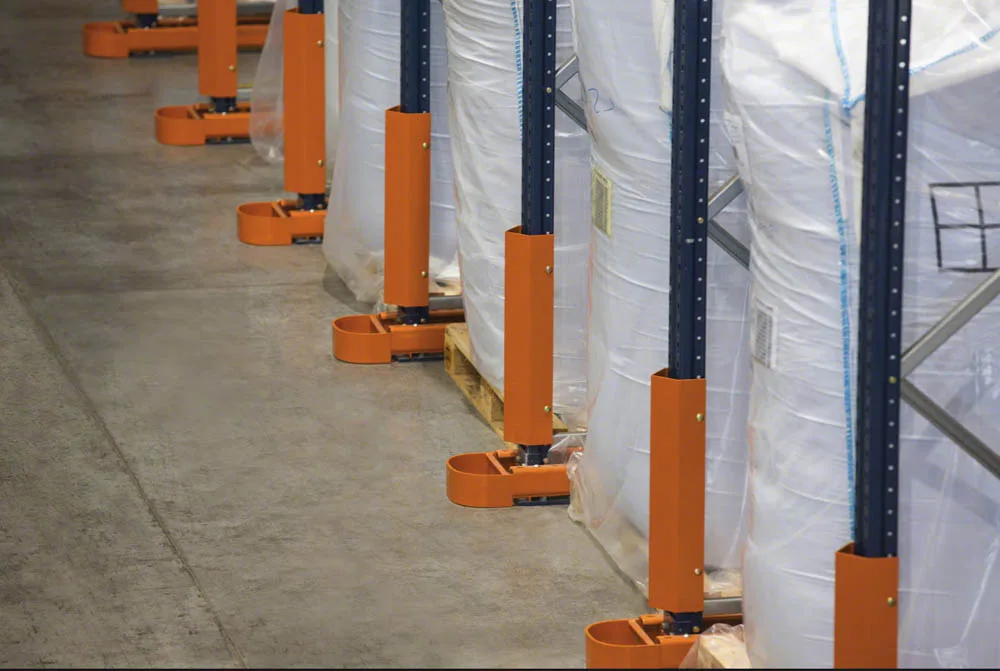
Warehouse safety equipment protects your people, your products, and your racking investment. A single forklift impact on an unprotected upright can damage the column beyond safe use, requiring immediate takedown of the bay and replacement of the upright, a costly and disruptive event that proper protection can prevent. We supply a full range of safety and protection products: upright column protectors, rack end guards, safety netting, bollards, guard rails, pallet rack safety bars, and wire decking. All products meet or exceed ANSI and OSHA requirements.
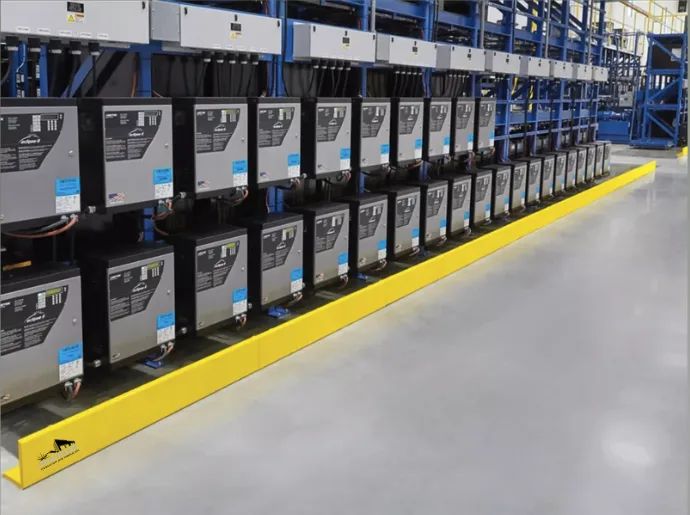
Beyond physical protection, a well-designed safety system communicates hazards clearly to forklift operators and pedestrians. High-visibility yellow column protectors signal the column location in low-light conditions. Safety netting on elevated rack levels prevents product from falling to the floor below. Bollards protect rack end caps, fire sprinkler risers, and other infrastructure from vehicle traffic. Guard rails create visual and physical separation between pedestrian walkways and forklift aisles, a requirement under OSHA 1910.178 for facilities where pedestrians and forklifts share the same floor.
Rocky Mountain Warehouse Solutions also provides post-impact racking inspections and engineer-certified damage assessments. When a rack upright is struck, the structural integrity of the entire bay is compromised and the system should not be reloaded until it has been evaluated. Our inspectors assess damage using RMI ANSI MH16.1 criteria and provide written reports with repair or replacement recommendations.
Salt Lake County: seismic design, permitting, and site conditions
Salt Lake County sits directly over the Salt Lake City segment of the Wasatch fault zone, one of the most active segments in the system, and it also holds the densest concentration of warehouse and distribution square footage in the state. Storage racking here is designed to the higher end of the seismic range we work in, which in practice means engineered base plates, anchor patterns calculated against the actual slab, tighter limits on unbraced upright height, and in taller configurations additional row bracing or a deliberate seismic separation from the building structure.
Site conditions vary more inside this county than buyers expect. The northwest quadrant around the I-80 and I-215 corridors carries a large stock of older industrial buildings where slab thickness, compressive strength, and saw-cut joint layout genuinely constrain anchor selection, while the newer tilt-up development on the west side of the valley generally offers clean slabs and the clear height to justify taller systems. We assess the floor before specifying base plates rather than after, because an anchor that fails an edge-distance check changes the whole base design.
Permitting is administered by Salt Lake County and by the individual municipalities inside it, including Salt Lake City, West Valley City, Sandy, Murray, West Jordan, South Jordan, and Draper, each running its own building department and its own review practice. Thresholds for when a storage rack installation requires a permit and stamped drawings are set at that level, so we confirm with the specific jurisdiction during layout. Our own facility is in Bluffdale, at the south end of the county, so site visits, delivery, and warranty service happen on our own schedule rather than a freight carrier's.
Codes, Compliance, and Enforcement in UT
Utah is a state where storage racking is engineered, not just assembled. Steel storage racks are treated as nonbuilding structures under ASCE 7 with their own design provisions, and much of Utah's warehouse square footage sits in parts of the state where seismic load is a governing design factor rather than a formality. In practice that means engineered base plates, anchor patterns calculated against the actual slab rather than a catalog default, limits on unbraced upright height, and in taller configurations additional row bracing or a deliberate seismic separation from the building structure. How much of that applies depends heavily on where in Utah the facility sits, which is why we work the seismic question at the county and site level rather than quoting a single statewide answer.
Permitting in Utah is local. There is no statewide storage rack permit threshold; county and municipal building departments set their own requirements for when an installation needs a permit, stamped drawings, anchor calculations, and load capacity documentation. Review practice varies noticeably between jurisdictions, so we confirm requirements with the authority having jurisdiction over your specific building during layout rather than after the racking is on site. Slab condition is the input buyers most often overlook: anchor pull-out values depend on concrete depth, compressive strength, and proximity to joints and slab edges, so an older building can drive a different base plate design than a new tilt-up shell in the same city.
Workplace safety enforcement is genuinely statewide. Utah operates its own OSHA-approved State Plan through Utah Occupational Safety and Health, a division of the Utah Labor Commission, rather than relying on federal OSHA. There is no rack-specific OSHA standard anywhere in the country, but storage systems are reachable through general materials handling and storage requirements and the general duty obligation to provide a workplace free of recognized hazards. We design to RMI ANSI MH16.1, provide engineered load capacity labeling on every installation, and retain the anchor, as-built, and inspection documentation that a UOSH inspector, an insurer, or a plan reviewer is likely to ask for.
Technical Specifications & Buying Guide
Column protectors are the most cost-effective safety investment in any warehouse. Heavy-duty polyethylene column protectors bolt to the floor around the base of the upright and are designed to absorb and redirect forklift impact forces. Standard protectors fit 3-inch and 4-inch column widths and are available in heights from 16 to 42 inches. For extra-high protection zones, steel column guards provide maximum impact resistance at high-traffic row ends and aisle intersections. The cost of a set of column protectors, typically $50–$150 per upright, is a fraction of the cost to replace a damaged column, which can run $400–$800 plus downtime.
Rack end guards (also called row end protectors) are steel or heavy-duty plastic assemblies that wrap around the end frame of a rack row, providing impact protection for the entire face of the upright. They are most important at row ends adjacent to forklift travel aisles, where the upright is most exposed to impact. End guards also serve as visual aisle markers, helping operators identify the end of each row during travel.
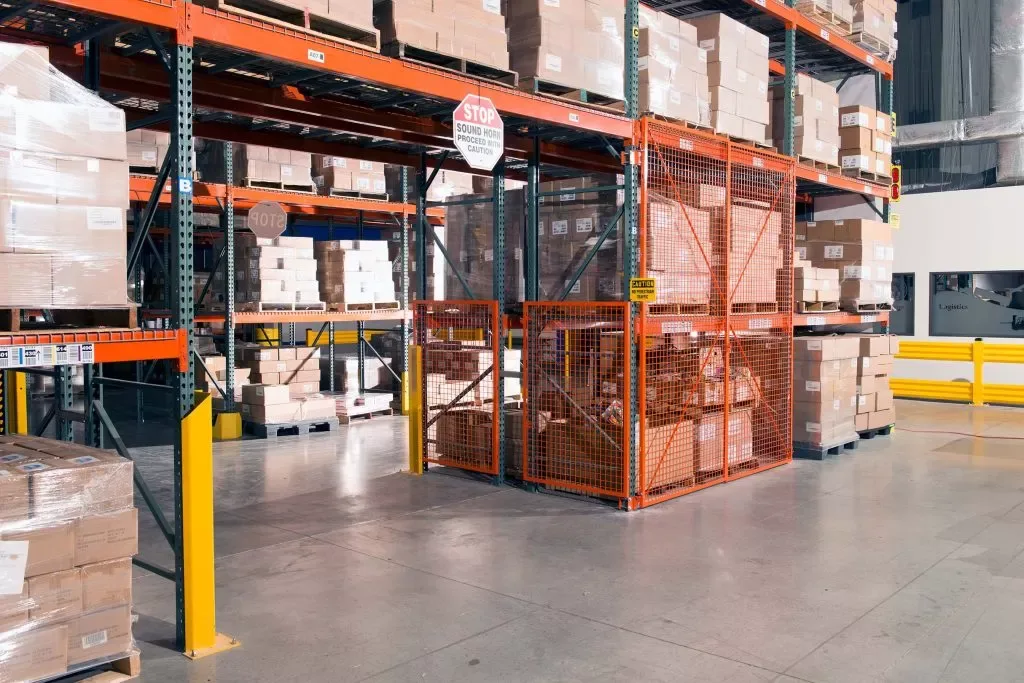
Safety netting and back-stops are required on elevated rack levels in many facilities to prevent product from falling or being pushed off the back of the rack. OSHA 1910.176 and local fire marshal requirements may specify particular netting specifications depending on your building type and occupancy. We supply wire mesh safety panels, polypropylene safety nets, and solid steel back-stop bars in configurations to match your rack depth and beam spacing. Load beam safety clips (sometimes called beam locks or safety pins) are a small but critical accessory. They prevent beams from accidentally dislodging from uprights during loading operations and are recommended by the RMI for all installations.
Key Benefits of Safety and Protection in Salt Lake City
- Protects rack uprights from forklift impact
- Reduces rack replacement costs
- OSHA and ANSI compliant products
- Highly visible yellow safety color standard
- Column protectors, end guards, bollards, and netting
- Wire decking for improved pallet support and visibility
- Post-impact inspection services
Industries We Serve in Salt Lake City
Distribution and logistics
Safety and Protection systems tailored for the operational requirements of distribution and logistics facilities in Salt Lake City.
Manufacturing
Safety and Protection systems tailored for the operational requirements of manufacturing facilities in Salt Lake City.
E-commerce fulfillment
Safety and Protection systems tailored for the operational requirements of e-commerce fulfillment facilities in Salt Lake City.
Food and beverage
Safety and Protection systems tailored for the operational requirements of food and beverage facilities in Salt Lake City.
Retail distribution
Safety and Protection systems tailored for the operational requirements of retail distribution facilities in Salt Lake City.
Government facilities
Safety and Protection systems tailored for the operational requirements of government facilities facilities in Salt Lake City.
Common Use Cases in Salt Lake City
High-traffic forklift aisle protection
We configure Safety and Protection systems that solve real high-traffic forklift aisle protection challenges for Salt Lake City operations of every size.
End-of-aisle rack guarding
From layout planning to final installation, we deliver Safety and Protection optimized for end-of-aisle rack guarding in Salt Lake City.
Column impact protection
Rocky Mountain Warehouse Solutions specializes in Safety and Protection for column impact protection, serving facilities across Salt Lake City and the Mountain West.
Safety netting for elevated storage
Salt Lake City warehouses relying on Safety and Protection for safety netting for elevated storage benefit from our engineered layouts and expert installation.
Pedestrian separation barriers
We design and install Safety and Protection configurations built for the demands of pedestrian separation barriers in Salt Lake City warehouses.
Fire sprinkler clearance compliance
Our team helps Salt Lake City businesses implement Safety and Protection solutions tailored specifically for fire sprinkler clearance compliance at any scale.
Why Salt Lake City Businesses Choose Rocky Mountain Warehouse Solutions
We don't subcontract our Salt Lake City installations. Your project is handled by our own ANSI/RMI-certified crews, start to finish.
Our Salt Lake City customers get direct access to project coordinators, not a call center. You'll work with the same team from quote through installation and follow-up.
Rocky Mountain Warehouse Solutions has worked with facilities throughout Salt Lake City and the surrounding region. We understand the local building codes, seismic requirements, and operational demands that affect how Safety and Protection systems should be designed and installed.
We handle Safety and Protection projects in Salt Lake City from start to finish — layout design, product procurement, delivery coordination, installation, and post-project documentation. You don't need to manage multiple vendors.
Frequently Asked Questions About Safety and Protection in Salt Lake City
What should I do if a rack upright is damaged by a forklift?
Take the damaged bay out of service immediately. Remove all product and cordon off the area. Do not attempt to repair it with non-OEM parts or continue using it. Contact us for a professional inspection. A qualified engineer will assess the damage against RMI ANSI MH16.1 criteria and provide a written repair or replacement recommendation.
Rocky Mountain Warehouse Solutions serves Salt Lake City, UT and surrounding Salt Lake County businesses. Contact us for local pricing and availability.
Are column protectors effective against forklift impact?
Yes. Heavy-duty column protectors absorb and redirect forklift impacts, protecting the upright beneath. They are a low-cost investment compared to upright replacement. A column protector costs $50–$150, while an upright replacement plus installation can cost $500–$1,000 or more. We recommend them on all row ends and high-traffic aisle locations.
Rocky Mountain Warehouse Solutions serves Salt Lake City, UT and surrounding Salt Lake County businesses. Contact us for local pricing and availability.
Are rack safety clips (beam locks) required?
The RMI recommends safety clips for all installations, and many local jurisdictions and insurance carriers require them. They prevent step beams from being accidentally dislodged from uprights during loading, a failure mode that can cause partial or full bay collapse. They are inexpensive and easy to install.
Rocky Mountain Warehouse Solutions serves Salt Lake City, UT and surrounding Salt Lake County businesses. Contact us for local pricing and availability.
What is OSHA's requirement for pedestrian and forklift separation?
OSHA 29 CFR 1910.178 requires that pedestrian areas be clearly marked and that adequate separation exist between pedestrian walkways and forklift traffic areas. This can be accomplished with painted floor markings, guardrails, bollards, or physical barriers. We help facilities design compliant separation systems as part of our safety product installations.
Rocky Mountain Warehouse Solutions serves Salt Lake City, UT and surrounding Salt Lake County businesses. Contact us for local pricing and availability.
How often should rack safety inspections be performed?
The RMI and ANSI MH16.1 recommend a formal rack inspection annually, with informal visual checks conducted more frequently by trained personnel. After any known or suspected forklift impact, the affected bays should be inspected and taken out of service until evaluated. We offer professional inspection services with written reports and engineer-certified assessments.
Rocky Mountain Warehouse Solutions serves Salt Lake City, UT and surrounding Salt Lake County businesses. Contact us for local pricing and availability.
Which OSHA agency oversees warehouse safety compliance in Utah?
Utah operates its own OSHA-approved State Plan through Utah Occupational Safety and Health (UOSH), a division of the Utah Labor Commission, rather than relying on federal OSHA directly. We design and document every Utah installation to meet UOSH's workplace safety standards.
Get a Free Quote for Safety and Protection in Salt Lake City
Rocky Mountain Warehouse Solutions makes it easy to move forward on Safety and Protection in Salt Lake City. One call gets you a site visit, a layout proposal, and a detailed quote.
Related Products in Salt Lake City
Nearby Service Areas
Request a Quote for Safety and Protection in Salt Lake City
Our team can help you choose the right warehouse solution, plan the layout, and move your project forward.
Get a Free Quote