Carton Flow Racking in Pueblo, CO
Steel and metals inventory in Pueblo moves almost entirely at the pallet or bulk level, so the carton flow installations we've done here tend to sit at smaller regional distribution operations instead.
Carton Flow Racking Solutions for Pueblo Warehouses
Pueblo is Southern Colorado's industrial center, home to steel manufacturing, distribution operations, and a growing logistics sector along I-25. The city's industrial base has diversified from its historic steel industry roots to include distribution, manufacturing, and energy sector operations.
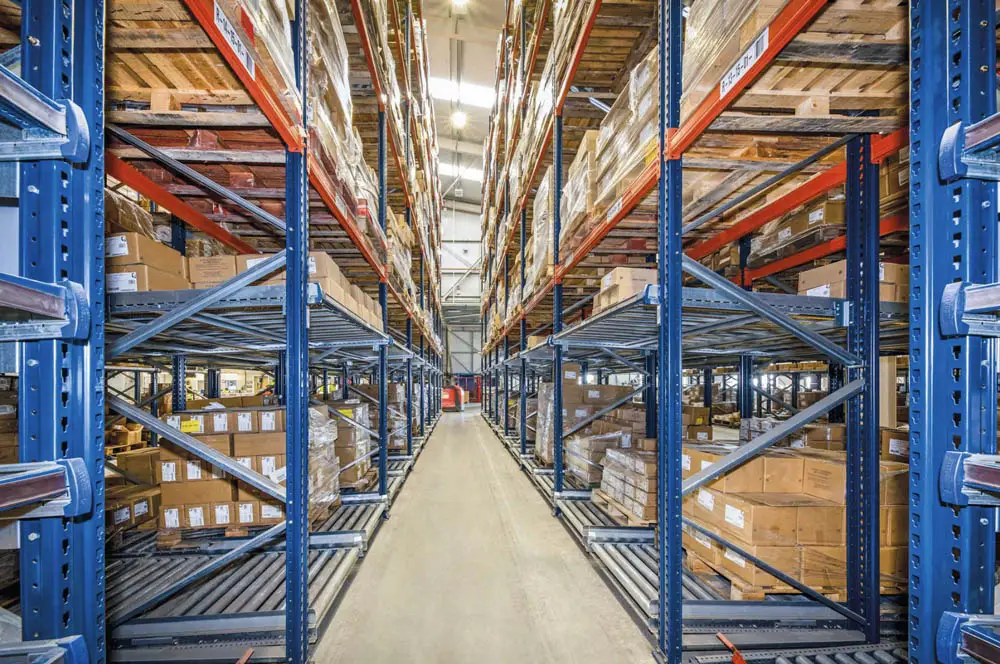
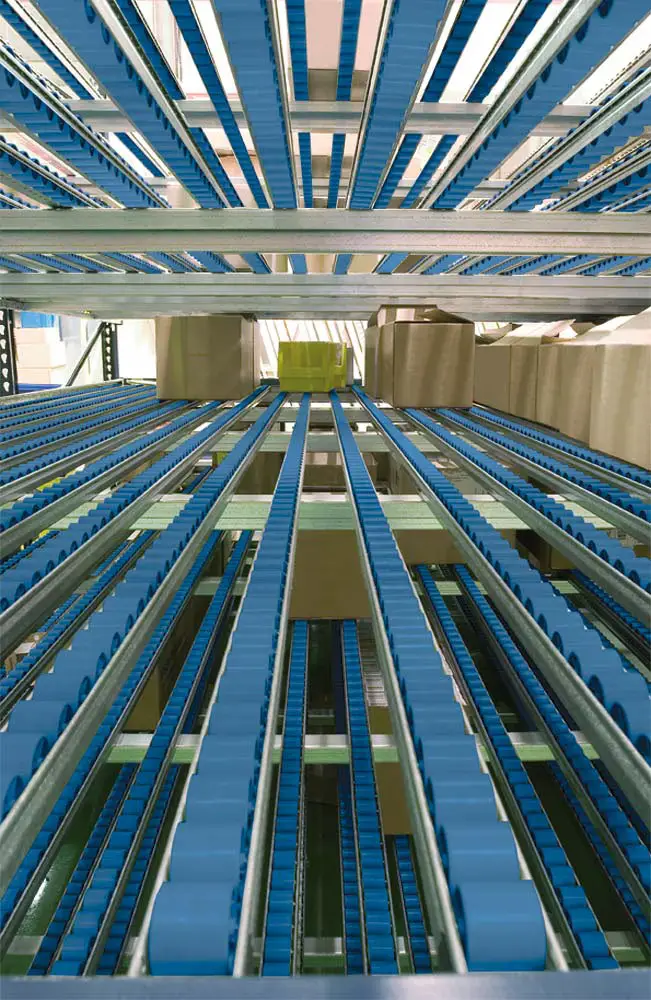
Carton flow racking, also called case flow racking, uses inclined roller or wheel tracks to gravity-feed cartons from the replenishment aisle to the pick face, creating a continuously replenished, first-in, first-out pick front. As a picker removes a carton from the pick face, the next carton in the lane slides forward automatically, eliminating the need for pickers to reach into the shelf or reposition product. Carton flow is a core component of modern pick module design and one of the most effective ergonomic improvements a distribution center can implement, reducing picker travel time by up to 50% compared to static shelving.
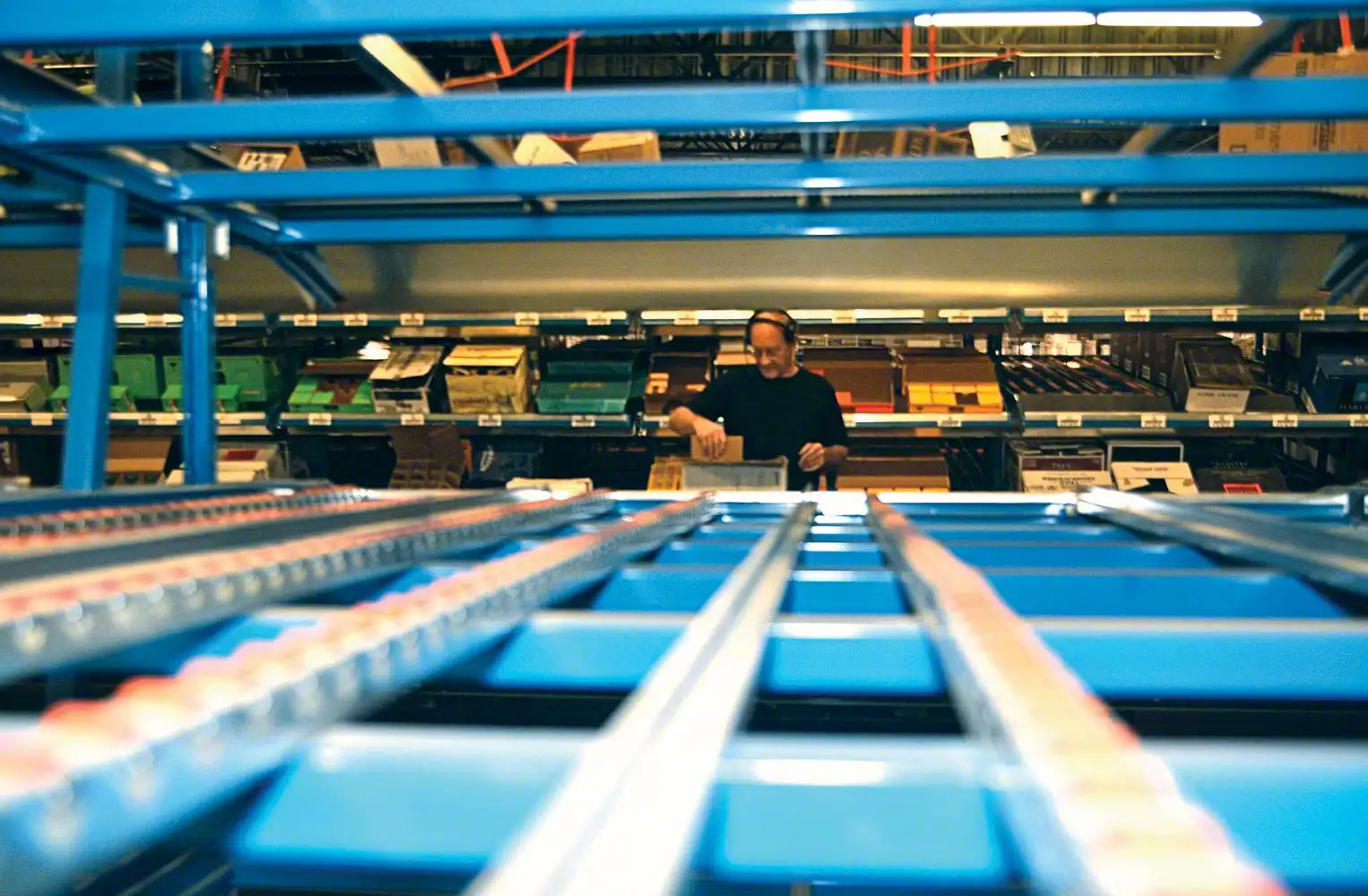
The productivity case for carton flow is well-established. In a traditional static shelving pick environment, pickers travel the full length of the pick aisle and reach into shelves at varying depths to retrieve each item. In a carton flow environment, the pick face is always full, product is always at the front of the lane, and the ergonomic pick position is consistent, reducing both travel time and the physical strain of deep-reaching into shelves. For high-velocity SKUs in particular, the constant forward presentation of fresh inventory enables a picking rhythm that static storage cannot match.
Rocky Mountain Warehouse Solutions designs and installs carton flow systems as standalone pick bays or as part of complete multi-level pick modules with conveyor integration. We specify wheel track spacings and lane widths based on your carton size profile, configure lane depth based on replenishment frequency, and integrate the system with your WMS pick locations. Systems are installed on standard teardrop pallet rack frames in most cases, making carton flow a cost-effective upgrade to an existing racking investment.
Codes, Compliance, and Enforcement in CO
Colorado's design constraints are different from Utah's in a way that matters for budgeting. The Front Range carries a comparatively low seismic hazard, so seismic loads are rarely the governing factor in a Denver, Boulder, Fort Collins, or Colorado Springs racking design the way they are along the Wasatch. What tends to govern instead is building geometry: clear height under sprinklers, column bay spacing, and slab condition in the older industrial stock around central Denver and Pueblo. That usually means a Colorado facility can put its budget into height and density rather than into seismic bracing and heavy base plate engineering.
Permitting is handled locally, and practice varies noticeably between Denver, Aurora, Colorado Springs, and the smaller Front Range and Western Slope jurisdictions. Some require a building permit and stamped drawings for storage racks above a threshold height; others treat racking as equipment and review it lightly or not at all. Because that determination is made by the local building department rather than at the state level, we confirm requirements with the authority having jurisdiction during layout rather than assuming a Denver answer applies in Grand Junction. Fire code review is often the more substantive constraint in Colorado: in-rack sprinkler requirements, flue space, and commodity classification frequently shape the rack configuration more than structural code does.
Workplace safety in Colorado is enforced directly by federal OSHA, since the state does not operate its own approved State Plan. We design every Colorado installation to federal OSHA expectations and to RMI ANSI MH16.1, with engineered load capacity labeling and post-installation documentation. Colorado's industrial mix pulls in a few specific directions: the I-25 and I-70 corridors carry high-throughput e-commerce fulfillment that puts real cycle wear on dock equipment, the Front Range craft beverage sector moves keg and case pallets on tight production-tied schedules, and Boulder Valley's pharmaceutical and biotech facilities expect documented, audit-ready maintenance records as part of their broader compliance program.
Technical Specifications & Buying Guide
Carton flow systems use either wheel tracks (rollers with individual plastic wheels on a steel axle) or skatewheel tracks (continuous rows of small plastic wheels) to support and move cartons down the inclined lane. Wheel track spacing (the distance between parallel tracks) is selected based on the minimum carton width in the system. For a mix of carton sizes, adjustable wheel track systems allow lane width to be changed without replacing components. Track inclination is typically 3/8 to 5/8 inch per foot, providing enough gravity to move cartons forward without excess speed at the pick face.
Lane depth in carton flow is determined by your replenishment cycle. If a replenishment operator restocks lanes once per shift, lanes should be deep enough to hold a full shift's worth of picks for each SKU without running empty. For high-velocity SKUs, this may mean 8–12 carton deep lanes; for slower-moving SKUs, 3–5 carton depth is typically sufficient. Lane dividers allow a single shelf level to accommodate multiple lane widths, maximizing the number of pick faces per vertical foot of racking height. Ergonomic pick heights, typically 28 to 52 inches above the floor, are the most productive and should be assigned to the highest-velocity SKUs.
Carton flow integrates naturally with pick-to-belt and pick-to-conveyor systems. In a pick module, the carton flow pick face is positioned directly above or adjacent to the take-away conveyor, allowing pickers to immediately deposit picked items onto the belt without carrying them. The separation of replenishment (from the back aisle) and picking (from the front aisle) allows replenishment and picking to occur simultaneously without congestion, further improving throughput. Lane position indicators, put-to-light systems, and pick-to-light systems are commonly integrated with carton flow to guide pickers and reduce errors in high-SKU-count environments.
Key Benefits of Carton Flow Racking in Pueblo
- Reduces picker travel time by 40–60%
- Continuous FIFO replenishment from the rear
- Ideal for high-velocity pick operations
- Integrates with pick module and conveyor systems
- Multiple wheel track spacings for carton size variety
- Gravity-powered: no electricity required
- Compatible with WMS pick systems
Industries We Serve in Pueblo
E-commerce fulfillment
Carton Flow Racking systems tailored for the operational requirements of e-commerce fulfillment facilities in Pueblo.
Distribution and logistics
Carton Flow Racking systems tailored for the operational requirements of distribution and logistics facilities in Pueblo.
Food and beverage
Carton Flow Racking systems tailored for the operational requirements of food and beverage facilities in Pueblo.
Pharmaceutical
Carton Flow Racking systems tailored for the operational requirements of pharmaceutical facilities in Pueblo.
Third-party logistics
Carton Flow Racking systems tailored for the operational requirements of third-party logistics facilities in Pueblo.
Retail replenishment
Carton Flow Racking systems tailored for the operational requirements of retail replenishment facilities in Pueblo.
Common Use Cases in Pueblo
Piece-pick order fulfillment
Carton Flow Racking systems we install in Pueblo for piece-pick order fulfillment are sized for your current needs and designed to scale as your operation grows.
Case-pick distribution
Facilities in Pueblo use our Carton Flow Racking systems for case-pick distribution because we deliver configurations that actually match how their operation works.
Pick module design
When Pueblo facilities need Carton Flow Racking for pick module design, we provide turnkey solutions that cover design, procurement, installation, and documentation.
High-velocity SKU storage
Our Pueblo installations for high-velocity sku storage are engineered to perform under real operational conditions, not just spec sheets.
Ergonomic picking at proper height
We configure Carton Flow Racking systems that solve real ergonomic picking at proper height challenges for Pueblo operations of every size.
FIFO product rotation
From layout planning to final installation, we deliver Carton Flow Racking optimized for fifo product rotation in Pueblo.
Why Pueblo Businesses Choose Rocky Mountain Warehouse Solutions
Our Pueblo customers consistently tell us the same things: fast quotes, crews that show up on time, and systems that perform exactly as designed.
Rocky Mountain Warehouse Solutions backs every Carton Flow Racking installation in Pueblo with post-installation support, safety documentation, and load capacity labeling.
The Pueblo industrial market has grown significantly in recent years, and storage efficiency has become a competitive advantage. Carton Flow Racking gives local operations a practical way to increase capacity without signing a new lease.
Every Carton Flow Racking project we complete in Pueblo follows the same proven process: site assessment, engineered layout design, permit coordination if required, professional installation, load capacity labeling, and a final safety inspection.
Frequently Asked Questions About Carton Flow Racking in Pueblo
What is the difference between carton flow and pallet flow?
Carton flow handles individual cartons and cases using wheel or roller tracks sized for case dimensions (typically 4–24 inches wide). Pallet flow handles full pallets on heavy-duty roller lanes. Carton flow is used in piece-pick and case-pick operations; pallet flow is used for bulk pallet storage and replenishment.
Rocky Mountain Warehouse Solutions serves Pueblo, CO and surrounding Pueblo County businesses. Contact us for local pricing and availability.
Can carton flow be added to existing pallet racking?
Yes. Carton flow tracks can be retrofitted into existing teardrop pallet racking using universal rail kits that clamp onto standard beam steps. This is a cost-effective way to convert static shelving bays to high-productivity pick faces without replacing the structural racking frame.
Rocky Mountain Warehouse Solutions serves Pueblo, CO and surrounding Pueblo County businesses. Contact us for local pricing and availability.
What carton sizes can carton flow handle?
Standard carton flow systems handle cartons from approximately 4 inches to 24 inches wide and from 3 inches to 12 inches tall. For smaller items, dividers can be added to create narrower lanes. For very heavy or oversized cartons, heavy-duty wheel tracks with closer spacing and steeper inclination maintain reliable gravity flow.
Rocky Mountain Warehouse Solutions serves Pueblo, CO and surrounding Pueblo County businesses. Contact us for local pricing and availability.
How do I determine the right lane depth for carton flow?
Lane depth is driven by replenishment frequency and SKU velocity. For high-velocity SKUs picked hundreds of times per day, deep lanes (8–12 cartons) reduce replenishment frequency. For slower SKUs, 3–5 cartons deep is usually adequate. We size lanes based on your SKU velocity data to minimize replenishment labor while keeping pick faces stocked.
Rocky Mountain Warehouse Solutions serves Pueblo, CO and surrounding Pueblo County businesses. Contact us for local pricing and availability.
What is a pick module?
A pick module is a multi-level storage and picking structure that combines mezzanine levels, carton flow racking, pallet flow racking, and conveyor systems into an integrated order fulfillment operation. Multiple pick levels are connected by a take-away conveyor that collects picked items from each level and routes them to packing and shipping. Pick modules can dramatically increase pick productivity in high-SKU, high-volume operations.
Rocky Mountain Warehouse Solutions serves Pueblo, CO and surrounding Pueblo County businesses. Contact us for local pricing and availability.
Does Colorado have its own state OSHA program?
No. Colorado does not operate an OSHA-approved State Plan, so workplace safety is enforced directly by federal OSHA rather than a state agency. We design every Colorado installation to meet federal OSHA's standards for warehouse racking and storage systems.
Get a Free Quote for Carton Flow Racking in Pueblo
Contact us today to discuss your Carton Flow Racking needs in Pueblo. We'll help you find the right configuration, the right timeline, and the right price for your project.
Related Products in Pueblo
Nearby Service Areas
Request a Quote for Carton Flow Racking in Pueblo
Our team can help you choose the right warehouse solution, plan the layout, and move your project forward.
Get a Free Quote