Conveyor Systems in Ogden, UT
Ogden's rail-adjacent distribution operations often need induction conveyor sized for freight arriving off rail cars rather than standard parcel dimensions, while aerospace and defense manufacturers more commonly need scan-verified tracking integrated into a production-line conveyor system.
Conveyor Systems Solutions for Ogden Warehouses
Ogden is a key industrial center in northern Utah, with a strong manufacturing and distribution base anchored by Hill Air Force Base, Union Pacific's major rail hub, and a growing logistics sector along the I-15 and I-84 corridors.
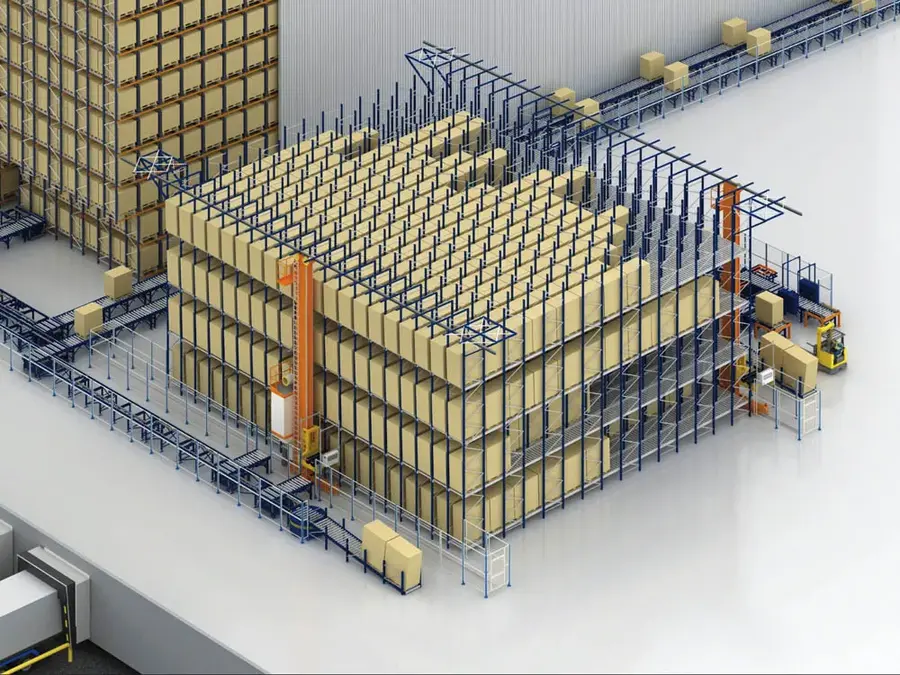
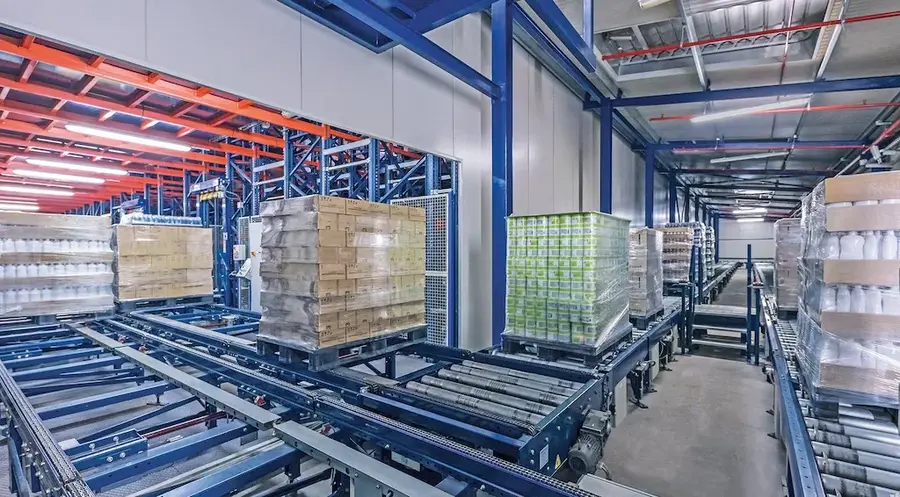
Conveyor systems are the foundation of efficient order fulfillment and material flow. They eliminate the need for workers to carry, push, or move product manually through a facility, redirecting that labor to higher-value tasks. We design and install belt conveyors, roller conveyors, gravity flow conveyors, and accumulation systems for warehouses, distribution centers, and manufacturing facilities. Our systems integrate with pick stations, sorters, packing stations, and shipping docks to create a seamless material flow from receiving to dispatch.
The ROI on conveyor automation is well-documented. Facilities that transition from manual cart-based picking to pick-to-belt conveyor systems consistently report throughput increases of 25–50% with the same headcount. Sortation conveyors eliminate manual divert decisions, reducing errors and improving order accuracy. Gravity conveyor in shipping staging areas reduces the physical demand on workers at the end of the fulfillment line, decreasing fatigue-related errors during peak shifts.
Rocky Mountain Warehouse Solutions designs conveyor systems scaled for facilities of all sizes, from a simple 50-foot gravity roller line connecting a pick area to a packing station, to fully integrated multi-level pick module conveyor networks with automated sortation. We work with your operations team to understand your product profile, throughput requirements, and WMS integration needs before specifying a system, ensuring the conveyor investment delivers measurable performance improvements.
Weber County: older industrial stock and Weber segment seismic
Weber County sits over the Weber segment of the Wasatch fault zone, placing Ogden-area installations in the higher seismic design range along with the rest of the Front. Base plate design, anchor specification, and bracing are engineered to the site rather than carried over from a lower-hazard market.
Ogden's industrial building stock is the practical constraint here. The city's rail heritage left a substantial inventory of older warehouse and manufacturing buildings, many with lower clear heights, irregular column bays, and slabs poured long before anyone anticipated anchoring storage racks into them. Business Depot Ogden and the surrounding industrial parks include a wide range of building vintages side by side. Those conditions frequently change the answer on how tall a system can go and what anchor type is appropriate, which is why we measure and assess the slab before quoting rather than pricing from a drawing.
Permitting is handled by Weber County and by the municipalities including Ogden, Roy, and Riverdale, each with its own building department and submittal expectations. Weber County also anchors a defense and aerospace supply base tied to Hill Air Force Base to the south, which brings the same documentation expectations we plan for in Davis County.
Codes, Compliance, and Enforcement in UT
Utah is a state where storage racking is engineered, not just assembled. Steel storage racks are treated as nonbuilding structures under ASCE 7 with their own design provisions, and much of Utah's warehouse square footage sits in parts of the state where seismic load is a governing design factor rather than a formality. In practice that means engineered base plates, anchor patterns calculated against the actual slab rather than a catalog default, limits on unbraced upright height, and in taller configurations additional row bracing or a deliberate seismic separation from the building structure. How much of that applies depends heavily on where in Utah the facility sits, which is why we work the seismic question at the county and site level rather than quoting a single statewide answer.
Permitting in Utah is local. There is no statewide storage rack permit threshold; county and municipal building departments set their own requirements for when an installation needs a permit, stamped drawings, anchor calculations, and load capacity documentation. Review practice varies noticeably between jurisdictions, so we confirm requirements with the authority having jurisdiction over your specific building during layout rather than after the racking is on site. Slab condition is the input buyers most often overlook: anchor pull-out values depend on concrete depth, compressive strength, and proximity to joints and slab edges, so an older building can drive a different base plate design than a new tilt-up shell in the same city.
Workplace safety enforcement is genuinely statewide. Utah operates its own OSHA-approved State Plan through Utah Occupational Safety and Health, a division of the Utah Labor Commission, rather than relying on federal OSHA. There is no rack-specific OSHA standard anywhere in the country, but storage systems are reachable through general materials handling and storage requirements and the general duty obligation to provide a workplace free of recognized hazards. We design to RMI ANSI MH16.1, provide engineered load capacity labeling on every installation, and retain the anchor, as-built, and inspection documentation that a UOSH inspector, an insurer, or a plan reviewer is likely to ask for.
Technical Specifications & Buying Guide
Belt conveyors are the most versatile type for general material handling. A continuous belt driven by a motor at the head pulley moves product at a consistent speed, typically 30–100 feet per minute. Belt conveyors handle a wide variety of product sizes and shapes, including items that would not roll on a roller conveyor. They are used for inclines, declines, and merges, and can be configured with tracking corrections and take-up assemblies for long runs. Belt width is selected based on the largest product dimension being conveyed, typically ranging from 10 to 36 inches.
Roller conveyors use either gravity (inclined) or powered rollers to move product. Powered roller conveyors (MDR, motor-driven roller) use individually powered rollers controlled by a PLC to create zone accumulation, where product queues in a zone without back-pressure contact with the upstream item. This zero-pressure accumulation is critical for fragile products and pick-to-belt applications where cartons need to build up smoothly at pack stations. MDR systems are highly energy-efficient and allow precise speed and zone control via network PLC integration.
Sorters are a specialized conveyor type that divert product from a main line to one of multiple take-away lines based on a scan read (barcode or RFID). Common sorter types include cross-belt sorters for gentle handling of irregular items, pop-up wheel sorters for right-angle divert of flat-bottomed cartons, and tilt-tray sorters for high-speed retail sortation. System throughput requirements, product dimensions, and divert angle determine the appropriate sorter technology. We size systems using throughput modeling based on your SKU profile and peak order volume.
Key Benefits of Conveyor Systems in Ogden
- Reduces labor cost for product movement
- Increases throughput and order accuracy
- Integrates with pick, pack, and ship operations
- Gravity, belt, and powered roller options
- Modular and expandable systems
- Compatible with WMS and sortation systems
- Designed and installed by certified integrators
Industries We Serve in Ogden
E-commerce fulfillment
Conveyor Systems systems tailored for the operational requirements of e-commerce fulfillment facilities in Ogden.
Distribution and logistics
Conveyor Systems systems tailored for the operational requirements of distribution and logistics facilities in Ogden.
Food and beverage
Conveyor Systems systems tailored for the operational requirements of food and beverage facilities in Ogden.
Manufacturing
Conveyor Systems systems tailored for the operational requirements of manufacturing facilities in Ogden.
Pharmaceutical
Conveyor Systems systems tailored for the operational requirements of pharmaceutical facilities in Ogden.
Retail distribution
Conveyor Systems systems tailored for the operational requirements of retail distribution facilities in Ogden.
Common Use Cases in Ogden
Order fulfillment lines
Rocky Mountain Warehouse Solutions specializes in Conveyor Systems for order fulfillment lines, serving facilities across Ogden and the Mountain West.
Shipping and receiving sortation
Ogden warehouses relying on Conveyor Systems for shipping and receiving sortation benefit from our engineered layouts and expert installation.
Pallet accumulation and staging
We design and install Conveyor Systems configurations built for the demands of pallet accumulation and staging in Ogden warehouses.
Pick-to-belt systems
Our team helps Ogden businesses implement Conveyor Systems solutions tailored specifically for pick-to-belt systems at any scale.
Case handling and induction
Conveyor Systems systems we install in Ogden for case handling and induction are sized for your current needs and designed to scale as your operation grows.
Returns processing
Facilities in Ogden use our Conveyor Systems systems for returns processing because we deliver configurations that actually match how their operation works.
Why Ogden Businesses Choose Rocky Mountain Warehouse Solutions
We don't subcontract our Ogden installations. Your project is handled by our own ANSI/RMI-certified crews, start to finish.
Our Ogden customers get direct access to project coordinators, not a call center. You'll work with the same team from quote through installation and follow-up.
The Ogden industrial market has grown significantly in recent years, and storage efficiency has become a competitive advantage. Conveyor Systems gives local operations a practical way to increase capacity without signing a new lease.
Our process begins with a site visit to your Ogden facility. We measure your space, assess your current storage, and design a Conveyor Systems configuration that maximizes your usable cube while meeting all safety and code requirements.
Frequently Asked Questions About Conveyor Systems in Ogden
What types of conveyors are used in warehouses?
The most common warehouse conveyor types are gravity roller (product slides downhill), belt conveyor (motorized belt moves product), powered roller (motorized rollers move product on a flat surface), and accumulation conveyor (allows product to queue without back-pressure damage). The right type depends on product weight, size, and throughput requirements.
Rocky Mountain Warehouse Solutions serves Ogden, UT and surrounding Weber County businesses. Contact us for local pricing and availability.
How do conveyor systems integrate with warehouse management software?
Modern conveyor systems integrate with WMS via barcode scanners, RFID readers, and PLC controllers. Scanned product data triggers sortation decisions, routing cartons to the correct pack station, shipping lane, or storage zone automatically. Most systems communicate via standard protocols like Ethernet TCP/IP or industrial fieldbus networks.
Rocky Mountain Warehouse Solutions serves Ogden, UT and surrounding Weber County businesses. Contact us for local pricing and availability.
What products are not suitable for conveyor systems?
Very heavy pallets, unstable or unsupported loads, loose or irregular items without a flat bottom, and items that exceed the conveyor width or weight capacity are not suitable for standard conveyor systems. Most conveyors are designed for cartons, totes, and cases with a flat bearing surface and consistent dimensions.
Rocky Mountain Warehouse Solutions serves Ogden, UT and surrounding Weber County businesses. Contact us for local pricing and availability.
Can conveyor systems be expanded after initial installation?
Yes. Well-designed conveyor systems are modular. Sections can be added, extended, or reconfigured as your operation grows. We design systems with future expansion in mind, including specifying motor drives and electrical panels with capacity headroom, and planning takeaway locations for future sorter or accumulation zone additions.
Rocky Mountain Warehouse Solutions serves Ogden, UT and surrounding Weber County businesses. Contact us for local pricing and availability.
What is a pick-to-belt conveyor system?
A pick-to-belt system places a conveyor belt at the pick face so workers can place picked items directly onto the belt, which carries them to a pack station without a cart. This eliminates the time spent pushing a cart through the warehouse and typically increases pick productivity by 25–40% compared to cart-based picking.
Rocky Mountain Warehouse Solutions serves Ogden, UT and surrounding Weber County businesses. Contact us for local pricing and availability.
Which OSHA agency oversees warehouse safety compliance in Utah?
Utah operates its own OSHA-approved State Plan through Utah Occupational Safety and Health (UOSH), a division of the Utah Labor Commission, rather than relying on federal OSHA directly. We design and document every Utah installation to meet UOSH's workplace safety standards.
Get a Free Quote for Conveyor Systems in Ogden
Contact us today to discuss your Conveyor Systems needs in Ogden. We'll help you find the right configuration, the right timeline, and the right price for your project.
Related Products in Ogden
Request a Quote for Conveyor Systems in Ogden
Our team can help you choose the right warehouse solution, plan the layout, and move your project forward.
Get a Free Quote