Carton Flow Racking in Layton, UT
Case-pick replenishment keeps Layton's retail logistics warehouses running carton flow lanes, a world apart from the documentation-heavy defense and government contracting work that fills the rest of this market's industrial base.
Carton Flow Racking Solutions for Layton Warehouses
Layton is Davis County's largest city and home to significant industrial activity driven by proximity to Hill Air Force Base. The city's warehouse and distribution sector serves both military and commercial customers along the I-15 corridor between Salt Lake City and Ogden.
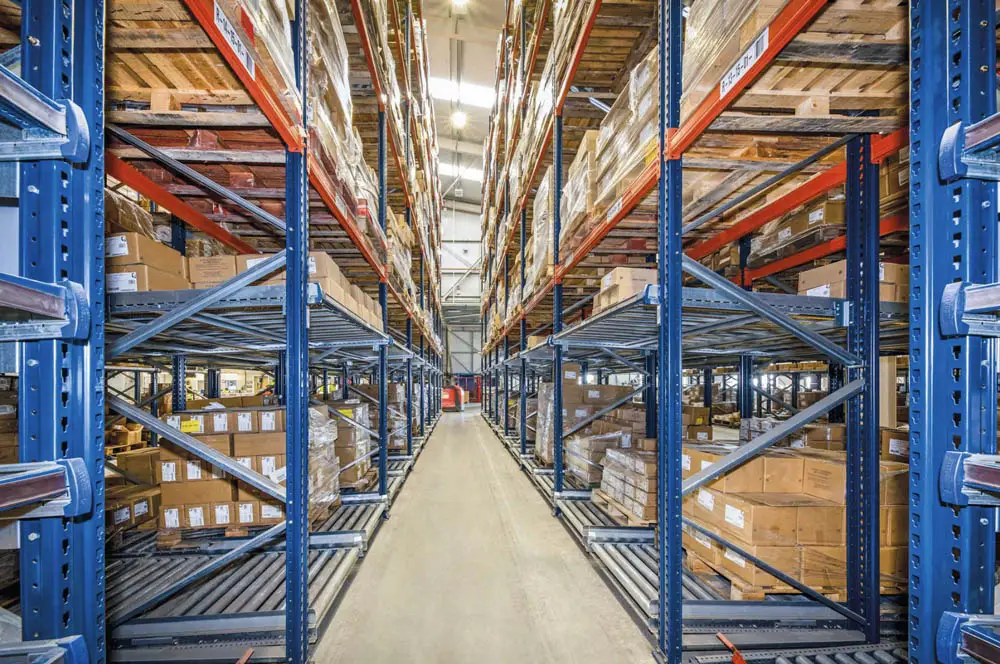
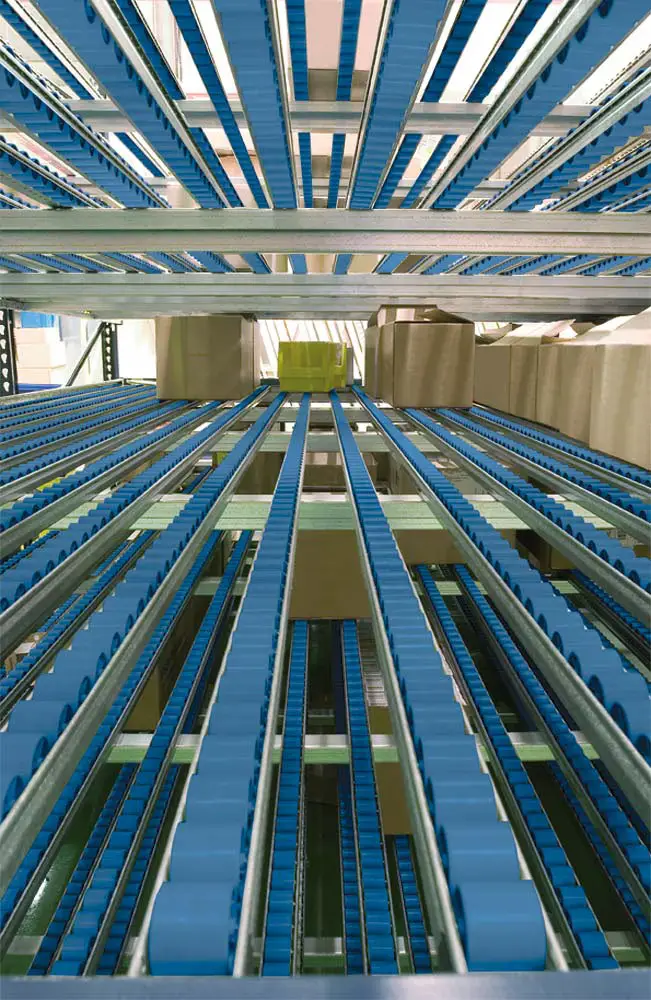
Carton flow racking, also called case flow racking, uses inclined roller or wheel tracks to gravity-feed cartons from the replenishment aisle to the pick face, creating a continuously replenished, first-in, first-out pick front. As a picker removes a carton from the pick face, the next carton in the lane slides forward automatically, eliminating the need for pickers to reach into the shelf or reposition product. Carton flow is a core component of modern pick module design and one of the most effective ergonomic improvements a distribution center can implement, reducing picker travel time by up to 50% compared to static shelving.
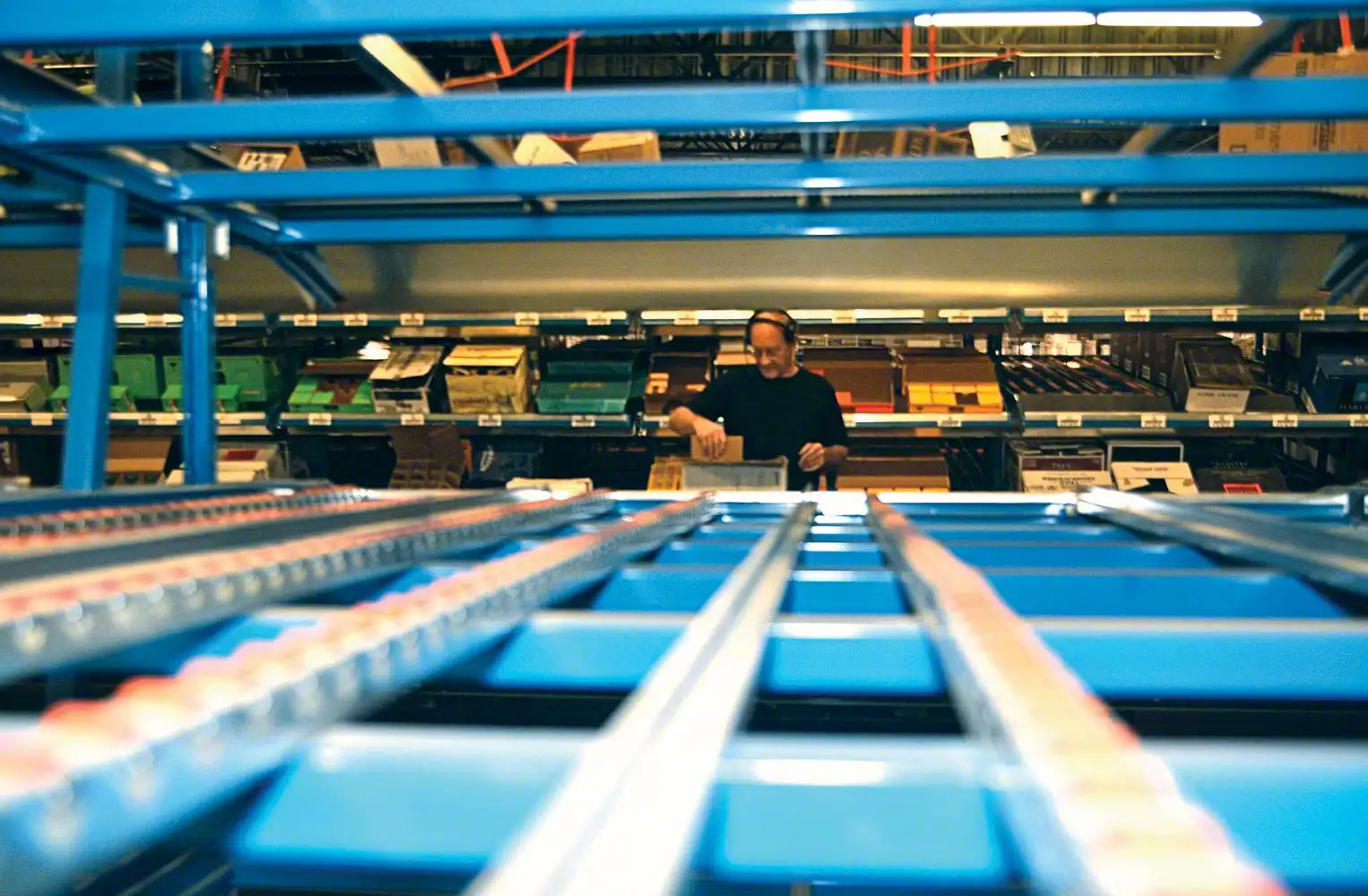
The productivity case for carton flow is well-established. In a traditional static shelving pick environment, pickers travel the full length of the pick aisle and reach into shelves at varying depths to retrieve each item. In a carton flow environment, the pick face is always full, product is always at the front of the lane, and the ergonomic pick position is consistent, reducing both travel time and the physical strain of deep-reaching into shelves. For high-velocity SKUs in particular, the constant forward presentation of fresh inventory enables a picking rhythm that static storage cannot match.
Rocky Mountain Warehouse Solutions designs and installs carton flow systems as standalone pick bays or as part of complete multi-level pick modules with conveyor integration. We specify wheel track spacings and lane widths based on your carton size profile, configure lane depth based on replenishment frequency, and integrate the system with your WMS pick locations. Systems are installed on standard teardrop pallet rack frames in most cases, making carton flow a cost-effective upgrade to an existing racking investment.
Davis County: defense logistics documentation and Wasatch Front seismic
Davis County runs along the I-15 corridor between Salt Lake City and Ogden and sits over the Wasatch fault zone, so racking here carries the same seismic design expectations as the rest of the Front: engineered anchorage, base plate calculations tied to the specific slab, and bracing appropriate to the upright height rather than a generic configuration.
What sets Davis County apart is documentation. Hill Air Force Base and the surrounding defense logistics operations, along with the concentration of contractors in and around the Freeport Center in Clearfield, mean a large share of facilities here work under government contract requirements. Those customers routinely need audit-ready records rather than just working hardware: preventive maintenance schedules, inspection sign-offs, engineered load capacity labeling, and retained anchor and as-built documentation. We build that into the project from the first installation instead of assembling it later when a contract review asks for it, because reconstructing it after the fact is considerably harder.
Permitting runs through Davis County and the individual cities including Layton, Clearfield, Bountiful, Kaysville, Farmington, and North Salt Lake. Requirements and review practice differ between them, so we verify with the jurisdiction that covers your facility during layout rather than carrying a Salt Lake County assumption north.
Codes, Compliance, and Enforcement in UT
Utah is a state where storage racking is engineered, not just assembled. Steel storage racks are treated as nonbuilding structures under ASCE 7 with their own design provisions, and much of Utah's warehouse square footage sits in parts of the state where seismic load is a governing design factor rather than a formality. In practice that means engineered base plates, anchor patterns calculated against the actual slab rather than a catalog default, limits on unbraced upright height, and in taller configurations additional row bracing or a deliberate seismic separation from the building structure. How much of that applies depends heavily on where in Utah the facility sits, which is why we work the seismic question at the county and site level rather than quoting a single statewide answer.
Permitting in Utah is local. There is no statewide storage rack permit threshold; county and municipal building departments set their own requirements for when an installation needs a permit, stamped drawings, anchor calculations, and load capacity documentation. Review practice varies noticeably between jurisdictions, so we confirm requirements with the authority having jurisdiction over your specific building during layout rather than after the racking is on site. Slab condition is the input buyers most often overlook: anchor pull-out values depend on concrete depth, compressive strength, and proximity to joints and slab edges, so an older building can drive a different base plate design than a new tilt-up shell in the same city.
Workplace safety enforcement is genuinely statewide. Utah operates its own OSHA-approved State Plan through Utah Occupational Safety and Health, a division of the Utah Labor Commission, rather than relying on federal OSHA. There is no rack-specific OSHA standard anywhere in the country, but storage systems are reachable through general materials handling and storage requirements and the general duty obligation to provide a workplace free of recognized hazards. We design to RMI ANSI MH16.1, provide engineered load capacity labeling on every installation, and retain the anchor, as-built, and inspection documentation that a UOSH inspector, an insurer, or a plan reviewer is likely to ask for.
Technical Specifications & Buying Guide
Carton flow systems use either wheel tracks (rollers with individual plastic wheels on a steel axle) or skatewheel tracks (continuous rows of small plastic wheels) to support and move cartons down the inclined lane. Wheel track spacing (the distance between parallel tracks) is selected based on the minimum carton width in the system. For a mix of carton sizes, adjustable wheel track systems allow lane width to be changed without replacing components. Track inclination is typically 3/8 to 5/8 inch per foot, providing enough gravity to move cartons forward without excess speed at the pick face.
Lane depth in carton flow is determined by your replenishment cycle. If a replenishment operator restocks lanes once per shift, lanes should be deep enough to hold a full shift's worth of picks for each SKU without running empty. For high-velocity SKUs, this may mean 8–12 carton deep lanes; for slower-moving SKUs, 3–5 carton depth is typically sufficient. Lane dividers allow a single shelf level to accommodate multiple lane widths, maximizing the number of pick faces per vertical foot of racking height. Ergonomic pick heights, typically 28 to 52 inches above the floor, are the most productive and should be assigned to the highest-velocity SKUs.
Carton flow integrates naturally with pick-to-belt and pick-to-conveyor systems. In a pick module, the carton flow pick face is positioned directly above or adjacent to the take-away conveyor, allowing pickers to immediately deposit picked items onto the belt without carrying them. The separation of replenishment (from the back aisle) and picking (from the front aisle) allows replenishment and picking to occur simultaneously without congestion, further improving throughput. Lane position indicators, put-to-light systems, and pick-to-light systems are commonly integrated with carton flow to guide pickers and reduce errors in high-SKU-count environments.
Key Benefits of Carton Flow Racking in Layton
- Reduces picker travel time by 40–60%
- Continuous FIFO replenishment from the rear
- Ideal for high-velocity pick operations
- Integrates with pick module and conveyor systems
- Multiple wheel track spacings for carton size variety
- Gravity-powered: no electricity required
- Compatible with WMS pick systems
Industries We Serve in Layton
E-commerce fulfillment
Carton Flow Racking systems tailored for the operational requirements of e-commerce fulfillment facilities in Layton.
Distribution and logistics
Carton Flow Racking systems tailored for the operational requirements of distribution and logistics facilities in Layton.
Food and beverage
Carton Flow Racking systems tailored for the operational requirements of food and beverage facilities in Layton.
Pharmaceutical
Carton Flow Racking systems tailored for the operational requirements of pharmaceutical facilities in Layton.
Third-party logistics
Carton Flow Racking systems tailored for the operational requirements of third-party logistics facilities in Layton.
Retail replenishment
Carton Flow Racking systems tailored for the operational requirements of retail replenishment facilities in Layton.
Common Use Cases in Layton
Piece-pick order fulfillment
Our team helps Layton businesses implement Carton Flow Racking solutions tailored specifically for piece-pick order fulfillment at any scale.
Case-pick distribution
We design and install Carton Flow Racking configurations built for the demands of case-pick distribution in Layton warehouses.
Pick module design
Layton warehouses relying on Carton Flow Racking for pick module design benefit from our engineered layouts and expert installation.
High-velocity SKU storage
Rocky Mountain Warehouse Solutions specializes in Carton Flow Racking for high-velocity sku storage, serving facilities across Layton and the Mountain West.
Ergonomic picking at proper height
From layout planning to final installation, we deliver Carton Flow Racking optimized for ergonomic picking at proper height in Layton.
FIFO product rotation
We configure Carton Flow Racking systems that solve real fifo product rotation challenges for Layton operations of every size.
Why Layton Businesses Choose Rocky Mountain Warehouse Solutions
Our team has designed and installed Carton Flow Racking systems for hundreds of warehouses across the Mountain West, including facilities in Layton.
We carry new and certified-used Carton Flow Racking inventory, giving Layton businesses flexible options that match their budget without compromising safety or compliance.
We've learned what Layton warehouse managers need most: fast response, accurate quotes, and installation crews who show up on time and finish the job right. That's what every Carton Flow Racking project gets.
Every Carton Flow Racking project we complete in Layton follows the same proven process: site assessment, engineered layout design, permit coordination if required, professional installation, load capacity labeling, and a final safety inspection.
Frequently Asked Questions About Carton Flow Racking in Layton
What is the difference between carton flow and pallet flow?
Carton flow handles individual cartons and cases using wheel or roller tracks sized for case dimensions (typically 4–24 inches wide). Pallet flow handles full pallets on heavy-duty roller lanes. Carton flow is used in piece-pick and case-pick operations; pallet flow is used for bulk pallet storage and replenishment.
Rocky Mountain Warehouse Solutions serves Layton, UT and surrounding Davis County businesses. Contact us for local pricing and availability.
Can carton flow be added to existing pallet racking?
Yes. Carton flow tracks can be retrofitted into existing teardrop pallet racking using universal rail kits that clamp onto standard beam steps. This is a cost-effective way to convert static shelving bays to high-productivity pick faces without replacing the structural racking frame.
Rocky Mountain Warehouse Solutions serves Layton, UT and surrounding Davis County businesses. Contact us for local pricing and availability.
What carton sizes can carton flow handle?
Standard carton flow systems handle cartons from approximately 4 inches to 24 inches wide and from 3 inches to 12 inches tall. For smaller items, dividers can be added to create narrower lanes. For very heavy or oversized cartons, heavy-duty wheel tracks with closer spacing and steeper inclination maintain reliable gravity flow.
Rocky Mountain Warehouse Solutions serves Layton, UT and surrounding Davis County businesses. Contact us for local pricing and availability.
How do I determine the right lane depth for carton flow?
Lane depth is driven by replenishment frequency and SKU velocity. For high-velocity SKUs picked hundreds of times per day, deep lanes (8–12 cartons) reduce replenishment frequency. For slower SKUs, 3–5 cartons deep is usually adequate. We size lanes based on your SKU velocity data to minimize replenishment labor while keeping pick faces stocked.
Rocky Mountain Warehouse Solutions serves Layton, UT and surrounding Davis County businesses. Contact us for local pricing and availability.
What is a pick module?
A pick module is a multi-level storage and picking structure that combines mezzanine levels, carton flow racking, pallet flow racking, and conveyor systems into an integrated order fulfillment operation. Multiple pick levels are connected by a take-away conveyor that collects picked items from each level and routes them to packing and shipping. Pick modules can dramatically increase pick productivity in high-SKU, high-volume operations.
Rocky Mountain Warehouse Solutions serves Layton, UT and surrounding Davis County businesses. Contact us for local pricing and availability.
Which OSHA agency oversees warehouse safety compliance in Utah?
Utah operates its own OSHA-approved State Plan through Utah Occupational Safety and Health (UOSH), a division of the Utah Labor Commission, rather than relying on federal OSHA directly. We design and document every Utah installation to meet UOSH's workplace safety standards.
Get a Free Quote for Carton Flow Racking in Layton
Getting a quote for Carton Flow Racking in Layton is fast and free. Our team will visit your facility, assess your needs, and deliver a detailed proposal — typically within 48 hours.
Related Products in Layton
Nearby Service Areas
Request a Quote for Carton Flow Racking in Layton
Our team can help you choose the right warehouse solution, plan the layout, and move your project forward.
Get a Free Quote